Diving in Bimini
Why dive here
Bimini offers some of Bahamas's richest diving, with 623+ marine species recorded in the area - including barracuda, blue sharks, bull sharks, dolphins and eagle rays. Water ranges 25-31°C, warmest July, August, September.
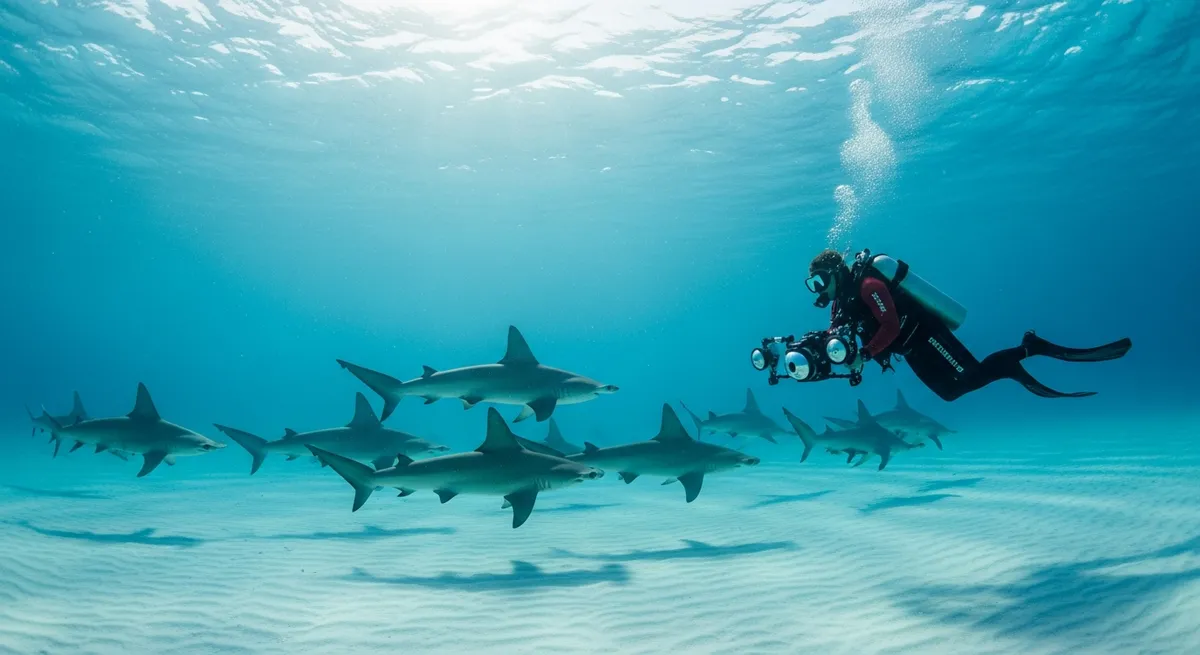
Bimini has carved out a reputation as a big animal hotspot, and honestly, we agree. It’s the place to be for hammerhead shark encounters, especially from December to April. We’ve spent many mornings feeling the thrum of the boat engine, knowing we're heading out to meet these magnificent sharks. Beyond the hammerheads, the bull shark dives are a real adrenaline rush, putting you face-to-face with powerful predators, often in surprisingly clear water. Dive into the famous Bimini Road, a geological puzzle locals will tell you is part of the lost city of Atlantis. We’ve finned slowly over those ancient-looking stones, imagining what stories they hold. The surrounding reefs are healthy, not just a backdrop for sharks. You’ll find impressive grooved brain coral formations, and we’ve spotted plenty of inquisitive sailfin blennies peeking out. Visibility here is generally good, often exceeding 20 meters, though strong currents can pick up, particularly around the deeper walls. Our tip? Go early in the morning for the calmest conditions and fewer boats.
Bimini Dive Site Map
Dive sites and dive centres in Bimini
Bimini Dive Sites
14 dive sites in Bimini
Anchor 8
Anchor 8 in Bimini is primarily a drift dive, following the current along a sloping reef. We often spot pelagics here, with sailfish and swordfish occasionally cruising by in the blue. It’s a site for divers comfortable with open water and looking for bigger fish encounters. Keep an eye on the depth; it drops off quickly.
Arrecife Lavandera de Tierra
Arrecife Lavandera de Tierra offers a relaxed Bimini dive. We typically find a good mix of coral here, including some respectable formations of Massive Starlet Coral and the occasional patch of Staghorn. It’s a pleasant drift, with schools of French grunt and yellowtail parrotfish often hanging out in the gentle current. Look closely for the smaller stuff – the orangespotted filefish are always a treat. It’s a nice site for those looking for an easy second dive or a cruisy introduction to Bimini's reefs.
Arrecife Los Cabezos
Located in Bimini, Bahamas, Arrecife Los Cabezos is a dive site.
Cay Sal Island
Cay Sal Island is a bit of a journey from Bimini, a full-day trip on a liveaboard, but for some divers, it's worth the effort. The appeal here is the feeling of remoteness. You're diving somewhere fewer people reach, and that often means less pressure on the reefs. We’ve seen good numbers of Doctorfish and French Grunts schooling over the shallower patches, and if you’ve got a good eye, the Blennies, like the Puffcheek and Blackfin, are a treat to spot among the rubble. It's a spot that suits divers who enjoy a quieter, more exploratory vibe, rather than those chasing big pelagics.
Dog Rocks 3
Dog Rocks 3, off Bimini, is a good spot if you’re keen on seeing larger pelagic species. It’s essentially a rocky outcrop, which often attracts schools of Atlantic bonito, tuna, and barracuda patrolling the deeper water. We've found it’s a decent drift, making it suitable for divers comfortable with currents and looking for open-ocean encounters rather than complex reef structures. It's a dive for those hoping to spot something big passing through.
Dog Rocks 4
Dog Rocks 4 in Bimini is primarily a rocky area, best known for its pelagic action. We've often seen various tuna species here, like Albacore and Allison's, along with dorado and barracuda zipping through. It's a site for divers keen on big fish encounters rather than intricate reef exploration. Expect less coral, more open water, and a good chance of spotting something substantial passing by.
Elbow Cays 4
Elbow Cays 4 feels like an old friend, familiar and comforting, but always with a new detail to catch your eye. We often find ourselves drifting along the reef here, spotting the tiny residents. Look closely in the gorgonians for shark nose gobies, and don't miss the rosy blennies popping their heads out of tiny holes. The sheer number of small, colourful fish – those little bridled cardinalfish, the grumpy-looking blackcheek blennies – is what keeps us coming back. This isn’t a site for big pelagics, though a curious barracuda might cruise by. It's more about slowing down, getting low, and appreciating the miniature world. We particularly love the shallower sections, where the light plays beautifully through the water. It’s ideal for macro photographers or anyone who just enjoys a relaxed drift over a healthy reef, spotting critters others might swim right past. Keep an eye out for the American pugnose pipefish too, they’re masters of disguise here.
Elbow Cays 5
Elbow Cays 5. Now this is a spot we’d happily dive again and again in Bimini. It’s got that classic Caribbean feel, but with just enough individual character to make it our favourite in the Cays. You’re dropping down onto a reef system that’s pretty much ideal for a relaxed drift. The sheer number of smaller fish here is what really sets it apart – we're talking about those little guys like Slippery Dicks and the Naked Blenny, often tucked into crevices. Keep your eyes peeled for the Imitator Blenny, a fantastic spot, they’re clever little fish. We love how the light plays on the reef around midday, really bringing out the colour in the sponges. You’ll definitely see bigger fish too, the resident barracuda usually hovers around the edge, eyeing up the French Grunts. It's a great site for photographers who enjoy macro and mid-range subjects without battling strong currents. Best to dive it on a calm morning, before the afternoon chop can stir things up a bit, though visibility here is usually pretty reliable.
Inner Bommies
Inner Bommies, in Bimini, offers a relaxed dive among scattered coral heads. We often spot dusky smoothhounds here, cruising over the sandy patches between the bommies. It's a nice easygoing spot, good for a second dive of the day or if you're looking for something gentle. Expect a calm drift and plenty of time to explore the nooks and crannies.
Julia Tuttle Causeway Artifical Reef
The Julia Tuttle Causeway Artificial Reef is one of those places we always make a point of revisiting when we’re in Bimini. It’s not about dramatic drop-offs or massive pelagics here, though we have seen blacktip sharks cruise by. What we love about this site is its sheer, buzzing density of smaller life, particularly for macro enthusiasts and patient observers. Dive in and you’re immediately enveloped by schools of herring, so thick they shimmer like liquid silver, parting and reforming around you. It’s a sensory experience, that feeling of being completely surrounded. Our favourite part is slowly exploring the nooks and crannies where you’ll find the real treasures: bearded gobies peeking out, Caribbean reef clams nestled in the structure, and if you’ve got a good eye, the wonderfully camouflaged dusky flounders. Look closer still for the delicate lesser starlet coral, a small but significant builder here. It’s a relatively shallow, calm dive, making it perfect for lingering. We'd suggest aiming for late morning, after the initial boat traffic has settled, when the light penetrates beautifully, illuminating the constant activity. It’s a fantastic site for photographers or anyone who enjoys a slower, more deliberate dive to truly appreciate the intricate details of a busy ecosystem.
Southern Escarpment
The Southern Escarpment in Bimini offers a solid wall dive. The wall itself drops steadily, with plenty of nooks and crannies to explore. It’s a reliable spot for encountering larger pelagics, especially sailfish making passes further out. We'd suggest this site for divers who appreciate dramatic topography and the chance for big animal sightings.
Southern Escarpment
The Southern Escarpment is classic Bimini wall diving, with the reef dropping off into deeper water. You’ll find a mix of corals and sponges coating the vertical face. We’ve seen pelagics like sailfish and swordfish cruising the blue here, making it a good spot for divers hoping to catch a glimpse of the bigger stuff. This site is best for those comfortable with deeper profiles and open water.
Show all 14 dive sites in Bimini
Bimini Dive Centres
No dive centres listed in Bimini yet. Browse all dive centres.
Ocean Wildlife in Bimini
623 species recorded in Bimini
Bimini Daylight & Sunrise/Sunset
Sunrise and sunset times for Bimini, calculated from coordinates
Today - Sunday 11 October
Sunrise
06:16
Sunset
18:00
Daylight
11h 44m
Golden Hour
17:30
First light (dawn) at 05:54 · Last light (dusk) at 18:23
Monthly Averages
| Month | Sunrise | Sunset | Daylight |
|---|---|---|---|
| Jan | 07:06 | 17:55 | 10h 49m |
| Feb | 06:55 | 18:16 | 11h 21m |
| Mar | 06:31 | 18:30 | 11h 58m |
| Apr | 06:01 | 18:42 | 12h 41m |
| May | 05:40 | 18:56 | 13h 16m |
| JunLongest | 05:34 | 19:10 | 13h 36m |
| Jul | 05:43 | 19:11 | 13h 29m |
| Aug | 05:57 | 18:56 | 12h 59m |
| Sep | 06:08 | 18:27 | 12h 19m |
| OctNow | 06:18 | 17:56 | 11h 38m |
| Nov | 06:36 | 17:36 | 11h 1m |
| DecShortest | 06:56 | 17:37 | 10h 41m |
Times are approximate local times based on longitude. Actual times may vary slightly depending on the exact timezone observed in Bimini.
Where to Stay near Bimini
Prices from Booking.com. We may earn a commission at no extra cost to you.
Marine Protected Areas near Bimini
1 protected area near Bimini - please respect local regulations when diving
Cay Sal Marine Managed Area
Getting to Bimini
Marathon
Santa Clara
Matanzas
Plan & book
Ways to dive Bimini, from day trips to liveaboards.
Day trips & courses
via GetYourGuideGuided dives, courses and snorkel trips with instant booking.
Find dive trips in BiminiPlaces to stay
via Booking.comHotels and dive resorts near Bimini.
Search stays in BiminiDive insurance
Most travel insurance excludes or limits scuba. Check what you need before you go.
Dive insurance explainedPartner links: we may earn a commission if you book, at no extra cost to you. How we make money