ATLANTIC PEARL
Why dive here
With 271+ marine species recorded in the area - including barracuda, dolphins, lemon sharks, nurse sharks and seahorses - ATLANTIC PEARL offers some of Eleuthera & Harbour Island's richest wreck diving. Water ranges 24-31°C, warmest July, August, September.
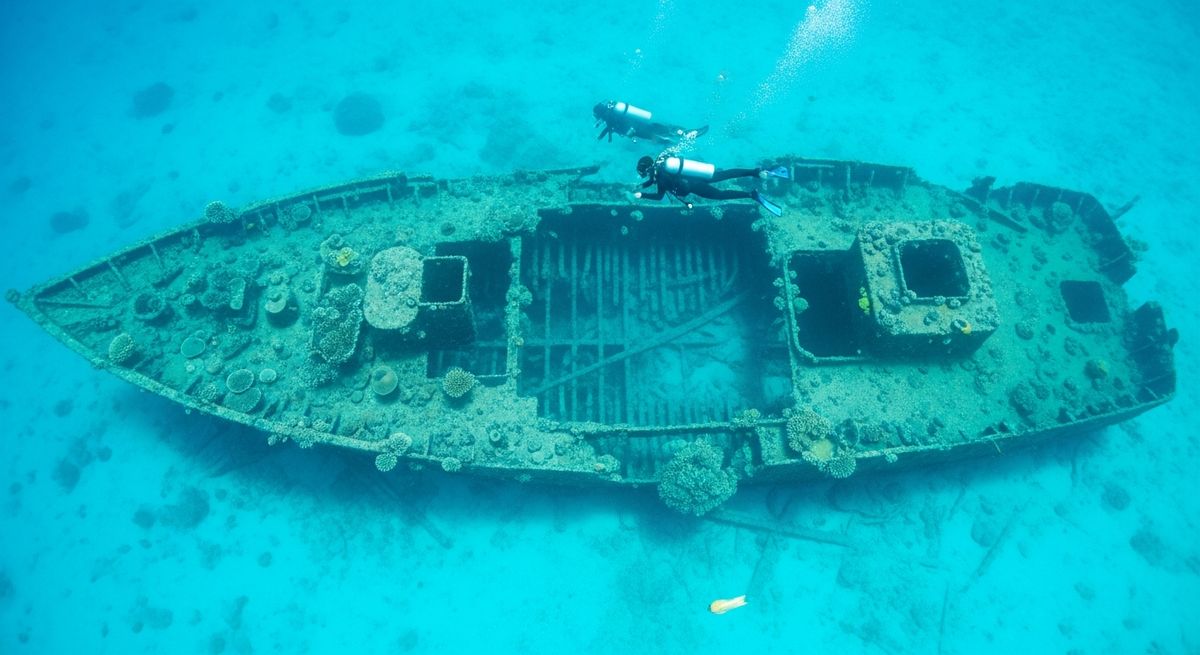
The Atlantic Pearl isn’t your typical Caribbean wreck. We’re talking about a serious piece of steel, an 80-meter cargo carrier that ran aground off James Point in '79. What makes it special? It sits *right* on the surface, its hull often breaking above the waves, then dipping to nothing. It’s an unusual sight, a ghost ship half-submerged. Because it’s so shallow, it’s not about deep penetration, though you can poke around some of the more accessible deck structures. Instead, we love it for the light and the sheer amount of life that has taken hold. Schools of snapper dart through the shadows of the twisted metal. It's an easy drift along the hull, often with a gentle current, letting you take in the scale. You’ll find parrotfish munching algae from the encrusted hull and often a curious barracuda hanging out in the darker sections. It’s a photographer’s dream on a sunny day, with shafts of light piercing the water, illuminating the wreck. We'd suggest getting there earlier in the morning for the best light and fewer boat wakes. If you like your wrecks dramatic and easily accessible, this is a standout.
Safety Notes
Wreck site - avoid penetration without wreck diving certification. Watch for sharp metal and entanglement hazards.
ATLANTIC PEARL Wreck History
Year Sunk
1979
Vessel Type
cargo ship
Cause
grounding
The Atlantic Pearl was a Dutch-built carrier vessel constructed in 1963. In February 1979, while on a passage from Miami to Guadeloupe, the ship encountered treacherous conditions off the coast of Eleuthera in the Bahamas. On the 11th of that month, the Atlantic Pearl ran hard aground at James Point, where its hull was breached, sealing its fate.
Today, the remains of the Atlantic Pearl are a landmark for locals and an exciting exploration site for visitors. Lying at a depth of 0 meters, the wreck is partially submerged and constantly battered by the Atlantic surf, creating a dramatic and picturesque scene. Its accessibility makes it a fantastic spot for snorkelers and photographers, who can explore the rusting superstructure and the shallow marine life that has colonized the hull without needing full scuba gear. The wreck serves as a stark reminder of the power of the sea and a unique habitat in the shallows.
Reviews for ATLANTIC PEARL
Conditions
Ocean conditions, forecast and tides for ATLANTIC PEARL
ATLANTIC PEARL Ocean Conditions
Monthly averages for ATLANTIC PEARL, sourced from Open-Meteo marine data - nearest station: Open-Meteo marine grid (24.8, -76.2) (12km away)
October Averages
Sea Temperature
29°C
84°F · Range: 27.1–30.8°C
Air Temperature
28°C
82°F
Wind Speed
7.92 m/s
15.4 knots
Atmospheric Pressure
1014.1 hPa
Based on 4 years of monitoring data · Data sources: Open-Meteo marine data
Plan & book
Ways to dive Eleuthera & Harbour Island, from day trips to liveaboards.
Day trips & courses
via GetYourGuideGuided dives, courses and snorkel trips with instant booking.
Find dive trips in Eleuthera & Harbour IslandPlaces to stay
via Booking.comHotels and dive resorts near Eleuthera & Harbour Island.
Search stays in Eleuthera & Harbour IslandDive insurance
Most travel insurance excludes or limits scuba. Check what you need before you go.
Dive insurance explainedPartner links: we may earn a commission if you book, at no extra cost to you. How we make money
Where to Stay near ATLANTIC PEARL
Prices from Booking.com. We may earn a commission at no extra cost to you.