Anchor Point
Protected Area
Spotter Bay - Anchors Point (Grand Cayman)
Why dive here
With 327+ marine species recorded in the area - including barracuda, bull sharks, oceanic whitetip sharks, orcas and sea turtles - Anchor Point offers some of Grand Cayman's richest wall diving. Water ranges 27-31°C, warmest August, September, October.
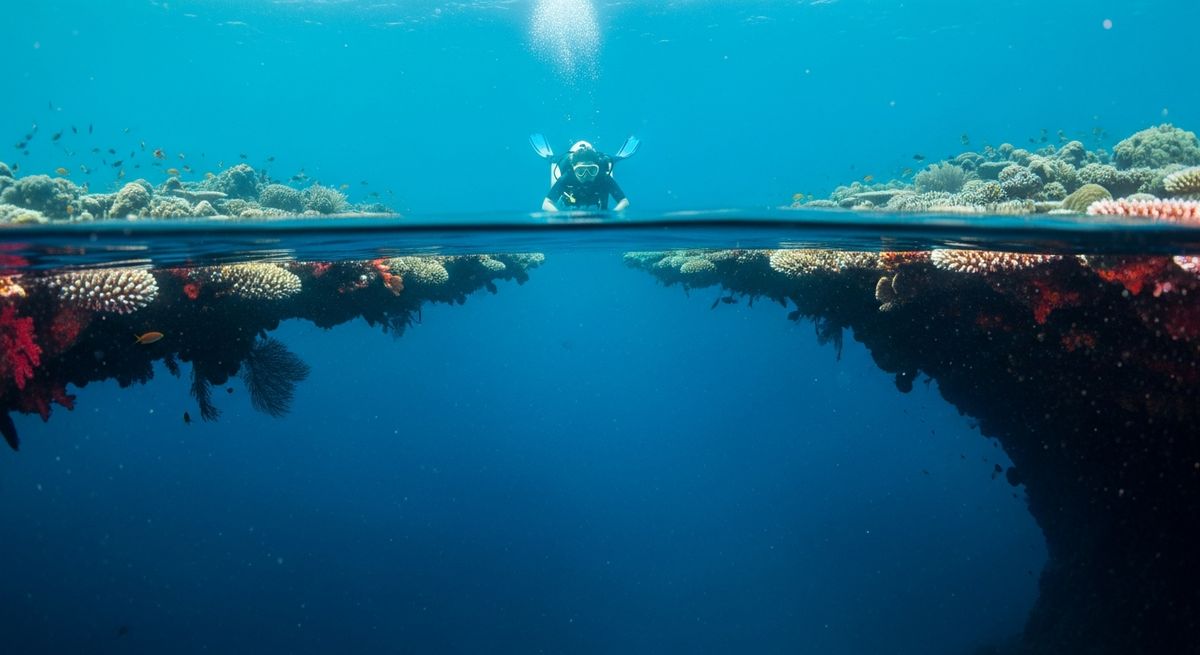
Anchor Point is one of those spots where Grand Cayman really shows off its wall diving. We’re talking a proper, dramatic drop-off, the kind that makes you feel like you’re flying over an abyss. The mooring itself is right there on the wall, pin depth around 17 metres, which means you’re immediately into the good stuff. We love dropping down and just drifting along the edge, watching for oceanic triggerfish patrol the blue. Visibility here is usually excellent, around 20 metres on an average day, giving you a clear view of the deep. Keep an eye out for the Stippled Clingfish, they're tiny but fascinating to watch as they hold on tight to the corals. We’ve also spotted some chunky Hogfish picking their way through the reef, and the Black Morays often peek out from their crevices. There’s a neat little swim-through just off the mooring, forward and towards the wall – it’s a quick dart through but adds a bit of fun. Current can be mild to moderate, so be prepared for a drift, it just means less finning for you. This site is a solid pick for anyone who loves a good wall dive with plenty of nooks and crannies to explore.
Nearest Dive Centres to Anchor Point
Dive shops near Anchor Point
Tortuga Divers
Silver Thatch Watersports
Ocean Frontiers
Living the Dream Divers
OCTOPUS
Divers Supply
Reviews for Anchor Point
Conditions
Ocean conditions, forecast and tides for Anchor Point
Anchor Point Ocean Conditions
Monthly averages for Anchor Point, sourced from Open-Meteo marine data + Copernicus Marine (EU) - nearest station: Open-Meteo marine grid (19.38, -81.32) (5km away)
October Averages
Sea Temperature
30°C
87°F · Range: 29.1–31.8°C
Current Speed
4.47 cm/s
Direction: NW (296.6°)
Chlorophyll-a
0.045 mg/m³
Very clear (oligotrophic)
Salinity
36.14 PSU
Based on 4 years of monitoring data · Data sources: Open-Meteo marine data + Copernicus Marine (EU)
Plan & book
Ways to dive Grand Cayman, from day trips to liveaboards.
Day trips & courses
via GetYourGuideGuided dives, courses and snorkel trips with instant booking.
Find dive trips in Grand CaymanPlaces to stay
via Booking.comHotels and dive resorts near Grand Cayman.
Search stays in Grand CaymanDive insurance
Most travel insurance excludes or limits scuba. Check what you need before you go.
Dive insurance explainedPartner links: we may earn a commission if you book, at no extra cost to you. How we make money
Where to Stay near Anchor Point
Prices from Booking.com. We may earn a commission at no extra cost to you.