Balboa (Wreck)
Protected Area
Old Pageant Beach - Sand Cay Apartments (Grand Cayman)
Why dive here
With 327+ marine species recorded in the area - including barracuda, bull sharks, oceanic whitetip sharks, orcas and sea turtles - Balboa (Wreck) offers some of Grand Cayman's richest reef diving. Water ranges 27-31°C, warmest August, September, October.
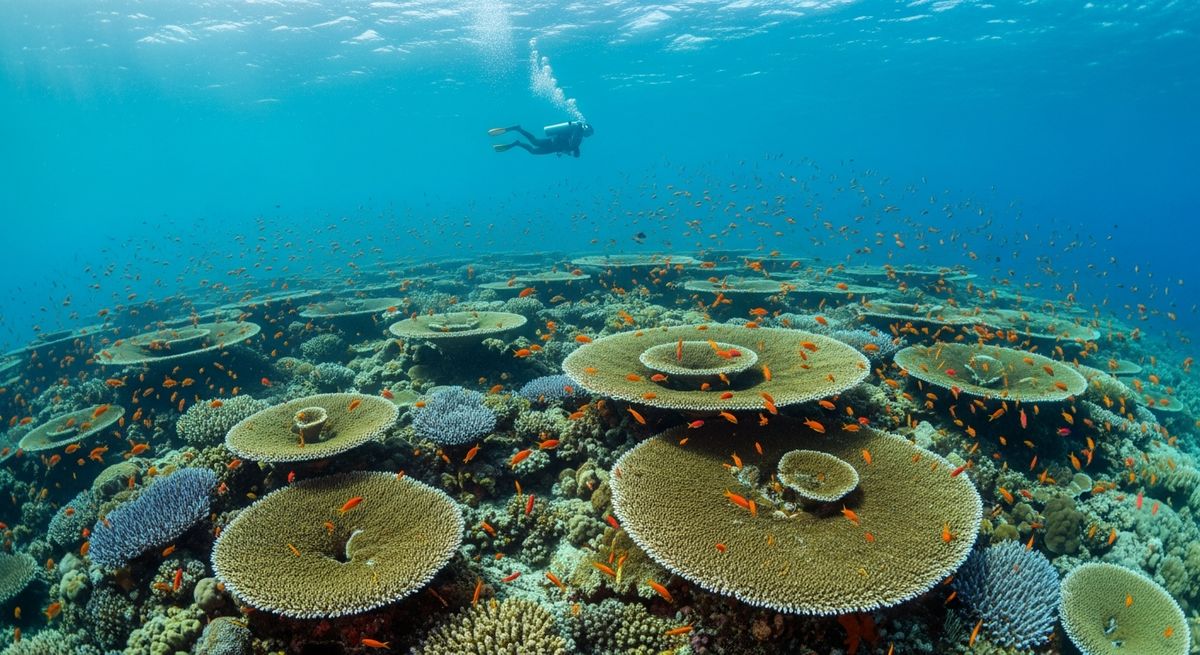
The Balboa wreck often gets overlooked for Grand Cayman’s flashier deep walls, but we think that’s a mistake. This isn't a pristine vessel to penetrate; it’s a scattered skeleton, blown apart in the 1930s to clear the shipping channel. What you get instead is a surprisingly vibrant artificial reef, spread across the seabed in a jumble of planks and twisted metal. Dropping down, the first thing that hits you is the sheer scale of the debris field. Beams lie askew, and you can still trace the ghost of the ship's outline in the sand. We’ve spent hours here, meticulously combing the smaller fragments. Look closely, and you’ll find Spotlight Gobies darting into crevices, and we’ve spotted more Arrow Blennies here than anywhere else on the island. Blushing Star Coral patches cling to the larger sections, providing miniature cities for juvenile parrotfish. It’s a shallow dive, maxing out at 15m, which means plenty of bottom time to appreciate the macro life and the way the natural light filters down through the pieces. Visibility here averages a comfortable 24m, and because it’s so close to Georgetown, we’d suggest going early in the morning before any potential boat traffic kicks up the sand. Just remember, you need permission from Port Security to dive this spot.
Nearest Dive Centres to Balboa (Wreck)
Dive shops near Balboa (Wreck)
Atlantis Dive Center
Divers Down
Don Foster's Dive Cayman, Ltd.
SUNSET DIVERS
Divers Supply
OCTOPUS
Reviews for Balboa (Wreck)
Conditions
Ocean conditions, forecast and tides for Balboa (Wreck)
Balboa (Wreck) Ocean Conditions
Monthly averages for Balboa (Wreck), sourced from Open-Meteo marine data + Copernicus Marine (EU) - nearest station: Open-Meteo marine grid (19.38, -81.32) (5km away)
October Averages
Sea Temperature
30°C
87°F · Range: 29.1–31.8°C
Current Speed
4.47 cm/s
Direction: NW (296.6°)
Chlorophyll-a
0.045 mg/m³
Very clear (oligotrophic)
Salinity
36.14 PSU
Based on 4 years of monitoring data · Data sources: Open-Meteo marine data + Copernicus Marine (EU)
Plan & book
Ways to dive Grand Cayman, from day trips to liveaboards.
Day trips & courses
via GetYourGuideGuided dives, courses and snorkel trips with instant booking.
Find dive trips in Grand CaymanPlaces to stay
via Booking.comHotels and dive resorts near Grand Cayman.
Search stays in Grand CaymanDive insurance
Most travel insurance excludes or limits scuba. Check what you need before you go.
Dive insurance explainedPartner links: we may earn a commission if you book, at no extra cost to you. How we make money
Where to Stay near Balboa (Wreck)
Prices from Booking.com. We may earn a commission at no extra cost to you.