Cali Ship Wreck
Protected Area
Old Pageant Beach - Sand Cay Apartments (Grand Cayman)
Why dive here
With 327+ marine species recorded in the area - including barracuda, bull sharks, oceanic whitetip sharks, orcas and sea turtles - Cali Ship Wreck offers some of Grand Cayman's richest wreck diving. Water ranges 27-31°C, warmest August, September, October.
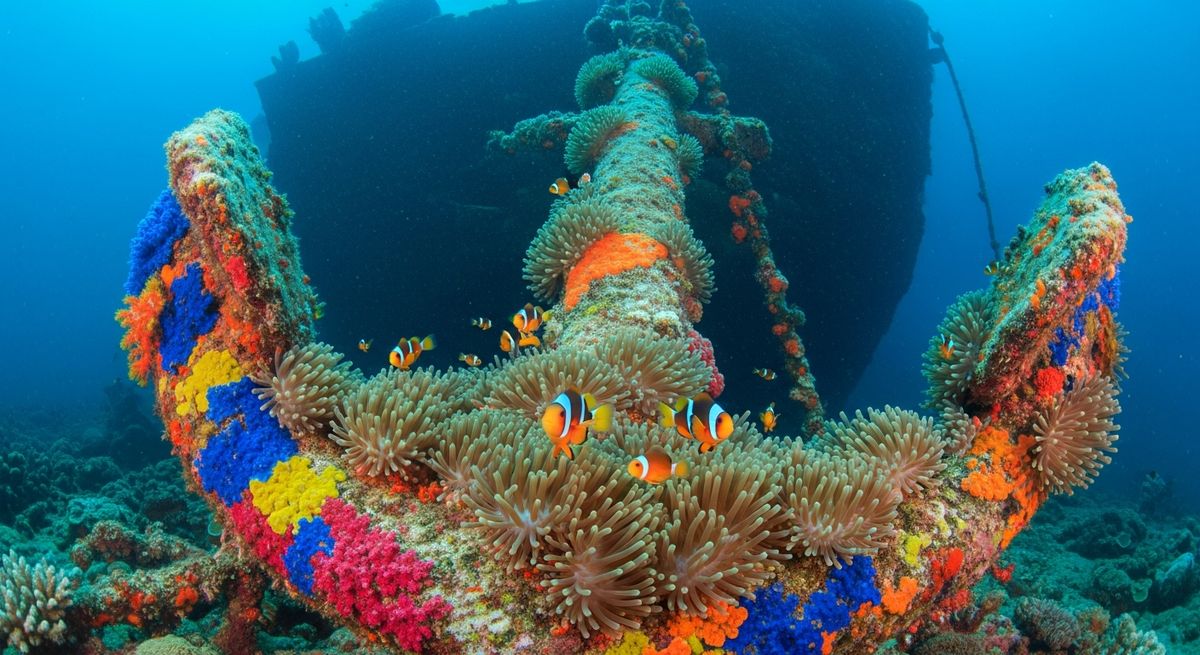
The Cali Wreck, a four-masted schooner that ran aground in 1944, sits just offshore from George Town, Grand Cayman. It’s a shallow dive, barely reaching 7 metres, which means plenty of bottom time and lots of light penetration – perfect for photographers. We love it because it's so accessible and surprisingly atmospheric for such a broken-up wreck. What remains are scattered timbers and metal frames, now completely encrusted with corals. You'll find a thick carpet of Star Coral and Finger Coral forming ledges and overhangs, creating hideouts for the resident fish. Keep an eye out for the tiny, camouflaged Goosehead Scorpionfish nestled among the growth, or a shy Shark nose goby peeking from a crevice. We’ve even spotted the elusive Conchfish here, hovering near its host. The Cali is an easygoing dive, ideal for those new to wreck diving or anyone who appreciates a relaxed potter through history and nature. You can spend a good hour exploring the debris field, watching Yellow Jacks cruise by, or trying to spot the well-hidden Warteye Stargazer in the sand nearby.
Typical Cali Ship Wreck Dive Profile
Illustrative profile based on site depth and type. Actual dive profiles vary - always follow your dive computer and training.
Safety Notes
Wreck site - avoid penetration without wreck diving certification. Watch for sharp metal and entanglement hazards.
Cali Ship Wreck Wreck History
Year Sunk
1944
Vessel Type
cargo ship
Cause
storm
The Cali was a 244-foot, steel-hulled freighter, often described as a four-masted schooner, built in the early 1900s. Her final voyage in 1944 saw her loaded with an unusual cargo: thousands of bags of rice. Caught in a storm off Grand Cayman, the ship's engines failed, and she was driven aground just yards from the shore of George Town harbour. As seawater flooded the holds, the rice began to swell, its immense expansionary force helping to burst the ship's hull plates and seal her fate.
Deemed a hazard to navigation in the busy harbour, the wreck was later dynamited by the Army Corps of Engineers. This transformed the Cali from an intact ship into the scattered, sprawling debris field that divers explore today. The silver lining of this destruction is that it created a perfect, complex habitat for marine life.
Now resting in just 8-10 metres of water, the Cali is one of Grand Cayman's most popular and beloved shallow dives, easily accessible to divers and snorkelers of all levels. The site is a playground of twisted metal plates, massive ribs, and machinery, all heavily encrusted with coral. It is famous for its large resident population of silversides and the huge, curious tarpon that hunt them. Exploring the wreckage, swimming through clouds of shimmering fish, and coming face-to-face with a giant tarpon makes the Cali an unforgettable Caribbean dive.
Nearest Dive Centres to Cali Ship Wreck
Dive shops near Cali Ship Wreck
Divers Down
Atlantis Dive Center
Don Foster's Dive Cayman, Ltd.
SUNSET DIVERS
Divers Supply
OCTOPUS
Reviews for Cali Ship Wreck
Conditions
Ocean conditions, forecast and tides for Cali Ship Wreck
Cali Ship Wreck Ocean Conditions
Monthly averages for Cali Ship Wreck, sourced from Open-Meteo marine data + Copernicus Marine (EU) - nearest station: Open-Meteo marine grid (19.38, -81.32) (5km away)
October Averages
Sea Temperature
30°C
87°F · Range: 29.1–31.8°C
Current Speed
4.47 cm/s
Direction: NW (296.6°)
Chlorophyll-a
0.045 mg/m³
Very clear (oligotrophic)
Salinity
36.14 PSU
Based on 4 years of monitoring data · Data sources: Open-Meteo marine data + Copernicus Marine (EU)
Plan & book
Ways to dive Grand Cayman, from day trips to liveaboards.
Day trips & courses
via GetYourGuideGuided dives, courses and snorkel trips with instant booking.
Find dive trips in Grand CaymanPlaces to stay
via Booking.comHotels and dive resorts near Grand Cayman.
Search stays in Grand CaymanDive insurance
Most travel insurance excludes or limits scuba. Check what you need before you go.
Dive insurance explainedPartner links: we may earn a commission if you book, at no extra cost to you. How we make money
Where to Stay near Cali Ship Wreck
Prices from Booking.com. We may earn a commission at no extra cost to you.