Eagle Ray Pass
Protected Area
Stingray City Wildlife Interaction Zone
Why dive here
With 327+ marine species recorded in the area - including barracuda, bull sharks, oceanic whitetip sharks, orcas and sea turtles - Eagle Ray Pass offers some of Grand Cayman's richest reef diving. Water ranges 27-31°C, warmest August, September, October.
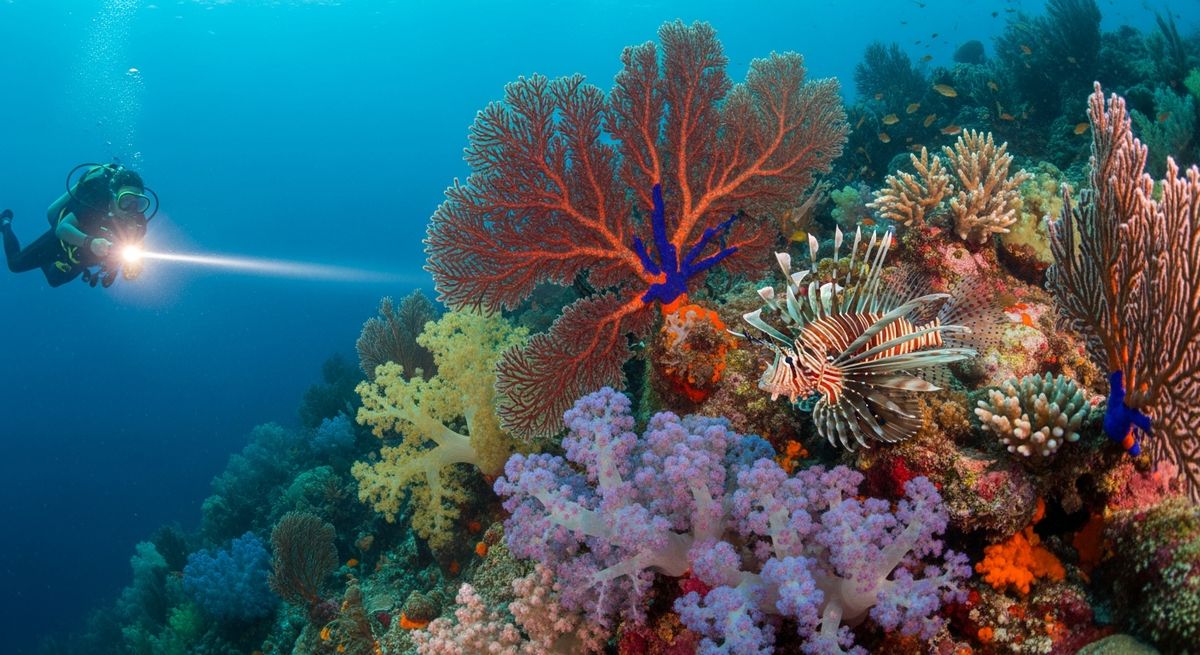
Eagle Ray Pass, up on Grand Cayman's North Side, feels like a proper deep dive, even though our maximum here is 25m. The reef stretches towards the barrier, a mix of chunky finger corals and sandy patches. It's the kind of site where you drift along the wall, keeping an eye out into the blue. We love it for those mid-morning dives, just as the light really starts to filter down. We've often seen Caribbean reef sharks cruising the drop-off, and, true to its name, spotted eagle rays often glide through the sandy channels. It’s also a surprisingly good spot for the smaller stuff if you slow down; look for pearl blennies poking out of holes and cryptic clingfish nestled in the coral. We'd suggest this site for anyone comfortable with a gentle drift and happy to spend time looking both wide and small.
Nearest Dive Centres to Eagle Ray Pass
Dive shops near Eagle Ray Pass
Living the Dream Divers
Divetech
OCTOPUS
Divers Supply
Indepth Watersports Ltd
Divers Down
Reviews for Eagle Ray Pass
Conditions
Ocean conditions, forecast and tides for Eagle Ray Pass
Eagle Ray Pass Ocean Conditions
Monthly averages for Eagle Ray Pass, sourced from Open-Meteo marine data + Copernicus Marine (EU) - nearest station: Open-Meteo marine grid (19.38, -81.32) (5km away)
October Averages
Sea Temperature
30°C
87°F · Range: 29.1–31.8°C
Current Speed
4.47 cm/s
Direction: NW (296.6°)
Chlorophyll-a
0.045 mg/m³
Very clear (oligotrophic)
Salinity
36.14 PSU
Based on 4 years of monitoring data · Data sources: Open-Meteo marine data + Copernicus Marine (EU)
Plan & book
Ways to dive Grand Cayman, from day trips to liveaboards.
Day trips & courses
via GetYourGuideGuided dives, courses and snorkel trips with instant booking.
Find dive trips in Grand CaymanPlaces to stay
via Booking.comHotels and dive resorts near Grand Cayman.
Search stays in Grand CaymanDive insurance
Most travel insurance excludes or limits scuba. Check what you need before you go.
Dive insurance explainedPartner links: we may earn a commission if you book, at no extra cost to you. How we make money
Where to Stay near Eagle Ray Pass
Prices from Booking.com. We may earn a commission at no extra cost to you.