Eagle Ray Rock
Protected Area
Grand Cayman West
Why dive here
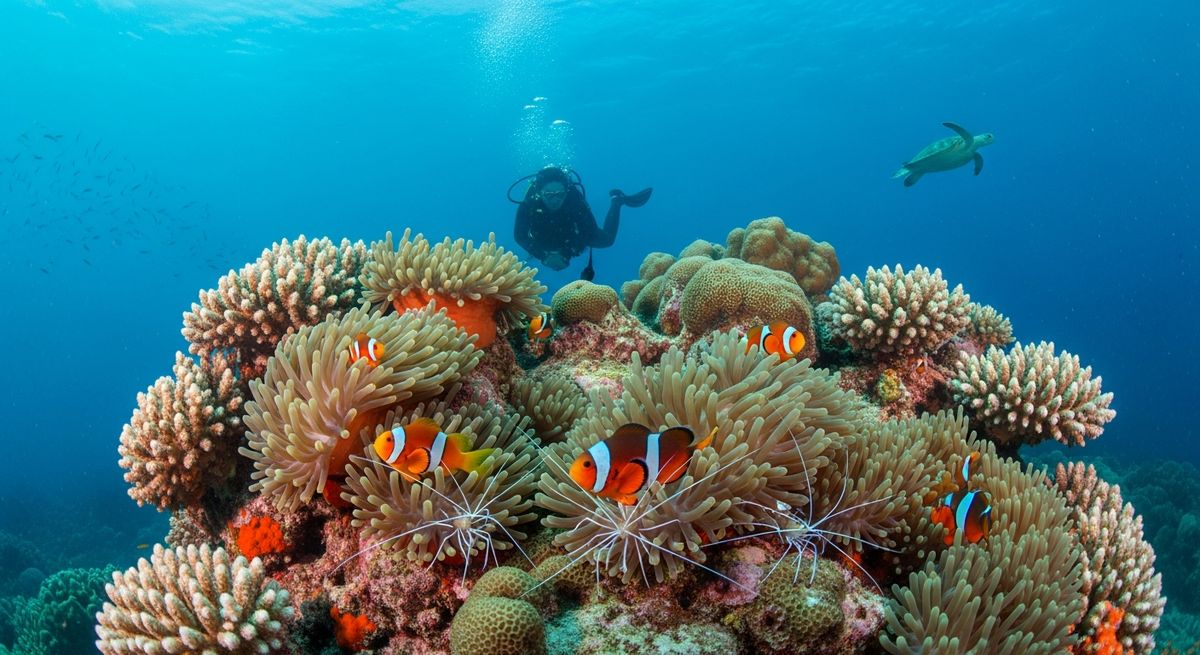
With 327+ marine species recorded in the area - including barracuda, bull sharks, oceanic whitetip sharks, orcas and sea turtles - Eagle Ray Rock offers some of Grand Cayman's richest reef diving. Water ranges 27-31°C, warmest August, September, October.
Eagle Ray Rock. The name gives a lot away, doesn't it? And often, it delivers. We've had some cracking dives here, especially when the spotted eagle rays glide by, completely unbothered. It's a proper wall dive, starting around 12 metres and dropping down to about 25. You’ll find some massive coral heads near the mooring, making for some cool swim-throughs if you poke around. We like to drift along the wall, keeping an eye out into the blue for those rays. It's a great spot for just cruising, letting the current do some of the work. You’ll see plenty of bluestriped grunts hanging out, and if you get down close to the sand, look for the sand stargazers – they're masters of camouflage. We’ve also spotted some surprisingly colourful parrotfish munching on the coral and the occasional green razorfish darting about. Visibility here is usually excellent, often 20 metres or more, making it easy to appreciate the scale of the wall. It’s a good choice for newer wall divers, as the current isn't usually too wild, but also rewarding for experienced eyes looking for those bigger pelagics.
Typical Eagle Ray Rock Dive Profile
Illustrative profile based on site depth and type. Actual dive profiles vary - always follow your dive computer and training.
Safety Notes
Always perform a 3-minute safety stop at 5m before surfacing.
Nearest Dive Centres to Eagle Ray Rock
Dive shops near Eagle Ray Rock
SUNSET DIVERS
Don Foster's Dive Cayman, Ltd.
Atlantis Dive Center
Divers Down
Divers Supply
OCTOPUS
Reviews for Eagle Ray Rock
Conditions
Ocean conditions, forecast and tides for Eagle Ray Rock
Eagle Ray Rock Ocean Conditions
Monthly averages for Eagle Ray Rock, sourced from Open-Meteo marine data + Copernicus Marine (EU) - nearest station: Open-Meteo marine grid (19.38, -81.32) (5km away)
October Averages
Sea Temperature
30°C
87°F · Range: 29.1–31.8°C
Current Speed
4.47 cm/s
Direction: NW (296.6°)
Chlorophyll-a
0.045 mg/m³
Very clear (oligotrophic)
Salinity
36.14 PSU
Based on 4 years of monitoring data · Data sources: Open-Meteo marine data + Copernicus Marine (EU)
Plan & book
Ways to dive Grand Cayman, from day trips to liveaboards.
Day trips & courses
via GetYourGuideGuided dives, courses and snorkel trips with instant booking.
Find dive trips in Grand CaymanPlaces to stay
via Booking.comHotels and dive resorts near Grand Cayman.
Search stays in Grand CaymanDive insurance
Most travel insurance excludes or limits scuba. Check what you need before you go.
Dive insurance explainedPartner links: we may earn a commission if you book, at no extra cost to you. How we make money
Where to Stay near Eagle Ray Rock
Prices from Booking.com. We may earn a commission at no extra cost to you.