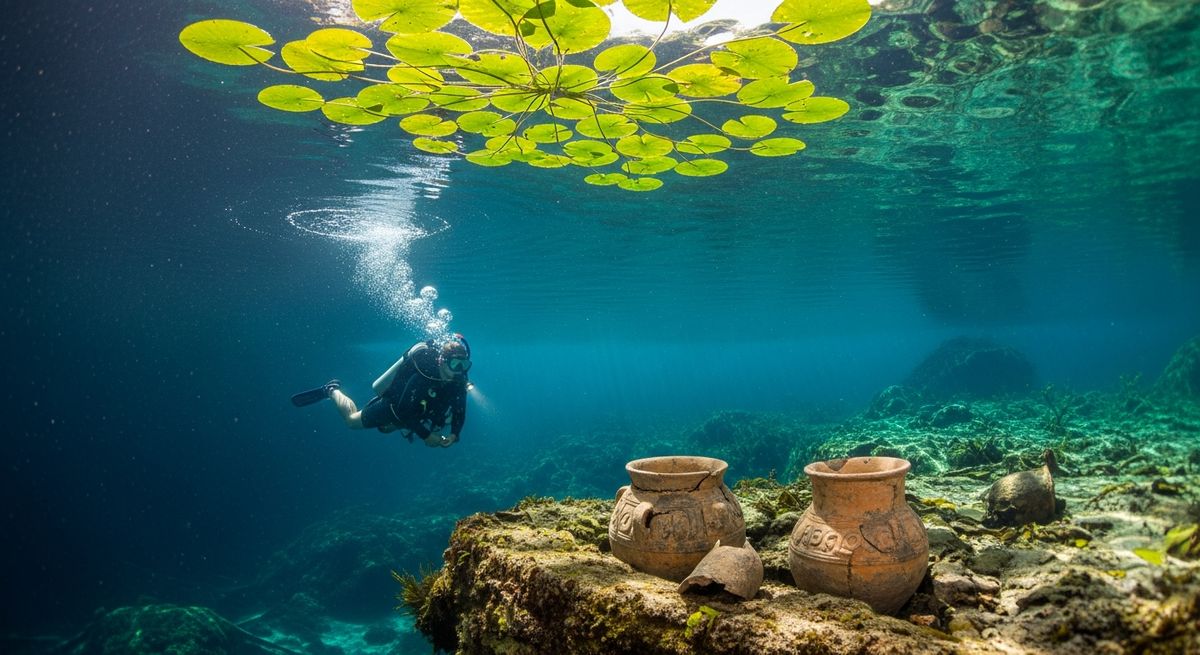
Eagles Nest
Protected Area
Victoria House- Treasure Island Resort (Grand Cayman)
Why dive here
With 327+ marine species recorded in the area - including barracuda, bull sharks, oceanic whitetip sharks, orcas and sea turtles - Eagles Nest offers some of Grand Cayman's richest cenote diving. Water ranges 27-31°C, warmest August, September, October.
Eagles Nest has a reputation for spotted eagle rays, and honestly, we’ve rarely been disappointed. We’ve seen them glide past in the distance, but our favourite memory here is dropping in to find three cruising just above the sand, wings beating slow and steady. It’s not just the big stuff though. The reef itself is a pretty classic Cayman wall, sloping gently down to 27m, covered in colourful sponges and some healthy staghorn coral patches. Keep an eye out for the smaller residents. We’ve spotted sand stargazers peeking from the sand, and the yellow stingrays are almost always present, often tucked right under a ledge. It’s a comfortable dive, usually with mild currents, making it a good choice for newer divers looking for that classic Caribbean feel without any major challenges. We’d suggest going in the morning; the light on the wall really makes the purples and oranges pop.
Safety Notes
Overhead environment - never enter without proper cave/cavern training, redundant equipment, and a guideline.
Nearest Dive Centres to Eagles Nest
Dive shops near Eagles Nest
Living the Dream Divers
OCTOPUS
Divers Supply
Divers Down
Atlantis Dive Center
Indepth Watersports Ltd
Reviews for Eagles Nest
Conditions
Ocean conditions, forecast and tides for Eagles Nest
Eagles Nest Ocean Conditions
Monthly averages for Eagles Nest, sourced from Open-Meteo marine data + Copernicus Marine (EU) - nearest station: Open-Meteo marine grid (19.38, -81.32) (5km away)
October Averages
Sea Temperature
30°C
87°F · Range: 29.1–31.8°C
Current Speed
4.47 cm/s
Direction: NW (296.6°)
Chlorophyll-a
0.045 mg/m³
Very clear (oligotrophic)
Salinity
36.14 PSU
Based on 4 years of monitoring data · Data sources: Open-Meteo marine data + Copernicus Marine (EU)
Plan & book
Ways to dive Grand Cayman, from day trips to liveaboards.
Day trips & courses
via GetYourGuideGuided dives, courses and snorkel trips with instant booking.
Find dive trips in Grand CaymanPlaces to stay
via Booking.comHotels and dive resorts near Grand Cayman.
Search stays in Grand CaymanDive insurance
Most travel insurance excludes or limits scuba. Check what you need before you go.
Dive insurance explainedPartner links: we may earn a commission if you book, at no extra cost to you. How we make money
Where to Stay near Eagles Nest
Prices from Booking.com. We may earn a commission at no extra cost to you.