Hepp’s Pipeline
Protected Area
Bat Cave Beach
Why dive here
With 327+ marine species recorded in the area - including barracuda, bull sharks, oceanic whitetip sharks, orcas and sea turtles - Hepp’s Pipeline offers some of Grand Cayman's richest drift diving. Water ranges 27-31°C, warmest August, September, October.
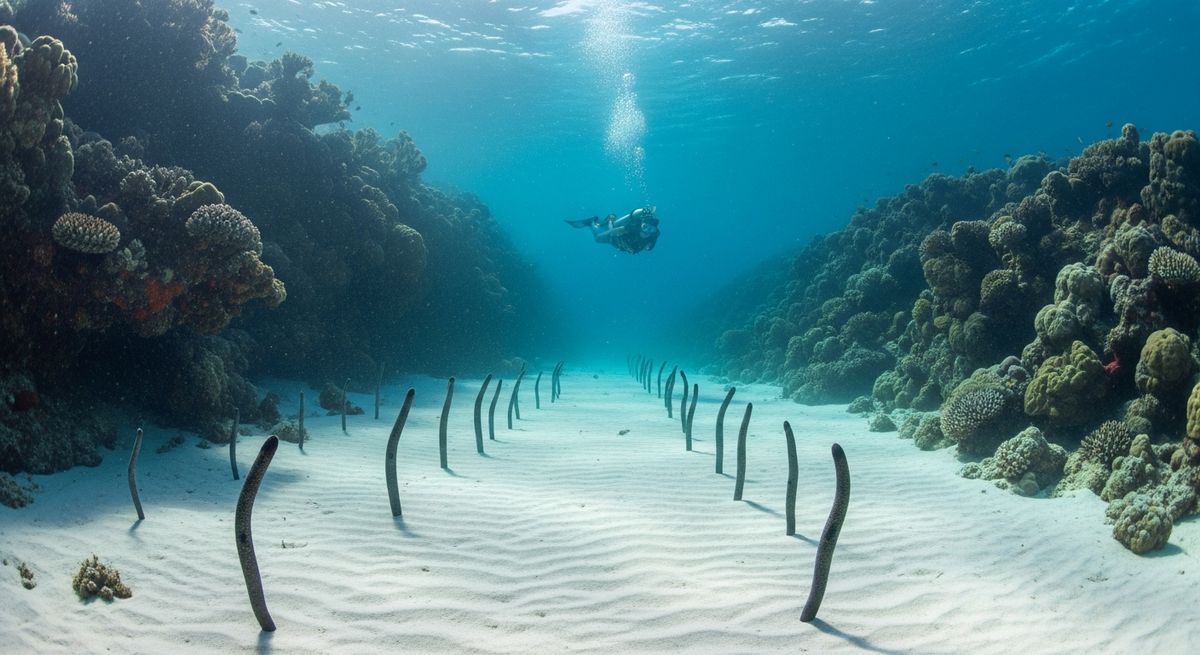
Hepp's Pipeline is one of those spots we always make time for, especially if we're in the mood for a proper hunt. It's a shallower dive, maxing out around 21 metres, with this fantastic mini-wall dropping down to a broad sand patch. The pipeline itself, an old waste pipe, is more of a curiosity these days than a feature, but it does add to the slightly rugged feel. What we really love here is the sheer density of small stuff. The top reef at 10-12 metres is often swarming with blue chromis and black durgons, a shimmering curtain you swim through. But get your eyes down onto the sand and into the crevices along the wall. We’ve had great luck spotting juvenile parrotfish tucked into overhangs, and the cleaning stations are usually buzzing. Keep an eye out for the more unusual residents – we’ve found Saddle Stargazers buried in the sand and Mottled Conger Morays peering out from their holes. It's a site that rewards patience and a keen eye, perfect for photographers or anyone who prefers macro wonders over pelagic giants.
Safety Notes
Drift dive - carry a surface marker buoy (SMB) and stay with your group. Brief the current direction before entry.
Nearest Dive Centres to Hepp’s Pipeline
Dive shops near Hepp’s Pipeline
Silver Thatch Watersports
Atlantis Dive Center
Divers Down
Don Foster's Dive Cayman, Ltd.
SUNSET DIVERS
Divers Supply
Reviews for Hepp’s Pipeline
Conditions
Ocean conditions, forecast and tides for Hepp’s Pipeline
Hepp’s Pipeline Ocean Conditions
Monthly averages for Hepp’s Pipeline, sourced from Open-Meteo marine data + Copernicus Marine (EU) - nearest station: Open-Meteo marine grid (19.38, -81.32) (5km away)
October Averages
Sea Temperature
30°C
87°F · Range: 29.1–31.8°C
Current Speed
4.47 cm/s
Direction: NW (296.6°)
Chlorophyll-a
0.045 mg/m³
Very clear (oligotrophic)
Salinity
36.14 PSU
Based on 4 years of monitoring data · Data sources: Open-Meteo marine data + Copernicus Marine (EU)
Plan & book
Ways to dive Grand Cayman, from day trips to liveaboards.
Day trips & courses
via GetYourGuideGuided dives, courses and snorkel trips with instant booking.
Find dive trips in Grand CaymanPlaces to stay
via Booking.comHotels and dive resorts near Grand Cayman.
Search stays in Grand CaymanDive insurance
Most travel insurance excludes or limits scuba. Check what you need before you go.
Dive insurance explainedPartner links: we may earn a commission if you book, at no extra cost to you. How we make money
Where to Stay near Hepp’s Pipeline
Prices from Booking.com. We may earn a commission at no extra cost to you.