Little House on the Prairie
Protected Area
Frank Sound RpZ (Grand Cayman)
Why dive here
With 327+ marine species recorded in the area - including barracuda, bull sharks, oceanic whitetip sharks, orcas and sea turtles - Little House on the Prairie offers some of Grand Cayman's richest reef diving. Water ranges 27-31°C, warmest August, September, October.
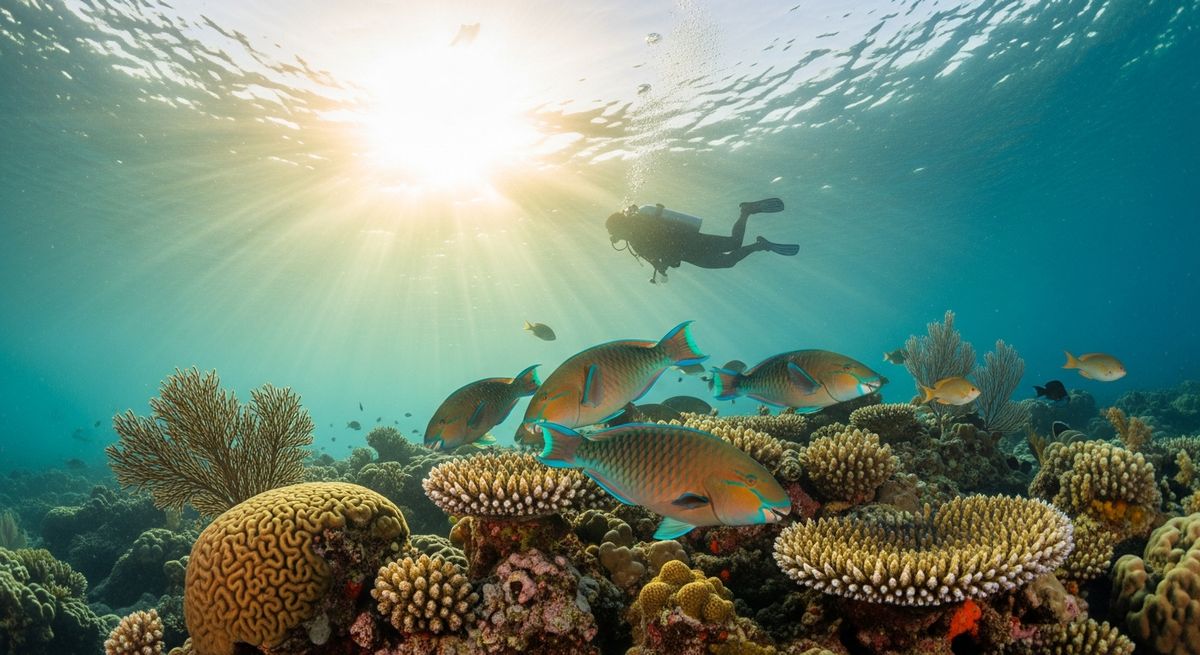
Little House on the Prairie is one of our go-to spots on Grand Cayman’s North Side, mainly because it never fails to deliver something interesting. The name comes from a little white house on shore, an old navigational marker for local boaters, and it’s a site that really shines when you take your time. You drop down onto this sprawling, Swiss-cheese kind of reef, all interconnected tunnels and swim-throughs, with massive formations of lobed and mountainous star coral. We love poking into every crevice, looking for those shy emerald sleepers or rosy blennies peeking out. Our favourite thing about Little House is that light plays tricks on you here. One minute you’re in a shadowy swim-through, watching the dust motes dance in the sunbeams filtering through the cracks above, then you pop out onto a brighter patch of reef where sergeant majors flash their stripes. We've seen blackbar soldierfish here, often with their little parasitic isopods attached, and occasionally a curious barracuda cruises by. This site is particularly incredible if you can time your visit for the fall coral spawning, when the star corals are releasing their gametes – a truly wild spectacle. It’s a site that rewards slow diving, perfect for macro enthusiasts and anyone who enjoys exploring a complex reef structure.
Nearest Dive Centres to Little House on the Prairie
Dive shops near Little House on the Prairie
Silver Thatch Watersports
Ocean Frontiers
Tortuga Divers
Divers Down
Atlantis Dive Center
OCTOPUS
Reviews for Little House on the Prairie
Conditions
Ocean conditions, forecast and tides for Little House on the Prairie
Little House on the Prairie Ocean Conditions
Monthly averages for Little House on the Prairie, sourced from Open-Meteo marine data + Copernicus Marine (EU) - nearest station: Open-Meteo marine grid (19.38, -81.32) (5km away)
October Averages
Sea Temperature
30°C
87°F · Range: 29.1–31.8°C
Current Speed
4.47 cm/s
Direction: NW (296.6°)
Chlorophyll-a
0.045 mg/m³
Very clear (oligotrophic)
Salinity
36.14 PSU
Based on 4 years of monitoring data · Data sources: Open-Meteo marine data + Copernicus Marine (EU)
Plan & book
Ways to dive Grand Cayman, from day trips to liveaboards.
Day trips & courses
via GetYourGuideGuided dives, courses and snorkel trips with instant booking.
Find dive trips in Grand CaymanPlaces to stay
via Booking.comHotels and dive resorts near Grand Cayman.
Search stays in Grand CaymanDive insurance
Most travel insurance excludes or limits scuba. Check what you need before you go.
Dive insurance explainedPartner links: we may earn a commission if you book, at no extra cost to you. How we make money
Where to Stay near Little House on the Prairie
Prices from Booking.com. We may earn a commission at no extra cost to you.