Playing Field
Protected Area
Cayman Dive Lodge (Grand Cayman)
Why dive here
With 327+ marine species recorded in the area - including barracuda, bull sharks, oceanic whitetip sharks, orcas and sea turtles - Playing Field offers some of Grand Cayman's richest reef diving. Water ranges 27-31°C, warmest August, September, October.
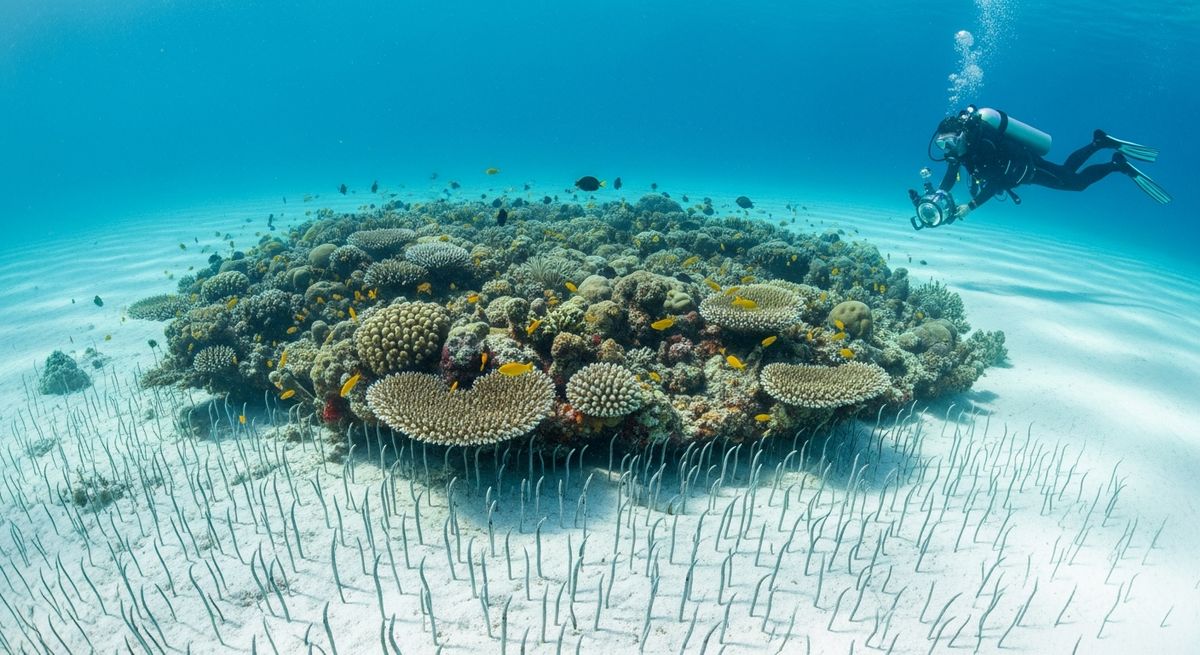
Playing Field is one of those Grand Cayman sites we keep coming back to. We love it for its simplicity and the sheer amount of time you can spend exploring without feeling like you’re doing laps. At a maximum depth of 17 metres, it’s a perfect spot for longer bottom times and really allows you to slow down and pick through the rubble, which is often more rewarding than chasing the big stuff. We’re not going to lie, it’s not a dramatic wall dive, but those three large coral heads form a brilliant figure-eight circuit, and we often find ourselves drifting between them, eyes peeled. That swim-through is a fun little squeeze, often with grunts hanging out inside. You'll definitely spot yellow stingrays camouflaged against the sandy bottom, and the amount of smaller reef fish – blennies, gobies, juvenile angelfish – always keeps things interesting. It’s a great site for photographers looking to capture macro life or newer divers building confidence. We've had some fantastic encounters here just by settling in and watching the reef's rhythm.
Nearest Dive Centres to Playing Field
Dive shops near Playing Field
Ocean Frontiers
Tortuga Divers
Silver Thatch Watersports
Divers Down
OCTOPUS
Divers Supply
Reviews for Playing Field
Conditions
Ocean conditions, forecast and tides for Playing Field
Playing Field Ocean Conditions
Monthly averages for Playing Field, sourced from Open-Meteo marine data + Copernicus Marine (EU) - nearest station: Open-Meteo marine grid (19.38, -81.32) (5km away)
October Averages
Sea Temperature
30°C
87°F · Range: 29.1–31.8°C
Current Speed
4.47 cm/s
Direction: NW (296.6°)
Chlorophyll-a
0.045 mg/m³
Very clear (oligotrophic)
Salinity
36.14 PSU
Based on 4 years of monitoring data · Data sources: Open-Meteo marine data + Copernicus Marine (EU)
Plan & book
Ways to dive Grand Cayman, from day trips to liveaboards.
Day trips & courses
via GetYourGuideGuided dives, courses and snorkel trips with instant booking.
Find dive trips in Grand CaymanPlaces to stay
via Booking.comHotels and dive resorts near Grand Cayman.
Search stays in Grand CaymanDive insurance
Most travel insurance excludes or limits scuba. Check what you need before you go.
Dive insurance explainedPartner links: we may earn a commission if you book, at no extra cost to you. How we make money
Where to Stay near Playing Field
Prices from Booking.com. We may earn a commission at no extra cost to you.