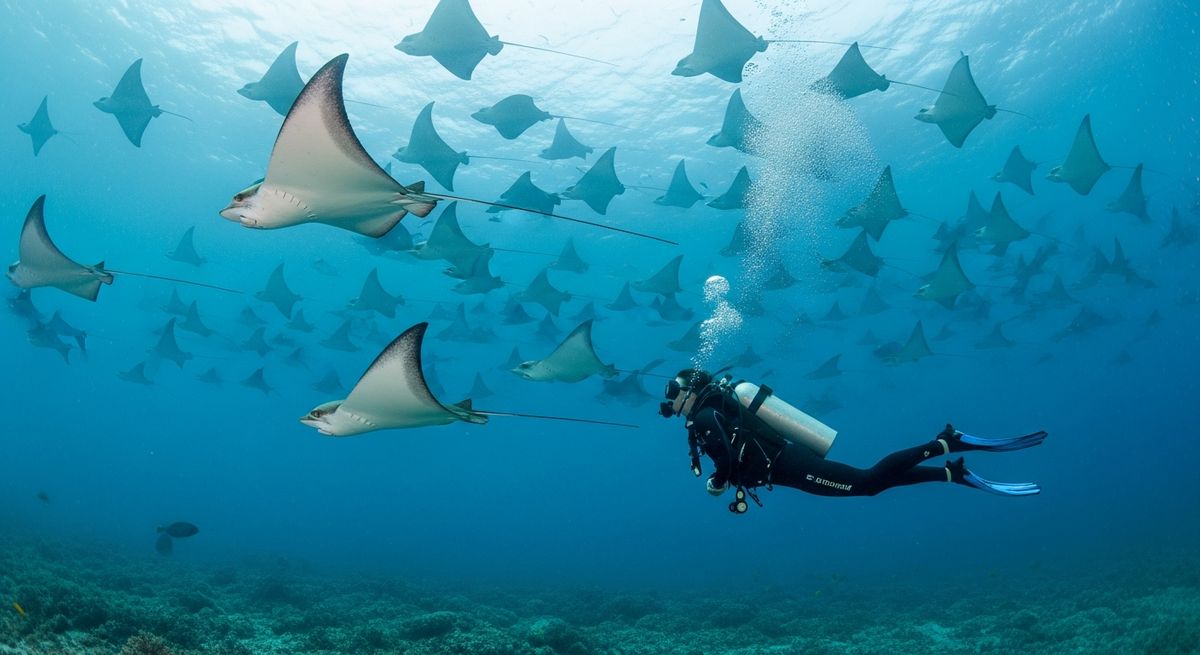
River of Sands
Protected Area
Cayman Dive Lodge (Grand Cayman)
Why dive here
With 327+ marine species recorded in the area - including barracuda, bull sharks, oceanic whitetip sharks, orcas and sea turtles - River of Sands offers some of Grand Cayman's richest drift diving. Water ranges 27-31°C, warmest August, September, October.
River of Sands is one of those sites we always recommend, especially if you’re looking for something a bit different than the usual wall dive. It’s got this incredible sandy slope that funnels down, carving what really does look like a river in the seabed, all the way to a main drop-off. We love swimming through those narrow channels, following the sand, often spotting razor fish darting back into their burrows as you pass. The topography here is the real star – a fascinating mix of sunlit sections and these darker, hidden gaps along the wall, full of overhangs and ledges. We've found everything from tiny Blackfin Blennies perched on coral to robust Boulder Brain Corals on the shallower bits. The deeper sections often hold some interesting Angelfish and Yellowtail Parrotfish. It’s a sheltered spot too, so currents are usually mellow, making it a great place to really take your time and explore those nooks and crannies. If you enjoy intricate reef architecture and hunting for smaller, more camouflaged critters, this site is a standout.
Typical River of Sands Dive Profile
Illustrative profile based on site depth and type. Actual dive profiles vary - always follow your dive computer and training.
Safety Notes
Drift dive - carry a surface marker buoy (SMB) and stay with your group. Brief the current direction before entry.
Always perform a 3-minute safety stop at 5m before surfacing.
Nearest Dive Centres to River of Sands
Dive shops near River of Sands
Ocean Frontiers
Silver Thatch Watersports
Tortuga Divers
Divers Down
OCTOPUS
Atlantis Dive Center
Reviews for River of Sands
Conditions
Ocean conditions, forecast and tides for River of Sands
River of Sands Ocean Conditions
Monthly averages for River of Sands, sourced from Open-Meteo marine data + Copernicus Marine (EU) - nearest station: Open-Meteo marine grid (19.38, -81.32) (5km away)
October Averages
Sea Temperature
30°C
87°F · Range: 29.1–31.8°C
Current Speed
4.47 cm/s
Direction: NW (296.6°)
Chlorophyll-a
0.045 mg/m³
Very clear (oligotrophic)
Salinity
36.14 PSU
Based on 4 years of monitoring data · Data sources: Open-Meteo marine data + Copernicus Marine (EU)
Plan & book
Ways to dive Grand Cayman, from day trips to liveaboards.
Day trips & courses
via GetYourGuideGuided dives, courses and snorkel trips with instant booking.
Find dive trips in Grand CaymanPlaces to stay
via Booking.comHotels and dive resorts near Grand Cayman.
Search stays in Grand CaymanDive insurance
Most travel insurance excludes or limits scuba. Check what you need before you go.
Dive insurance explainedPartner links: we may earn a commission if you book, at no extra cost to you. How we make money
Where to Stay near River of Sands
Prices from Booking.com. We may earn a commission at no extra cost to you.