ALSATIA
Protected Area
Bahia de Luperón
Why dive here
With 232+ marine species recorded in the area - including barracuda, humpback whales, orcas, sea turtles and sperm whales - ALSATIA offers some of Sosua & Puerto Plata's richest wreck diving. Water ranges 27-30°C, warmest September, October, November.
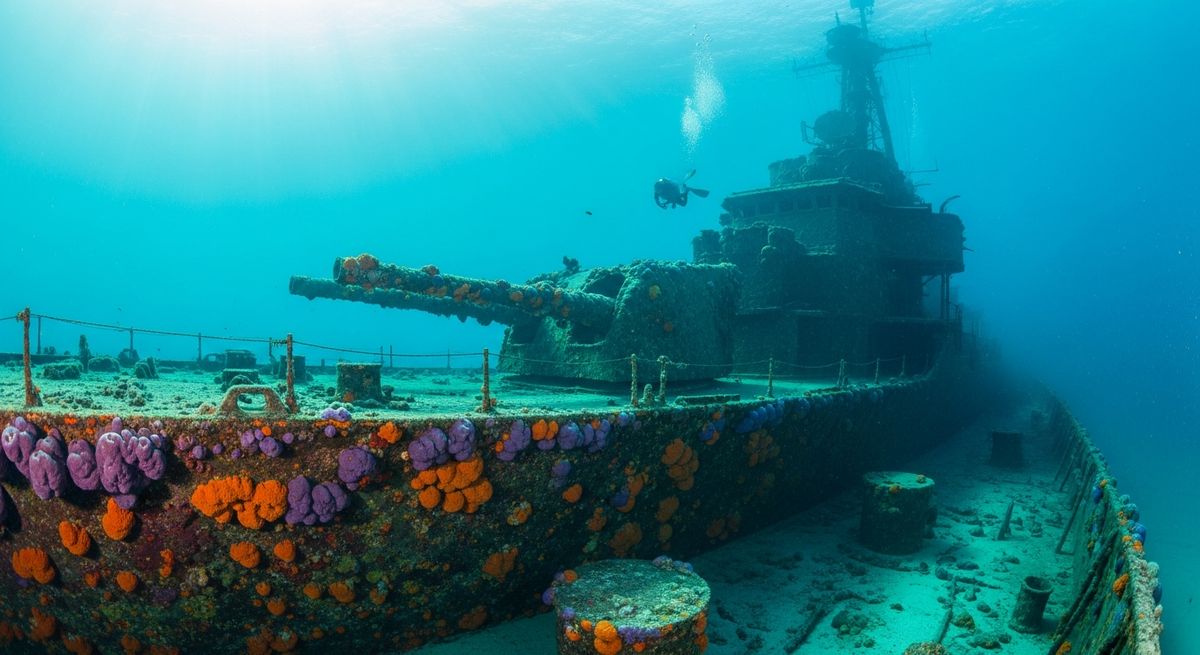
We’re going to be blunt: Alsatia isn't a typical Caribbean wreck dive. Forget deep, intact ships with massive swim-throughs. This is a shallow, scattered debris field, but don't let that put you off. What we love about Alsatia is its history, and how the ocean has slowly reclaimed it. You’re diving on the remains of a German freighter, torpedoed by a U-boat in 1942. The wreck lies in just five meters of water, totally broken up, so you’ll see scattered metal plates, twisted beams, and bits of superstructure spread across the sandy bottom. This extreme shallowness means incredible light penetration, painting everything in bright blues and greens. Look for parrotfish nibbling algae off the rusted metal, and small groups of snapper darting between the debris. We’ve often found a nurse shark or two napping under a larger piece of hull. It’s a gentle, easy dive, perfect for photographers wanting to capture light and texture, or for newer divers to experience a wreck without the depth. Our favourite time to dive it is mid-morning, when the sun is high, really illuminating the sand and attracting the smaller schooling fish. It’s a site that rewards patience and a keen eye for detail.
Typical ALSATIA Dive Profile
Illustrative profile based on site depth and type. Actual dive profiles vary - always follow your dive computer and training.
Safety Notes
Wreck site - avoid penetration without wreck diving certification. Watch for sharp metal and entanglement hazards.
ALSATIA Wreck History
Vessel Type
unknown
Cause
unknown
Resting in the shallow, sunlit waters off the Dominican Republic's north coast, the wreck known as the 'Alsatia' is an accessible and intriguing dive site. At a mere 5 meters deep, it's perfect for novice divers, snorkelers, and photographers looking to take advantage of the abundant natural light. The identity of the 'Alsatia' is shrouded in mystery, and it is almost certainly not the famous Cunard liner of a similar name, adding a layer of intrigue to the dive. Its 'Dangerous Wreck' classification likely refers to sharp, broken sections or its location, so divers should exercise caution and maintain good buoyancy control.
Today, the wreck's structure has become a thriving artificial reef. Its metallic bones are carpeted in colorful corals and sponges, attracting a vibrant array of Caribbean marine life. Schools of sergeant majors, parrotfish, and damselfish swarm the site, while moray eels and lobsters often peer out from its many crevices. The 'Alsatia' offers a fantastic opportunity to explore a piece of submerged history, regardless of its name, and witness firsthand how the ocean reclaims and repurposes man-made structures.
Nearest Dive Centres to ALSATIA
Dive shops near ALSATIA
View all dive centres in Sosua & Puerto PlataReviews for ALSATIA
Conditions
Ocean conditions, forecast and tides for ALSATIA
ALSATIA Ocean Conditions
Monthly averages for ALSATIA, sourced from Open-Meteo marine data - nearest station: Open-Meteo marine grid (19.76, -70.55) (24km away)
October Averages
Sea Temperature
30°C
86°F · Range: 27.7–31.1°C
Air Temperature
27°C
80°F
Wind Speed
4.26 m/s
8.3 knots
Atmospheric Pressure
1012.7 hPa
Based on 4 years of monitoring data · Data sources: Open-Meteo marine data
Plan & book
Ways to dive Sosua & Puerto Plata, from day trips to liveaboards.
Day trips & courses
via GetYourGuideGuided dives, courses and snorkel trips with instant booking.
Find dive trips in Sosua & Puerto PlataPlaces to stay
via Booking.comHotels and dive resorts near Sosua & Puerto Plata.
Search stays in Sosua & Puerto PlataDive insurance
Most travel insurance excludes or limits scuba. Check what you need before you go.
Dive insurance explainedPartner links: we may earn a commission if you book, at no extra cost to you. How we make money
Where to Stay near ALSATIA
Prices from Booking.com. We may earn a commission at no extra cost to you.