LE STANIOR
Protected Area
Gros Morne - Grande Anse
Why dive here
With 331+ marine species recorded in the area - including barracuda, dolphins, dwarf minke whales, humpback whales and manta rays - LE STANIOR offers some of Cousteau Reserve's richest reef diving. Water ranges 27-30°C, warmest August, September, October.
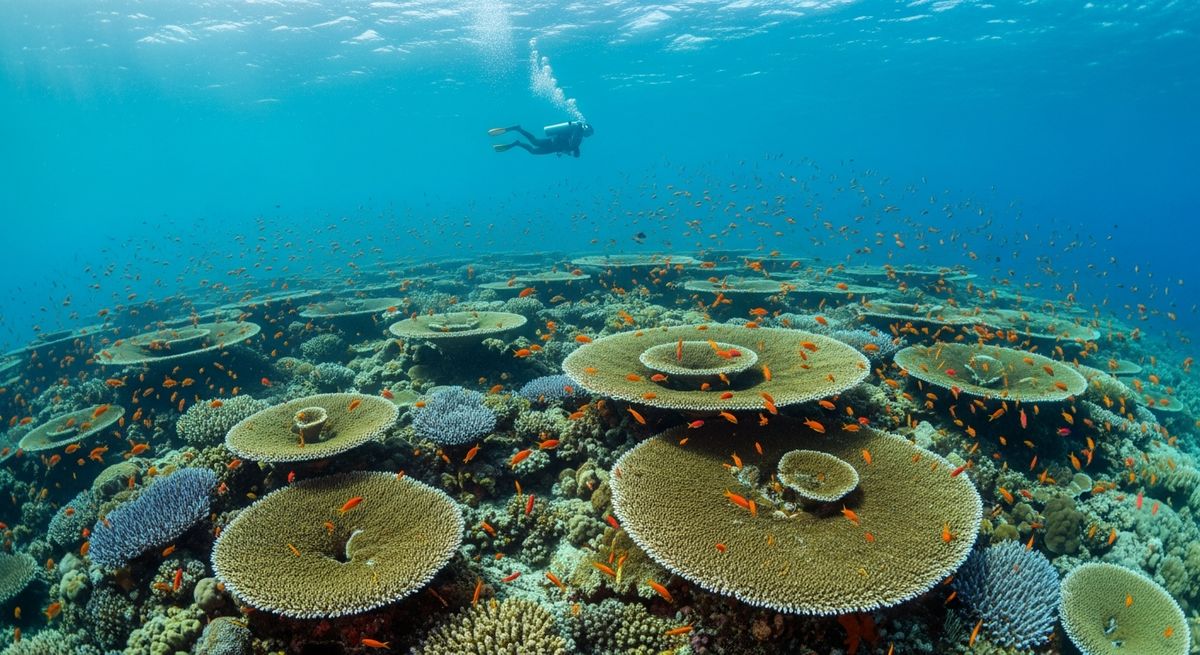
Le Stanior always feels like a proper dive, a bit of an adventure. It’s essentially two big rocky peaks that rise from around 26 metres, almost reaching 15 metres below the surface. We love navigating between them, following the contours, the water often a little cooler and darker in the channels. The highlight here for us isn't the corals, which are decent, but the sheer size of the barrel sponges and the fish life. You'll drift past barrel sponges the size of small armchairs, then suddenly be engulfed by schools of fusiliers so thick they block the light for a second. We've seen some impressive kingfish here, proper torpedoes zooming past, and the odd barracuda just hanging in the blue. Keep an eye out in the sand around the base for stingrays; they like to settle there. Visibility averages 16 metres, which is decent enough to appreciate the scale of the pinnacles. It’s a great site for divers who enjoy topography and big fish encounters, rather than macro life. Go early if you can, before the other boats arrive, and you might have the whole place to yourself.
Nearest Dive Centres to LE STANIOR
Dive shops near LE STANIOR
Piton Plongée
ANSE CARAIBE PLONGEE
PPK PLONGEE GUADELOUPE
Atlantis Plongee
ECOLE DE PLONGEE BLEU PASSION GUADELOUPE
SEACRETDIVE
Reviews for LE STANIOR
Conditions
Ocean conditions, forecast and tides for LE STANIOR
LE STANIOR Ocean Conditions
Monthly averages for LE STANIOR, sourced from Open-Meteo marine data - nearest station: Open-Meteo marine grid (16.17, -61.78) (8km away)
October Averages
Sea Temperature
30°C
86°F · Range: 29.2–31.2°C
Air Temperature
27°C
81°F
Wind Speed
3.54 m/s
6.9 knots
Atmospheric Pressure
1013.4 hPa
Based on 4 years of monitoring data · Data sources: Open-Meteo marine data
Plan & book
Ways to dive Cousteau Reserve, from day trips to liveaboards.
Day trips & courses
via GetYourGuideGuided dives, courses and snorkel trips with instant booking.
Find dive trips in Cousteau ReservePlaces to stay
via Booking.comHotels and dive resorts near Cousteau Reserve.
Search stays in Cousteau ReserveDive insurance
Most travel insurance excludes or limits scuba. Check what you need before you go.
Dive insurance explainedPartner links: we may earn a commission if you book, at no extra cost to you. How we make money
Where to Stay near LE STANIOR
Prices from Booking.com. We may earn a commission at no extra cost to you.