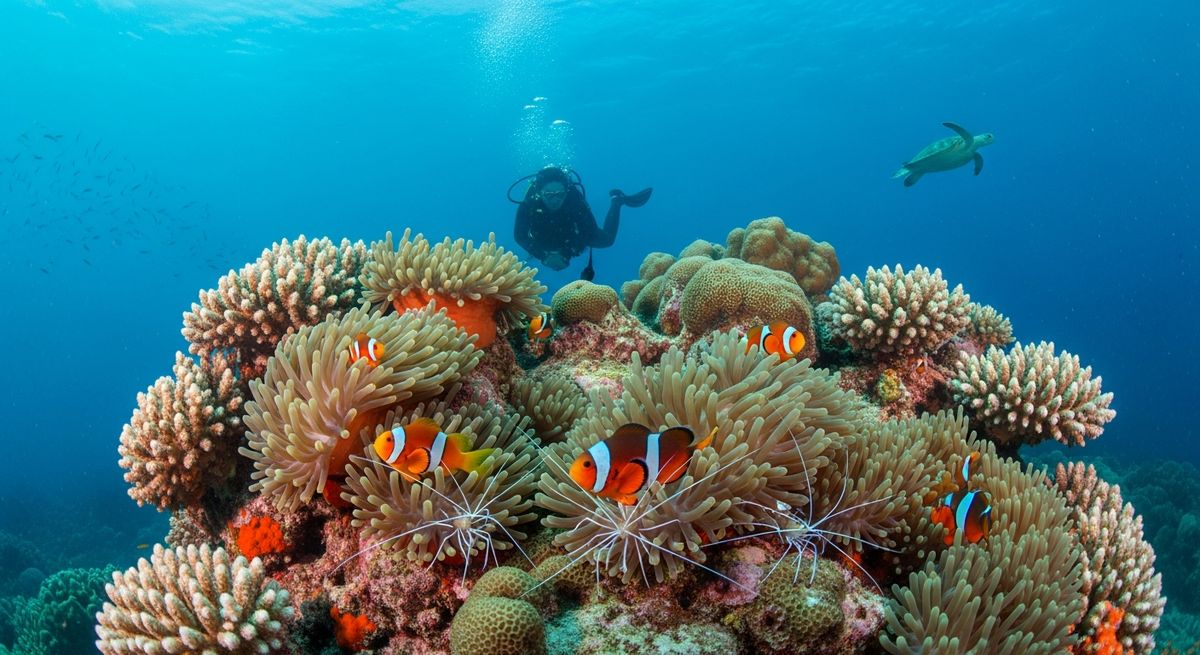
Platax
Protected Area
Grand Cul-de-Sac Marin de la Guadeloupe
Why dive here
With 331+ marine species recorded in the area - including barracuda, dolphins, dwarf minke whales, humpback whales and manta rays - Platax offers some of Cousteau Reserve's richest reef diving. Water ranges 27-30°C, warmest August, September, October.
Platax is a site that just feels different, a deep dive with a real sense of exploration. We often drop into the blue here, a slow descent with that deep Caribbean cobalt stretching out around you. The boot-shaped rock formation is your marker, leading you down to where the reef begins to unfold around 25 metres. We love how the light changes down here, a soft, filtered glow illuminating colossal barrel sponges and intricate black coral trees. You'll find generous stands of gorgonians too, swaying gently in the current, and we’ve often spotted eagle rays gliding past in the distance. The overlapping coral growth is truly impressive, a dense, layered ecosystem. For those comfortable with depth, Platax offers a quiet, profound dive experience, a place to really appreciate the scale of the Cousteau Reserve. Just remember your bottom time, because you'll want to soak in every moment.
Nearest Dive Centres to Platax
Dive shops near Platax
SEACRETDIVE
Piton Plongée
ANSE CARAIBE PLONGEE
NOA Plongée
PPK PLONGEE GUADELOUPE
Atlantis Plongee
Reviews for Platax
Conditions
Ocean conditions, forecast and tides for Platax
Platax Ocean Conditions
Monthly averages for Platax, sourced from Open-Meteo marine data - nearest station: Open-Meteo marine grid (16.17, -61.78) (8km away)
October Averages
Sea Temperature
30°C
86°F · Range: 29.2–31.2°C
Air Temperature
27°C
81°F
Wind Speed
3.54 m/s
6.9 knots
Atmospheric Pressure
1013.4 hPa
Based on 4 years of monitoring data · Data sources: Open-Meteo marine data
Plan & book
Ways to dive Cousteau Reserve, from day trips to liveaboards.
Day trips & courses
via GetYourGuideGuided dives, courses and snorkel trips with instant booking.
Find dive trips in Cousteau ReservePlaces to stay
via Booking.comHotels and dive resorts near Cousteau Reserve.
Search stays in Cousteau ReserveDive insurance
Most travel insurance excludes or limits scuba. Check what you need before you go.
Dive insurance explainedPartner links: we may earn a commission if you book, at no extra cost to you. How we make money
Where to Stay near Platax
Prices from Booking.com. We may earn a commission at no extra cost to you.