NEWFOUNDLAND COAST
Protected Area
West Caicos Marine
Why dive here
With 127+ marine species recorded in the area - including barracuda, humpback whales, sea turtles, sperm whales and pufferfish - NEWFOUNDLAND COAST offers some of Providenciales's richest wreck diving. Water ranges 26-30°C, warmest August, September, October.
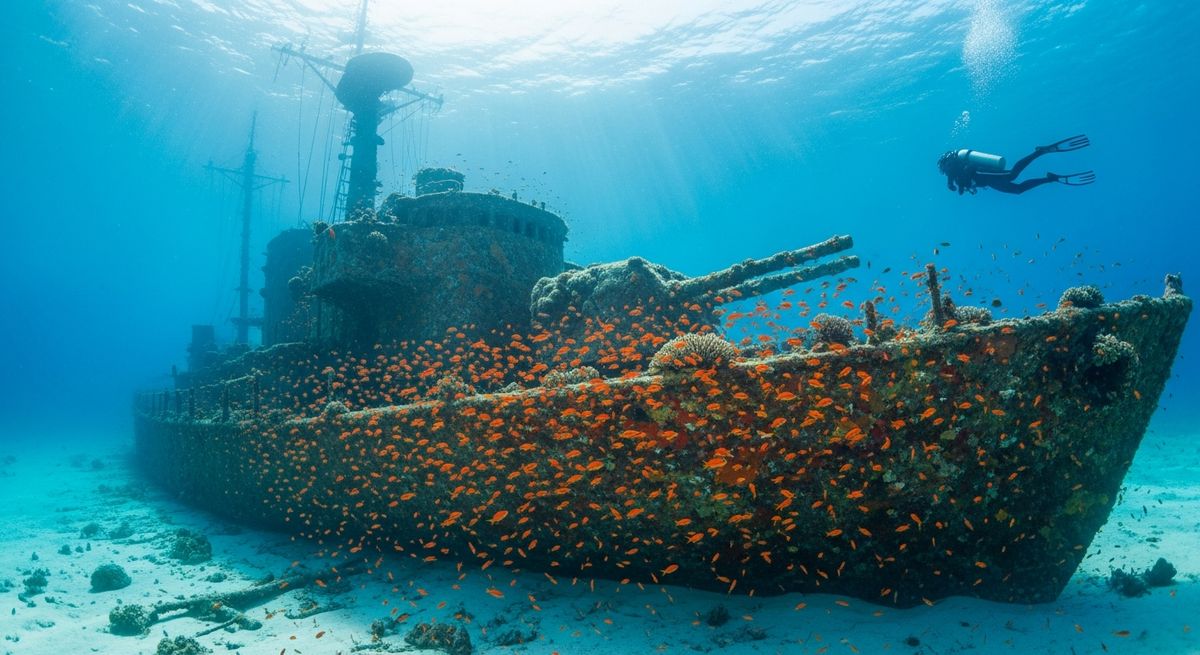
We love the Newfoundland Coast wreck for its sheer accessibility and surprising character. This isn't a deep dive, peaking at a humble two meters, but don't let the shallows fool you. The carrier vessel, built in 1934 and run aground in 1981, is now a distributed collection of metal and twisted beams, stretching out like a ghostly, deconstructed skeleton. What we really appreciate here is how the reef has completely taken over. You’ll weave through coral-encrusted plates, feeling the gentle surge push you past rusted sections now home to angelfish and parrotfish. Look closely for moray eels tucked into the darker recesses. Sunlight dances through the water, illuminating the vibrant sponges and anemones that cling to every surface. It’s a fantastic spot for a long, relaxed snorkel or a very shallow dive, perfect if you're looking to spend time exploring without worrying about depth or air consumption. It also makes for some excellent wide-angle photography, capturing the interplay of sun, structure, and shallow marine life.
Typical NEWFOUNDLAND COAST Dive Profile
Illustrative profile based on site depth and type. Actual dive profiles vary - always follow your dive computer and training.
Safety Notes
Wreck site - avoid penetration without wreck diving certification. Watch for sharp metal and entanglement hazards.
Nearest Dive Centres to NEWFOUNDLAND COAST
Dive shops near NEWFOUNDLAND COAST
View all dive centres in ProvidencialesReviews for NEWFOUNDLAND COAST
Conditions
Ocean conditions, forecast and tides for NEWFOUNDLAND COAST
NEWFOUNDLAND COAST Ocean Conditions
Monthly averages for NEWFOUNDLAND COAST, sourced from Open-Meteo marine data - nearest station: Open-Meteo marine grid (21.68, -72.47) (1km away)
October Averages
Sea Temperature
30°C
86°F · Range: 28.7–31.4°C
Air Temperature
28°C
83°F
Wind Speed
7.73 m/s
15.0 knots
Atmospheric Pressure
1013.1 hPa
Based on 4 years of monitoring data · Data sources: Open-Meteo marine data
Plan & book
Ways to dive Providenciales, from day trips to liveaboards.
Day trips & courses
via GetYourGuideGuided dives, courses and snorkel trips with instant booking.
Find dive trips in ProvidencialesPlaces to stay
via Booking.comHotels and dive resorts near Providenciales.
Search stays in ProvidencialesDive insurance
Most travel insurance excludes or limits scuba. Check what you need before you go.
Dive insurance explainedPartner links: we may earn a commission if you book, at no extra cost to you. How we make money
Where to Stay near NEWFOUNDLAND COAST
Prices from Booking.com. We may earn a commission at no extra cost to you.