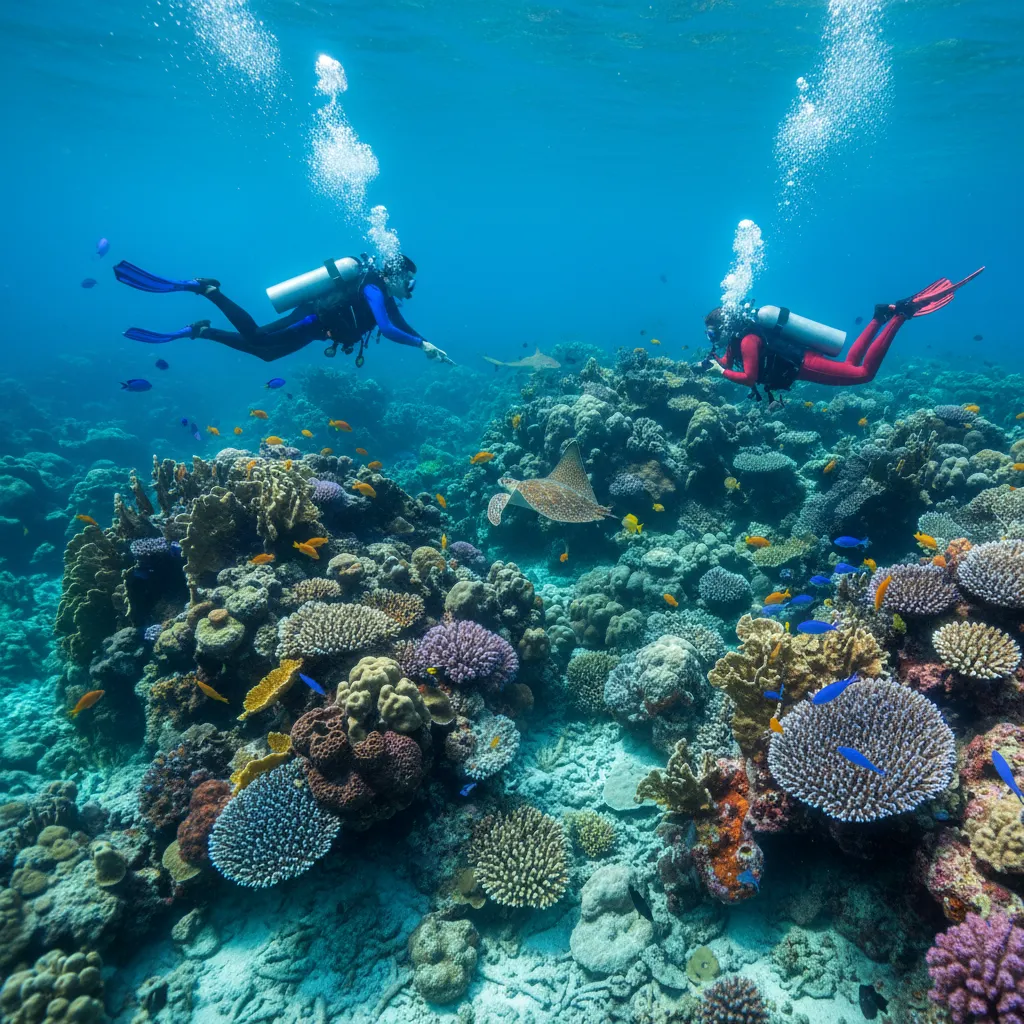
Diving in St. Thomas & St. John
Why dive here
St. Thomas & St. John offers some of US Virgin Islands's richest diving, with 476+ marine species recorded in the area - including barracuda, blacktip reef sharks, dolphins, eagle rays and humpback whales. Water sits around 27°C.
St. Thomas and St. John diving, we’ve found, often gets a casual nod, but it’s worth a deeper look. These twin islands offer a relaxed pace, and while you won’t always be chasing megafauna, the macro life and coral formations here are genuinely captivating. Dive the pinnacle reefs, and you’ll often find schools of Creole Wrasse shimmering, while the wrecks hold secrets like the curious Shortchin Stargazer, buried in the sand. We love the way the sunlight filters through the Elkhorn coral gardens, especially on a calm morning, illuminating the Olive Chromis darting in and out. For something a little different, keep an eye out for the Bearded Goby tucked away in the crevices. The Virgin Islands Coral Reef National Monument is a real highlight, providing some remarkably healthy coral stretches that sometimes feel overlooked. Our tip: go slow, bring a good macro lens, and look for the Naked Blennies, they’re everywhere once you start seeing them. Currents are generally manageable, making it an excellent spot for honing those buoyancy skills and really observing the smaller details.
St. Thomas & St. John Dive Site Map
Dive sites and dive centres in St. Thomas & St. John
St. Thomas & St. John Dive Sites
33 dive sites in St. Thomas & St. John
Buck Island Point (Submarine Alley)
Buck Island Point, affectionately known as Submarine Alley, is a pretty chill dive. At a gentle 18 meters, it’s a perfect spot for new divers or anyone just wanting an easy, relaxed bob around. We’ve drifted along here, watching schools of sergeant majors dart between the coral heads, and often spotted southern stingrays fanning themselves in the sand. It’s not going to blow your mind with massive pelagics, but for a calm Caribbean afternoon exploring the nooks and crannies for trumpetfish and grunts, it hits the spot.
Cabrita
Cabrita, just off St. Thomas, is a solid choice for a mellow Caribbean dive. At a consistent 13 meters, it’s a gentle spot, perfect for getting back into the swing of things or for those just starting out. We often see southern stingrays buried in the sand here, along with the usual cast of parrotfish and angelfish weaving through the coral patches. It’s not going to blow your mind with dramatic topography, but it’s reliably pleasant, making it a good second dive of the day when you're looking to relax and just enjoy being underwater.
Cabrita Pinnacle
Cabrita Pinnacle is a good introductory dive, especially if you’re getting your feet wet in St. Thomas. Dropping down to about 15 meters, it’s a manageable depth for those just certified or looking for a relaxed time. You'll navigate around the pinnacle, spotting plenty of the usual Caribbean suspects-parrotfish grazing, angelfish darting around, and often a few inquisitive trumpetfish. It's an easy drift with mild current usually, letting you take your time. We've always found it a solid choice for a second dive of the day, gentle and pretty without being overly demanding.
CARIDAD
The Caridad, lying in a shallow, sandy patch off St. Thomas, is one of our favourite wreck dives for when you just want to relax and explore without any depth concerns. This 30-meter motor vessel, sunk after developing a leak back in 1970, is now completely draped in soft corals and sponges. You can swim right over the top, maybe peer into the collapsed wheelhouse, or follow the line of the hull as it gently curves into the sand. What we really love about the Caridad is how approachable it is. It’s a perfect site for new divers getting comfortable with wreck exploration, or for photographers who want ample light and bottom time. Keep an eye out for the resident green morays tucked into the engine room, and we’ve often seen schools of snapper hovering just above the deck. The whole wreck has settled nicely, feeling more like a natural reef formation than a sunken ship these days.
Cartanser Sr. Wreck
The Cartanser Sr. Wreck sits right in Charlotte Amalie harbour, which means it’s an easy boat ride out. We love this site for its accessibility and how much the wreck has given back to the local ecosystem. Dropping down to about 18 metres, you’ll quickly make out the freighter, broken into two main sections. What makes it a standout for us is the way the ship has transformed. The hold is open, letting you swim through and observe schools of Brown Chromis darting in and out of the shadows. Look for the resident Broom-tail Filefish, often seen camouflaged against the rust-coloured metal, or the Yellowhead Wrasse diligently picking through the crevices. We’ve spotted Spotted Trunkfish here more than once, just hanging out near the broken superstructure. It's a fantastic spot for newer divers to get a feel for wreck penetration without any serious overhead environments. The light penetration is excellent, illuminating the entire wreck and the fish life around it.
CHARMAINE (?CHARMAINE II)
The Charmaine II wreck is a solid choice for a St. Thomas dive, especially if you’re into poking around an intact, smaller vessel. We often find ourselves drifting over her, usually after hitting a reef nearby, and it’s always a pleasant surprise. She sits upright, about 35 metres down, a 33-metre motor vessel sunk deliberately back in '91. You can still make out the superstructure pretty well, and the open wheelhouse is a favourite spot for us to peek into. What we really appreciate about the Charmaine II is how marine life has just taken over. Big schools of grunts and snappers hang around the deck, practically swimming into you if you’re gentle. Keep an eye out for morays tucked into crevices – we’ve seen some hefty green morays peering out from the deeper sections. For photographers, the way the light filters through the upper deck on a sunny day creates some really nice effects. It’s a comfortable dive for advanced open water divers, offering a good balance of wreck exploration without being overly challenging.
Christmas Cove
Christmas Cove, tucked between St. Thomas and St. John, is a solid choice for a mellow Caribbean dive. At a gentle 10 meters, it's ideal for those just getting comfortable in the water or snorkelers looking for a bit more. We often spot green sea turtles here, grazing casually on the seagrass, sometimes even a nurse shark napping under a ledge if you look closely. The coral patches aren't huge, but they’re home to plenty of wrasse, parrotfish, and small schooling fish that flutter around the brain and star corals. It’s a low-key, easygoing spot, perfect for a relaxed afternoon.
Coki Point Beach
Coki Point Beach is an easy shore dive, perfect if you’re looking to get wet without much fuss. The reef is really a series of scattered coral heads, so it’s not a dramatic wall dive, but you’ll find plenty of small stuff poking around. We’ve seen juvenile drum fish tucked into crevices and parrotfish grazing on the corals. It’s a great spot for beginners getting comfortable with buoyancy, and because it’s so shallow, you can spend a good amount of time exploring. Just be mindful of boat traffic if you venture far from the immediate beach area.
Cow and Calf Rocks
Cow and Calf Rocks, just off St. Thomas, is one of our favourite spots for a reason. It’s a series of substantial rock pinnacles, a genuine topographical standout. We like to drop in at the Calf, the smaller of the two, and let the current nudge us along towards the Cow. It’s often a drift, which we enjoy. The current, usually mild but sometimes frisky, brings in the bigger stuff. You’ll weave through rock formations, ducking into crevices and overhangs. Keep an eye out for frogfish; they’re masters of disguise here, tucked into sponges. Onestripe eels poke their heads from the sand. We’ve seen cero darting past in tight formations, and the occasional lemon shark cruising the perimeter. The coral isn’t as extensive as some other sites, but the sheer size of the rock structures, draped in scattered pore rope sponges and some impressive grooved brain coral, makes up for it. This site is definitely one for divers who appreciate dramatic underwater landscapes and the chance to see larger schooling fish.
Cow Rock
Cow Rock is one of those easy-going Caribbean dives that just hits the spot on a sunny afternoon. The site is shallow, bottoming out around 14 meters, making it a comfortable spot for newer divers to get their fins wet. You’ll find a rocky reef structure here, creating plenty of nooks and crannies for trumpetfish and juvenile snapper to hide. Keep an eye out for queen angelfish gliding past the coral patches; we’ve often seen them here. It’s a relaxed drift, perfect for warming up or winding down a dive day.
DAISY
We've spent a few hours on the Daisy, and it’s a pretty solid wreck dive off St. Thomas. This old motor vessel, about 36 meters long, ran aground years ago and now rests upright at 23 meters. What we really like about the Daisy is how much of the original structure remains – you can still make out the bow and stern, and even some of the cargo holds. Schools of grunts and snapper hang out in the shadowy interiors, and we’ve seen barracuda lurking around the mast. It’s an easy dive for anyone comfortable with a bit of depth, and a good spot if you’re keen on exploring a proper ship rather than just scattered debris.
DIFFERENT DRUMMER
Different Drummer, a 10.4-meter powerboat, sits upright and broken in just two meters of water, and that's exactly why we love it. Forget deep dives and complex navigation; this is pure, unadulterated wreck exploration for snorkelers and freedivers, and it’s a surprisingly engaging twenty minutes. We often pull up here as a second stop, especially if the wind’s blowing from the east, as it’s tucked nicely out of the chop. The wreck itself is a jumble of twisted metal and wooden planks, now completely encrusted with sponges and soft corals. Light shafts through the shallow water, illuminating schools of tiny juvenile fish darting amongst the debris. Look closely into the shadowy spaces, and you’ll spot moray eels peeking out, sometimes even a nurse shark napping underneath the keel. Our favourite part? The rudder and propeller, still mostly intact and now home to a resident barracuda. It’s not about big pelagics here, it’s about the intricate details of a boat reclaimed by the sea. A perfect spot for underwater photography, especially with a wide-angle lens, and fantastic for anyone wanting a taste of wreck diving without the tanks.
Show all 33 dive sites in St. Thomas & St. John
- Dog Island
- Flag Pole Little St James
- French Cap Pinnacle
- General Rogers (Wreck)
- GRAINTON
- I-MAY
- Ledges of Little St. James
- Lime Tree Beach
- MEIN KAPITAN
- miss oportunity
- Navy Barges
- Packet Rock (Wreck)
- Secret Harbor - North
- Secret Harbor - South
- Shark Bowl
- Stragglers Deep
- Sunken Sailboat
- Tugboat
- Turtle Cove
- WITSERVICE IV
- Wye Reef
St. Thomas & St. John Dive Centres
8 dive shops and operators in St. Thomas & St. John
Ocean Wildlife in St. Thomas & St. John
476 species recorded in St. Thomas & St. John
St. Thomas & St. John Daylight & Sunrise/Sunset
Sunrise and sunset times for St. Thomas & St. John, calculated from coordinates
Today - Sunday 11 October
Sunrise
06:13
Sunset
18:02
Daylight
11h 49m
Golden Hour
17:33
First light (dawn) at 05:51 · Last light (dusk) at 18:24
Monthly Averages
| Month | Sunrise | Sunset | Daylight |
|---|---|---|---|
| Jan | 06:55 | 18:03 | 11h 8m |
| Feb | 06:49 | 18:21 | 11h 32m |
| Mar | 06:30 | 18:30 | 12h 0m |
| Apr | 06:04 | 18:37 | 12h 32m |
| May | 05:47 | 18:46 | 12h 59m |
| JunLongest | 05:44 | 18:57 | 13h 13m |
| Jul | 05:52 | 19:00 | 13h 8m |
| Aug | 06:02 | 18:48 | 12h 46m |
| Sep | 06:08 | 18:24 | 12h 16m |
| OctNow | 06:14 | 17:59 | 11h 45m |
| Nov | 06:26 | 17:44 | 11h 17m |
| DecShortest | 06:44 | 17:46 | 11h 2m |
Times are approximate local times based on longitude. Actual times may vary slightly depending on the exact timezone observed in St. Thomas & St. John.
Where to Stay near St. Thomas & St. John
Prices from Booking.com. We may earn a commission at no extra cost to you.
Marine Protected Areas near St. Thomas & St. John
30 protected areas near St. Thomas & St. John - please respect local regulations when diving
St. Croix East End Marine Park
Buck Island Reef National Monument
Virgin Islands Coral Reef National Monument
Virgin Islands Coral Reef
Virgin Islands National Park
Virgin Islands
St. Thomas East End R Reserve
St. James Marine Reserve and Wildlife Sanctuary
Buck Island Reef
Salt River Bay National Historic Park and Ecological Preserve
Cas Cay-Mangrove Lagoon Marine Reserve & Wildlife Sanctuary
Whistling Cay
Showing 12 largest of 30
Getting to St. Thomas & St. John
Charlotte Amalie
Beef Island
San Juan
Plan & book
Ways to dive St. Thomas & St. John, from day trips to liveaboards.
Day trips & courses
via GetYourGuideGuided dives, courses and snorkel trips with instant booking.
Find dive trips in St. Thomas & St. JohnPlaces to stay
via Booking.comHotels and dive resorts near St. Thomas & St. John.
Search stays in St. Thomas & St. JohnDive insurance
Most travel insurance excludes or limits scuba. Check what you need before you go.
Dive insurance explainedPartner links: we may earn a commission if you book, at no extra cost to you. How we make money