SAVFUEL - Lighthouse Reef

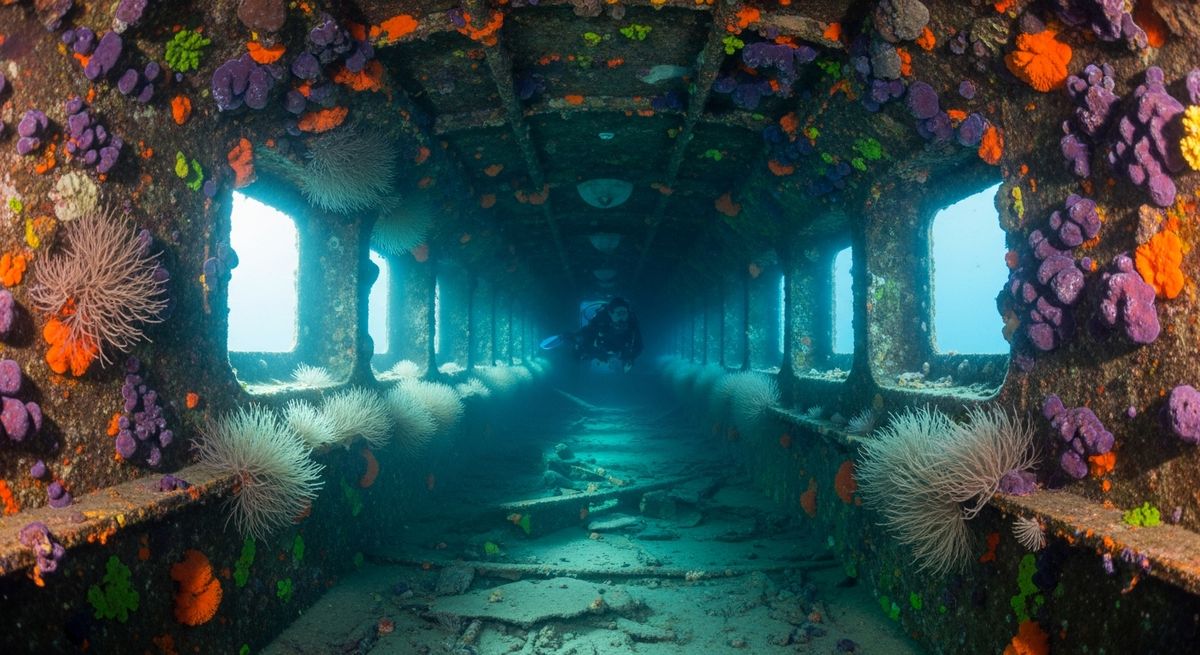
The SAVFUEL wreck sits in remarkably shallow water, a tanker that came to grief on Lighthouse Reef back in '74. You'll find it north of Half-Moon Caye, its hull and superstructure still visible above the surface, which is a nice marker. Diving it, you're looking at a mostly broken-up wreck, but the shallow depth means long bottom times and plenty of light to explore the remains. We've seen schools of snapper hovering in the shadows, and the coral growth, while not ancient, is really getting a grip on the metalwork. It’s a good spot for newer wreck divers or photographers who appreciate the interplay of sunlight and rusted steel.

Location
Lighthouse Reef, Belize, Central America
Coordinates
17.286667, -87.520836
Type
wreck
Maximum Depth
0m

Marine Protected Area: Blue Hole

Best Time to Dive in Lighthouse Reef

The warmest water temperatures in Lighthouse Reef occur in September, averaging 30.0°C. The coolest conditions are in February at 27.1°C.

Monthly Water Temperatures

  • January: 27.2°C
  • February: 27.1°C
  • March: 27.2°C
  • April: 27.8°C
  • May: 28.6°C
  • June: 29.2°C
  • July: 29.3°C
  • August: 29.7°C
  • September: 30.0°C
  • October: 29.9°C
  • November: 28.9°C
  • December: 28.0°C

Nearby Dive Sites in Lighthouse Reef

Nearest Dive Centres to SAVFUEL

Marine Life in Lighthouse Reef

Home to 216 recorded species including 175 reef fish, 20 hard corals, 9 other, 6 sharks & rays, 2 jellyfish, 2 sea urchins.

Notable Species

Recommended Packing List for SAVFUEL

Based on average water temperature of 28.6°C, currents 22 cm/s.

  • Shorty or Rashguard - warm 29°C water needs minimal exposure protection
  • Mask - essential for every dive
  • Fins
  • BCD - buoyancy compensator
  • Regulator - your most safety-critical piece of gear
  • Dive Computer - tracks depth, time, and NDL
  • Surface Marker Buoy (SMB) - essential for boat pickups
  • Dive Torch - useful for crevices and colour at depth
  • Underwater Camera - capture your diving memories

Frequently Asked Questions

What is the typical depth range for diving at the SAVFUEL dive site?
The SAVFUEL dive site is unique as it is classified with a depth of 0m, indicating that portions of the wreck are at or very near the surface. This makes it an accessible site for divers to explore the remains of the tanker vessel. Divers can expect to explore the wreck at very shallow depths, observing the hull and superstructure.
What kind of marine life and underwater features can divers expect to see at SAVFUEL?
Divers at SAVFUEL will primarily explore the fascinating underwater features of a historical wreck. This site is the remains of a 55.2m x 9.1m tanker vessel, built in 1944 and sunk in 1974. While specific marine life is not detailed, wrecks typically attract various reef fish and corals over time, making it a potential habitat for diverse aquatic species. To learn more about common marine life in the region, visit our wildlife database.
How challenging is the SAVFUEL dive site, and is it suitable for all experience levels?
The SAVFUEL dive site is classified as having an intermediate difficulty level. This suggests it is suitable for certified divers with some prior experience, rather than absolute beginners. While its 0m depth makes it very shallow, the nature of a wreck dive often requires specific skills for safe exploration.
What is the best time of year to dive SAVFUEL for optimal conditions and visibility?
The provided data for the SAVFUEL dive site does not specify the best time of year for optimal conditions or visibility. For general information on diving seasons in Belize and the Lighthouse Reef area, please refer to our When to Dive section.
Are there any specific diving certifications or experience levels required to dive SAVFUEL?
Given that the SAVFUEL dive site is rated with an intermediate difficulty, it is recommended for divers who have completed basic certification and possess some diving experience. While specific certifications like wreck diving are not explicitly stated as required, they would certainly enhance your experience and safety. Always ensure you are comfortable with the conditions and your skill level before attempting any dive.
What are the usual current strengths and water conditions encountered at the SAVFUEL dive site?
The available data for the SAVFUEL dive site does not provide specific details regarding usual current strengths or water conditions. Divers planning to visit this site should consult local dive operators for the most up-to-date information on prevailing conditions. Understanding local conditions is crucial for a safe and enjoyable dive experience.