Silver Caves
Protected Area
Halfmoon Caye
Why dive here
With 213+ marine species recorded in the area - including barracuda, dolphins, eagle rays, nurse sharks and sea turtles - Silver Caves offers some of Lighthouse Reef's richest diving. Water ranges 27-30°C, warmest August, September, October.
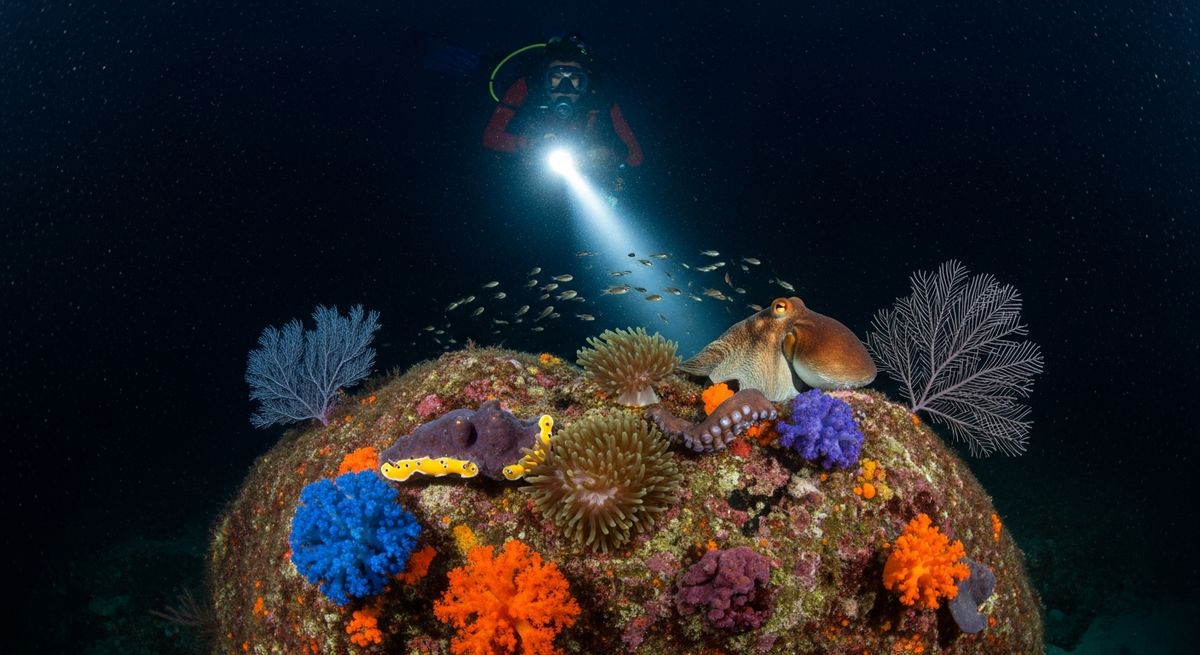
Dropping onto Silver Caves, we’re immediately struck by the sheer volume of silversides – so thick in the overhangs they truly shimmer. It's a wall dive, shallow at 20-30 feet, with a mooring that puts you right on top of the action. Along the wall, you’ll find impressive tube, barrel, and rope sponges in vivid colours, plus plenty of branching gorgonians waving in the gentle current. Keep an eye out for tarpon, barracuda, jacks, and chub cruising the deeper sections. At night, it becomes a different world, perfect for spotting sleeping fish, lobsters, crabs, and shrimp tucked into the crevices.
Typical Silver Caves Dive Profile
Illustrative profile based on site depth and type. Actual dive profiles vary - always follow your dive computer and training.
Safety Notes
Depth of 20m - Advanced Open Water certification recommended.
Always perform a 3-minute safety stop at 5m before surfacing.
Nearest Dive Centres to Silver Caves
Dive shops near Silver Caves
View all dive centres in Lighthouse ReefReviews for Silver Caves
Conditions
Ocean conditions, forecast and tides for Silver Caves
Silver Caves Ocean Conditions
Monthly averages for Silver Caves, sourced from Open-Meteo marine data + Copernicus Marine (EU) - nearest station: Open-Meteo marine grid (17.22, -87.61) (6km away)
October Averages
Sea Temperature
30°C
86°F · Range: 29.1–31.7°C
Current Speed
11.66 cm/s
Direction: NW (301°)
Chlorophyll-a
0.074 mg/m³
Very clear (oligotrophic)
Salinity
35.96 PSU
Based on 4 years of monitoring data · Data sources: Open-Meteo marine data + Copernicus Marine (EU)
Plan & book
Ways to dive Lighthouse Reef, from day trips to liveaboards.
Day trips & courses
via GetYourGuideGuided dives, courses and snorkel trips with instant booking.
Find dive trips in Lighthouse ReefPlaces to stay
via Booking.comHotels and dive resorts near Lighthouse Reef.
Search stays in Lighthouse ReefDive insurance
Most travel insurance excludes or limits scuba. Check what you need before you go.
Dive insurance explainedPartner links: we may earn a commission if you book, at no extra cost to you. How we make money
Where to Stay near Silver Caves
Prices from Booking.com. We may earn a commission at no extra cost to you.