Northern Bogue - Turneffe Atoll

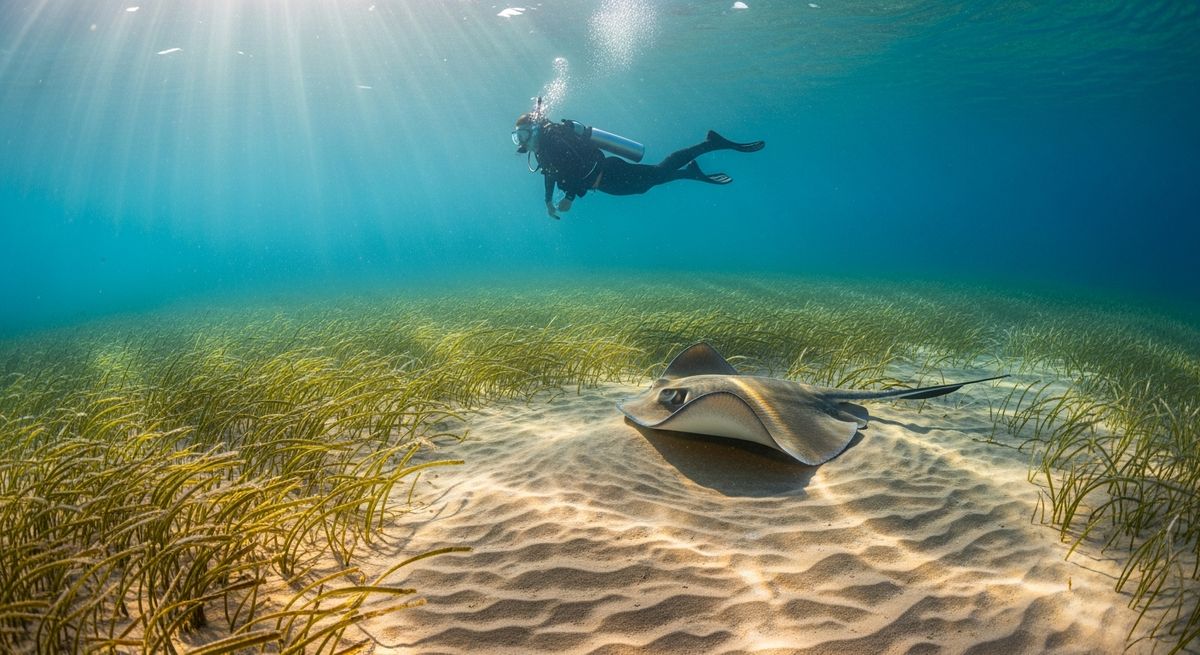
The sites around Northern Bogue on Turneffe Atoll’s eastern edge are a bit of a commitment. You’re at the mercy of the prevailing trade winds here, so calm days are key if you want to explore these reefs. When conditions allow, though, you’ll find yourself dropping onto sand flats scattered with coral heads, often around 35 meters deep. Keep an eye out for larger pelagics moving through, as well as the usual reef fish tucked into the corals. It’s a good spot for divers who appreciate a quieter site and don’t mind a bit of a wait for the right weather window.

Location
Turneffe Atoll, Belize, Central America
Coordinates
17.500000, -87.880000

Marine Protected Area: Dog Flea Caye, Turneffe Atolls

Best Time to Dive in Turneffe Atoll

The warmest water temperatures in Turneffe Atoll occur in January, averaging 27.4°C. The coolest conditions are in December at 27.4°C.

Monthly Water Temperatures

  • January: 27.4°C (air: 25.8°C)
  • February: 27.4°C (air: 25.7°C)
  • March: 27.4°C (air: 26.5°C)
  • April: 27.4°C (air: 27.3°C)
  • May: 27.4°C (air: 28.1°C)
  • June: 27.4°C (air: 28.4°C)
  • July: 27.4°C (air: 28.4°C)
  • August: 27.4°C (air: 28.4°C)
  • September: 27.4°C (air: 28.4°C)
  • October: 27.4°C (air: 27.9°C)
  • November: 27.4°C (air: 26.7°C)
  • December: 27.4°C (air: 26.0°C)

Nearby Dive Sites in Turneffe Atoll

Nearest Dive Centres to Northern Bogue

Marine Life in Turneffe Atoll

Home to 383 recorded species including 318 reef fish, 27 hard corals, 14 sharks & rays, 6 whales & dolphins, 5 other, 2 jellyfish.

Notable Species

Recommended Packing List for Northern Bogue

Based on average water temperature of 27.4°C.

  • Shorty or Rashguard - warm 27°C water needs minimal exposure protection
  • Mask - essential for every dive
  • Fins
  • BCD - buoyancy compensator
  • Regulator - your most safety-critical piece of gear
  • Dive Computer - tracks depth, time, and NDL
  • Surface Marker Buoy (SMB) - essential for boat pickups
  • Dive Torch - useful for crevices and colour at depth
  • Underwater Camera - capture your diving memories

Frequently Asked Questions

What are the typical depths encountered when scuba diving in Northern Bogue?
While the typical depths for Northern Bogue generally are not specified, at sites like Pelican Caye, divers can expect to descend into approximately 120 ft (35m) of water. The sea floor here is sandy with scattered patches of coral. For more information on diving in Turneffe Atoll, visit our sub-region guide.
What kind of marine life and underwater scenery can divers expect to find in Northern Bogue?
Divers exploring sites within Northern Bogue, such as Pelican Caye, can expect to encounter a sandy sea floor adorned with scattered patches of coral. While specific marine life details are not provided for this area, the presence of coral suggests a potential for various reef-associated species. For general information on marine life, you can visit our wildlife database.
How would you rate the difficulty of diving in Northern Bogue, especially concerning currents?
Diving in Northern Bogue is rated as intermediate difficulty. This area is exposed to predominant trade winds, which can cause significant surface swells, making calm conditions essential for diving. Divers should be prepared for potentially challenging surface conditions and plan their dives when there is still air and calm seas.
What is considered the best time of year to go scuba diving in Northern Bogue for good visibility and calm conditions?
The provided information does not specify a best time of year for diving in Northern Bogue. However, due to its exposure to predominant trade winds that cause surface swells, divers should seek periods of still air and calm seas for optimal conditions. For general guidance on seasonal diving conditions, please consult our When to Dive guide.
What scuba diving certifications are typically required or recommended for diving in Northern Bogue?
Given that Northern Bogue is rated as an intermediate difficulty dive site, it is generally recommended that divers hold at least an Advanced Open Water certification or equivalent experience. This level of certification typically prepares divers for varied conditions and depths that might be encountered. While specific requirements are not detailed, proficiency in navigation and buoyancy control would be beneficial.
What are the usual water conditions and currents that divers should be aware of in Northern Bogue?
Divers planning to visit Northern Bogue should be aware that the area is exposed to predominant trade winds, which frequently cause surface swells. Consequently, still air and calm seas are crucial for a safe and enjoyable dive experience here. While specific current information is not detailed, the challenging surface conditions indicate that divers should be prepared for dynamic environments.