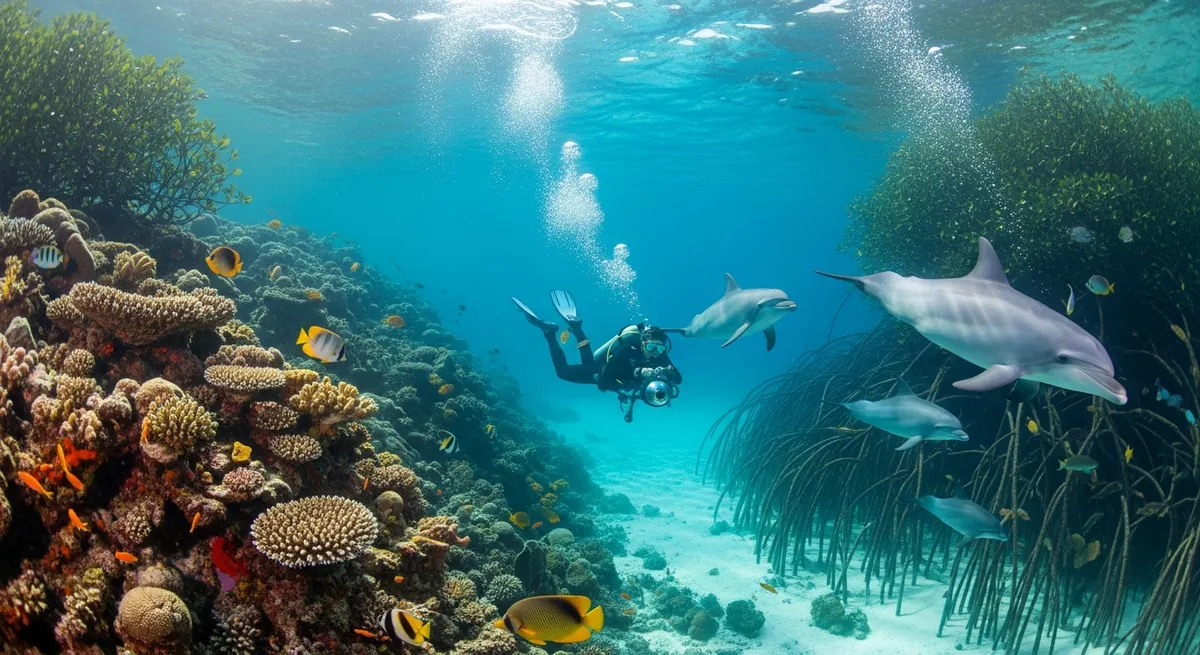
Diving in Turneffe Atoll
Why dive here
Turneffe Atoll offers some of Belize's richest diving, with 378+ marine species recorded in the area - including barracuda, bull sharks, dolphins, eagle rays and hammerhead sharks. Water ranges 27-30°C, warmest August, September, October.
Turneffe Atoll, the largest true atoll in Belize, offers a different flavour of Caribbean diving. Forget the crowds you might find closer to the mainland; here, it’s a quieter scene. We love the sheer scale of the place, the way the walls drop off into the deep blue, often dotted with massive barrel sponges you could almost climb inside. Our favourite dives often involve drifting along those walls, keeping an eye out for patrolling blacktip sharks and the occasional hawksbill turtle munching on a sponge. The coral here, particularly the ridged cactus coral, forms intricate structures, creating perfect hideouts for stippled clingfish and tobacco basslets. The mangrove channels are a real bonus, especially for photographers, offering chances to spot manatees or even a pod of dolphins cruising by. We’d suggest focusing on those early morning dives; that’s when the reef feels most alive, before any boat traffic picks up. Visibility averages around 20-30 metres on a good day, but it can get choppy on the eastern side if the wind picks up.
Turneffe Atoll Dive Site Map
Dive sites and dive centres in Turneffe Atoll
Turneffe Atoll Dive Sites
24 dive sites in Turneffe Atoll
126
The 126 site at Turneffe Atoll is a solid option if you’re looking for a shallow wreck dive. It’s a barge, sitting upright in about two metres of water, so it’s completely accessible to anyone, even snorkelers. We’ve found a surprising amount of small stuff tucked into its nooks and crannies over the years: juvenile drum fish, tiny blennies peering out from the rust, and often a grumpy parrotfish or two nibbling on the algae. It’s a nice, easy dive, perfect for photographers wanting to practice their shallow water skills, or just for a relaxed afternoon exploring a bit of history.
65
Dive Site 65 out at Turneffe Atoll gives you a peek at a sunken barge. It’s pretty shallow, only dipping to a meter, so it’s more of a snorkel or free-dive than a tank dive, but still worth checking out if you’re in the area. The barge itself isn't huge, but it's completely colonised by small reef fish – parrotfish pick at the growth and we've seen juvenile snapper darting in and out of the hull. It’s a nice calm spot, good for an easy dip, especially if you want to stretch your bottom time without the current or depth.
Belize Barrier Reef
Turneffe Atoll, a true standout, is where we often recommend divers start their Belize journey. Our favourite spot here has to be the Barrier Reef dives. We’re talking about a dramatic wall that just drops away, often in gin-clear water, giving you that sensation of flying. You can spend an entire dive just tracking along the edge, watching angelfish and yellowtail parrotfish drift in and out of the maze coral formations. Keep an eye out for bluestriped grunts huddling under ledges and those shy eyed flounders blending into the sand. We love the diversity here, from the delicate thin leaf lettuce coral to the robust elkhorn, creating homes for everything from tiny spotfin dragonets to the occasional cruising snapper. The currents are generally mild enough for relaxed exploration, making it a great pick for newer wall divers looking to gain confidence. For those with more experience, deeper sections often reveal bigger pelagics. Early morning dives are usually best, before any boat traffic stirs things up.
Black Beauty
Black Beauty offers a typical Turneffe Atoll experience, with spur and groove formations dropping to a sandy bottom. You'll often spot green moray eels tucked into crevices, along with schools of snapper and the occasional reef shark cruising the wall. It’s a good choice for divers who appreciate consistent reef profiles and a reliable chance of seeing larger pelagics.
Caye Chapel Reef
Caye Chapel Reef, just south of Caye Caulker, starts a bit silty in the shallows. We’ve found it can get misty at 30 feet, possibly from some of the nearby construction, with scattered coral heads and gorgonians. Push a little deeper though, and it shifts dramatically. The spur-and-groove formations really develop, big coral buttresses separated by wide sand chutes, and the visibility tends to clear up nicely. The spurs eventually give way to a mini-wall at 70 feet, dropping down to sand flats around 100-120 feet. That deeper sand is where we’ve often spotted large roughtail stingrays, just chilling. Along the reef wall and in those canyons, keep an eye out for lobsters and channel clinging crabs. We also like this site for its smaller stuff, the flamingo tongues on the gorgonians, slender filefish, and those tiny secretary and arrow blennies nestled in the purple sea fans. It’s a good choice if you appreciate a dive that rewards heading a bit deeper, and enjoy a mix of macro life alongside the chance for some bigger sandy bottom dwellers.
Crawl Cay
Crawl Cay at Turneffe Atoll gives you a classic Belize wall dive. The reef drops away, revealing plenty of schooling fish and often a resident turtle or two cruising the deeper sections. It’s a pretty straightforward dive, good for knocking off some bottom time without too much fuss. We'd suggest it if you're looking for a relaxed exploration of the Atoll's outer reef.
Crickozeen Cut
Crickozeen Cut gives you a drift dive feeling without the crazy current. It's a nice easy shot along a coral wall, often with trumpet fish hanging out perfectly still amongst the sea fans, trying their best to disappear. We’ve seen damselfish and parrotfish everywhere here, doing their essential work keeping the reef tidy. Keep an eye under the ledges for spiny lobsters. If you hit this spot during a summer full moon, you might get lucky and catch Creole wrasse aggregating to spawn – a truly impressive sight. It’s a solid, enjoyable dive for anyone who likes a relaxed pace and plenty to observe.
Elbow
The Elbow at Turneffe Atoll often delivers a thrilling drift dive, perfect for divers who enjoy a bit of current. We usually spot schools of horse-eye jacks and permit here, frequently visited by resident reef sharks. Visibility can be excellent, though the currents require good buoyancy control. It's a site we’d recommend for experienced divers comfortable with stronger flows.
Gallows Point Reef
Gallows Point Reef often gets overshadowed by some of Turneffe’s deeper walls, but we think that’s a mistake. This is a proper coral kingdom, shallower than most of its neighbours and perfect for long bottom times. The sheer density of reef fish here is what catches your eye first. We’ve drifted through schools of French grunts so thick they shimmered like a silver curtain, and then watched as curious spotted goatfish nudged their way past us, sifting the sand. Keep an eye out for the unusual residents. We’ve spotted pygmy filefish camouflaged perfectly in the gorgonians and even a broadnose worm eel peeking from its sandy hideout. It’s a great spot for macro enthusiasts, but equally rewarding if you just want to soak in the bustling reef ecosystem. The reef here just hums with activity, making it one of our favourite, laid-back afternoon dives.
Gallows Point Reef
Gallows Point Reef isn't always the first site people talk about in Turneffe, but it’s a real favourite of ours for a reason. You often drop onto a sandy patch around 15 metres, then drift west along a spur-and-groove system that's a classic Belizean setup. What we really love here is the sheer density of the smaller reef fish. Schools of French grunts and porkfish hang so thick in the grooves, they form shimmering walls of silver and yellow that part just enough for you to swim through. Keep an eye out for the concentric nut clams, their iridescent blue mantles flashing from the coral crevices. We’ve also seen some impressive great barracudas here, often just hanging motionless, watching the world go by. The coral itself, with its yellow pencil corals and thin leaf lettuce corals, feels healthy and alive. It's a relaxed drift, generally with a gentle current, making it a good choice for newer divers or anyone wanting a less strenuous dive. It’s perfect for just soaking in the vibrant reef ecosystem, especially if you appreciate the little things as much as the big pelagics.
HMS TRIUMVIRATE
The HMS Triumvirate isn't your typical Belize dive. Forget deep, intact wrecks – this is history scattered shallow, a testament to a brutal 1787 hurricane. We love it because it’s a living museum, less about penetration and more about discovery. At a mere 1m depth, it’s a snorkel or shallow dive paradise, perfect for those days when you want to truly slow down and examine the details. What you'll find here are the distributed remains of an English sailing vessel, timbers and ballast stones lying across a sandy bottom. The wreck isn't dramatic in height, but the sheer spread of it is impressive, and our favourite part is seeing how the reef has begun to reclaim these remnants. Look closely: you’ll spot tiny blennies peering from crevices in encrusted wood, and schools of juvenile fish darting amongst the ballast. It's a site that suits anyone interested in maritime history or those who appreciate the subtle beauty of a reef slowly incorporating human artifacts. Come prepared to spend time hovering, observing the intricate dance between decaying wood and new life. It’s an easy, rewarding experience, especially when the sun is high and illuminates every detail.
Lindsey's Back Porch
Lindsey's Back Porch is a comfortable drift dive, just a little over 13 meters, perfect for an easy afternoon. We love gliding along with the current, watching the gorgonian fans sway and the sea plumes wave. You'll spot plenty of butterflyfish and angelfish darting around, along with the resident blue tangs. Keep an eye out for the white-spotted toadfish tucked into the coral ledges – they're unique to Belize and always a treat to find. Hawksbill turtles are often ambling over the reef, and if you’re lucky, you might even see a nurse shark rooting around in the sand. It’s a gentle dive, ideal for those who prefer to take their time and soak it all in.
Turneffe Atoll Dive Centres
2 dive shops and operators in Turneffe Atoll
Ocean Wildlife in Turneffe Atoll
378 species recorded in Turneffe Atoll
Turneffe Atoll Daylight & Sunrise/Sunset
Sunrise and sunset times for Turneffe Atoll, calculated from coordinates
Today - Sunday 11 October
Sunrise
05:44
Sunset
17:34
Daylight
11h 50m
Golden Hour
17:06
First light (dawn) at 05:22 · Last light (dusk) at 17:56
Monthly Averages
| Month | Sunrise | Sunset | Daylight |
|---|---|---|---|
| Jan | 06:26 | 17:37 | 11h 11m |
| Feb | 06:20 | 17:54 | 11h 34m |
| Mar | 06:01 | 18:02 | 12h 1m |
| Apr | 05:37 | 18:08 | 12h 31m |
| May | 05:21 | 18:17 | 12h 56m |
| JunLongest | 05:18 | 18:28 | 13h 10m |
| Jul | 05:26 | 18:31 | 13h 5m |
| Aug | 05:35 | 18:19 | 12h 44m |
| Sep | 05:40 | 17:56 | 12h 15m |
| OctNow | 05:45 | 17:32 | 11h 46m |
| Nov | 05:57 | 17:17 | 11h 20m |
| DecShortest | 06:14 | 17:20 | 11h 6m |
Times are approximate local times based on longitude. Actual times may vary slightly depending on the exact timezone observed in Turneffe Atoll.
Where to Stay near Turneffe Atoll
Prices from Booking.com. We may earn a commission at no extra cost to you.
Marine Protected Areas near Turneffe Atoll
39 protected areas near Turneffe Atoll - please respect local regulations when diving
Réseau de réserves du récif de la barrière du Belize
Corozal Bay
Zone 7
Port Honduras
Glover's Reef
Zone 3
Sapodilla Cayes
Glover's Reef
Zone 4
Zone 5
Gladden Spit and Silk Cayes
Zone 6
Showing 12 largest of 39
Getting to Turneffe Atoll
Belize City
Belize City
Coxen Hole
Plan & book
Ways to dive Turneffe Atoll, from day trips to liveaboards.
Day trips & courses
via GetYourGuideGuided dives, courses and snorkel trips with instant booking.
Find dive trips in Turneffe AtollPlaces to stay
via Booking.comHotels and dive resorts near Turneffe Atoll.
Search stays in Turneffe AtollDive insurance
Most travel insurance excludes or limits scuba. Check what you need before you go.
Dive insurance explainedPartner links: we may earn a commission if you book, at no extra cost to you. How we make money