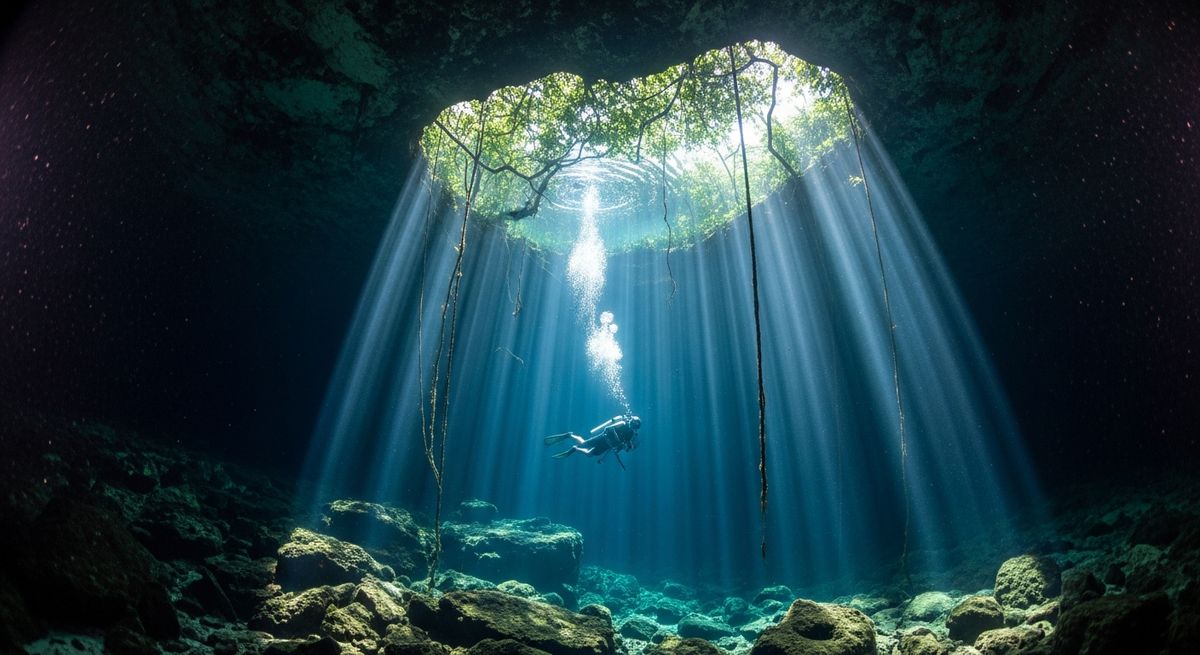
The Blue Hole
Why dive here
With 210+ marine species recorded in the area - including barracuda, dolphins, eagle rays, nurse sharks and sea turtles - The Blue Hole offers some of Utila's richest cenote diving. Water ranges 27-31°C, warmest June, August, September.
Utila’s Blue Hole, not to be confused with its famous Belizean cousin, offers a different kind of drop. We're talking about a volcanic swim-through here, not a giant sinkhole. The entry can be a bit tricky, often through a surge channel, so keep an eye on conditions. Once you’re in, you’ll navigate through some striking rock formations. It's a tighter squeeze than some might expect, leading to a small cavern where light filters down from above. You won't find large pelagics here, but it's a unique geological dive for those who appreciate the shape of the reef itself. Best for experienced divers comfortable with overhead environments and minor current.
Typical The Blue Hole Dive Profile
Illustrative profile based on site depth and type. Actual dive profiles vary - always follow your dive computer and training.
Safety Notes
Maximum depth 50m exceeds recreational limits (40m). Technical diving certification and equipment required.
Overhead environment - never enter without proper cave/cavern training, redundant equipment, and a guideline.
Always perform a 3-minute safety stop at 5m before surfacing.
Reviews for The Blue Hole
Conditions
Ocean conditions, forecast and tides for The Blue Hole
The Blue Hole Ocean Conditions
Monthly averages for The Blue Hole, sourced from Open-Meteo marine data + Copernicus Marine (EU) - nearest station: Open-Meteo marine grid (16.95, -88.05) (16km away)
October Averages
Sea Temperature
30°C
86°F · Range: 27.7–32.1°C
Current Speed
14.21 cm/s
Direction: SW (230.7°)
Chlorophyll-a
0.044 mg/m³
Very clear (oligotrophic)
Salinity
35.97 PSU
Based on 4 years of monitoring data · Data sources: Open-Meteo marine data + Copernicus Marine (EU)
Plan & book
Ways to dive Utila, from day trips to liveaboards.
Day trips & courses
via GetYourGuideGuided dives, courses and snorkel trips with instant booking.
Find dive trips in UtilaPlaces to stay
via Booking.comHotels and dive resorts near Utila.
Search stays in UtilaDive insurance
Most travel insurance excludes or limits scuba. Check what you need before you go.
Dive insurance explainedPartner links: we may earn a commission if you book, at no extra cost to you. How we make money
Where to Stay near The Blue Hole
Prices from Booking.com. We may earn a commission at no extra cost to you.