Caye Bokel - Utila

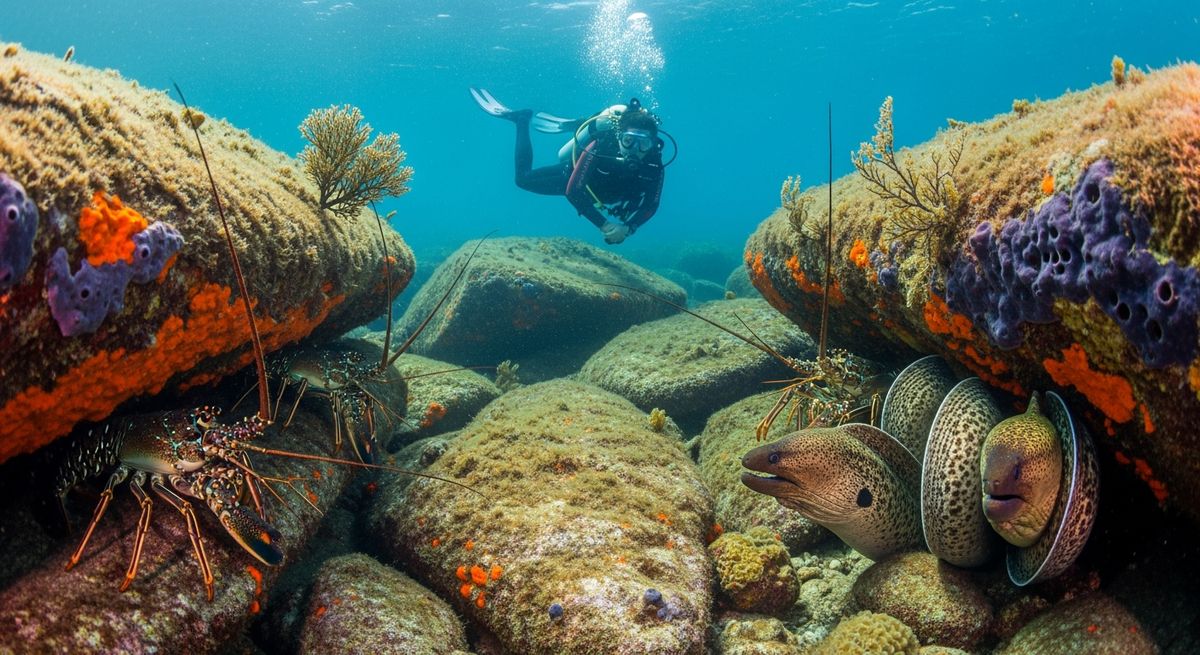
Caye Bokel often gets overlooked for Utila’s more famous northern sites, but we always enjoy a visit here. Dropping down to about 18 meters, you’ll find some really solid hard coral formations, a nice change from the soft corals that dominate elsewhere. The fish biomass tends to be a bit higher on Utila’s southern sites, and Caye Bokel is no exception – expect to see plenty of schooling fish darting among the reef. It’s generally a pretty relaxed dive, a good option if you’re looking for something calm with some good reef structure to explore.

Location
Utila, Honduras, Central America
Coordinates
17.180000, -87.820000

Best Time to Dive in Utila

The warmest water temperatures in Utila occur in September, averaging 30.0°C. The coolest conditions are in February at 27.1°C.

Monthly Water Temperatures

  • January: 27.3°C
  • February: 27.1°C
  • March: 27.3°C
  • April: 27.9°C
  • May: 28.6°C
  • June: 29.2°C
  • July: 29.2°C
  • August: 29.7°C
  • September: 30.0°C
  • October: 29.9°C
  • November: 29.1°C
  • December: 28.2°C

Nearby Dive Sites in Utila

Nearest Dive Centres to Caye Bokel

Marine Life in Utila

Home to 214 recorded species including 173 reef fish, 18 hard corals, 10 other, 6 sharks & rays, 2 jellyfish, 2 sea urchins.

Notable Species

Recommended Packing List for Caye Bokel

Based on average water temperature of 28.6°C, currents 21 cm/s.

  • Shorty or Rashguard - warm 29°C water needs minimal exposure protection
  • Mask - essential for every dive
  • Fins
  • BCD - buoyancy compensator
  • Regulator - your most safety-critical piece of gear
  • Dive Computer - tracks depth, time, and NDL
  • Surface Marker Buoy (SMB) - essential for boat pickups
  • Dive Torch - useful for crevices and colour at depth
  • Underwater Camera - capture your diving memories

Frequently Asked Questions

What are the typical diving depths at Caye Bokel dive sites like The Elbow and Permit Paradise?
While the general diving depths for Caye Bokel are not specified, the famous site known as The Elbow features a reef flat starting at 60ft (18m). This site is noted for progressively deeper areas beyond the reef flat. Information regarding typical depths for Permit Paradise is not available in the provided context.
What kind of marine life and coral formations can divers expect to see when diving around Caye Bokel?
Divers exploring the southern sector of the Caye Bokel atoll can expect to encounter more hard coral coverage and less soft corals compared to northern areas. The fish biomass is generally higher here, particularly at prominent sites like The Elbow. For more details on species, visit our wildlife database.
How challenging are the dive sites near Caye Bokel, especially for less experienced divers?
The dive sites around Caye Bokel are generally rated as intermediate in difficulty. This suggests that while suitable for certified divers, less experienced divers might find certain conditions or depths more challenging. It's always recommended to dive within your certification limits and comfort level.
What is the best time of year to go diving at Caye Bokel for optimal conditions and marine life sightings?
Information regarding the best time of year for optimal diving conditions and marine life sightings at Caye Bokel is not available in the provided context. For general guidance on seasonal diving, please consult our when to dive section.
What scuba diving certifications are recommended or required for diving the more advanced sites around Caye Bokel?
While the dive sites around Caye Bokel are rated as intermediate difficulty, specific certification requirements for more advanced sites are not provided. Divers should ensure they possess the appropriate training and experience for the depths and conditions encountered. Always check with local dive operators for their specific requirements.
What are the typical current conditions and visibility like when diving at Caye Bokel, particularly at sites such as The Elbow?
The provided data indicates that sites like The Elbow at Caye Bokel are exposed and located where the main reef changes direction, which can often imply potential for currents. However, specific information on typical current conditions or visibility for this area is not detailed in the context. Divers should always consult with local dive centers for up-to-date conditions.