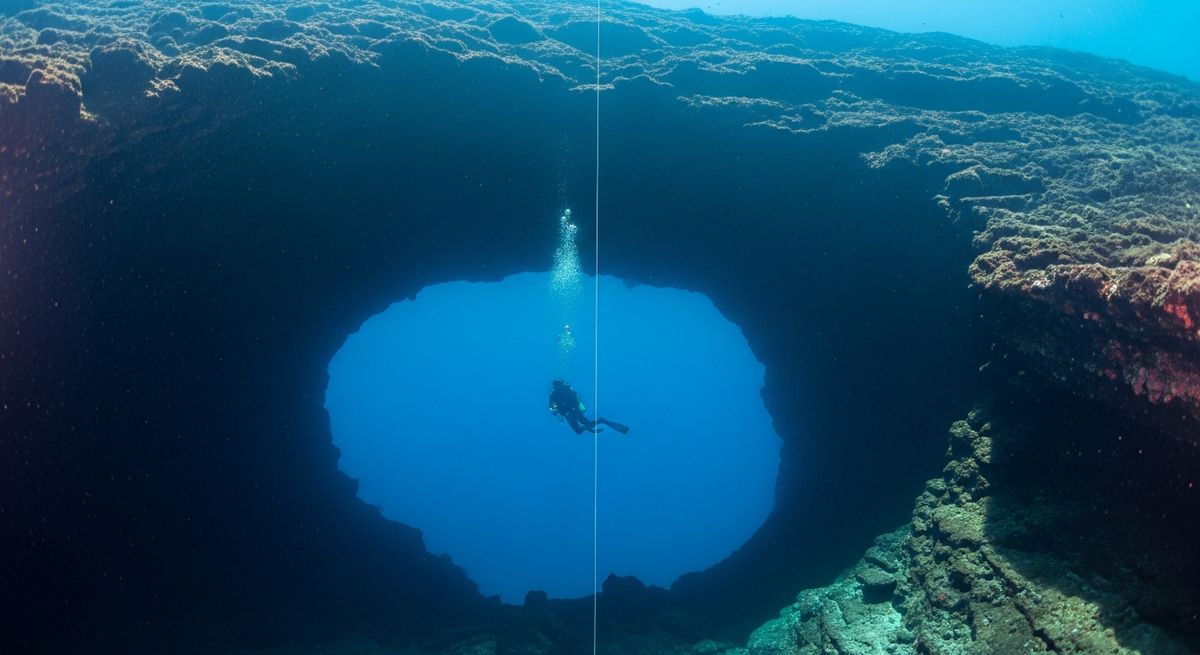
Mali - Mali
Protected Area
Coiba
Why dive here
With 351+ marine species recorded in the area - including barracuda, bull sharks, dolphins, eagle rays and giant moray eels - Mali - Mali offers some of Coiba National Park's richest cave diving. Water ranges 28-30°C, warmest March, April, May.
Mali Mali is one of our favourites in Coiba, even with its often-average visibility. It’s an underwater mountain, shaped like a triangle, that we love to drift around. You start around 13 metres, then drop to a max of 21 metres. We’ve seen Reef sharks here, often patrolling the deeper parts, and there are always turtles around. Keep an eye out for the unusual residents too, like the Bloody Frogfish and Masked Moray eels tucked into the coral. What makes Mali Mali special for us isn't just the occasional big pelagic, it's the smaller, harder-to-spot stuff. Look for seahorses clinging to the Cauliflower coral, and the quick darting movements of Pacific Creolefish. The site really suits divers who appreciate a slow, methodical search as much as a wide-angle view. It’s a good spot for photographers who like a mix of macro and medium shots, though the current can pick up, so be prepared to hold your position.
Safety Notes
Overhead environment - never enter without proper cave/cavern training, redundant equipment, and a guideline.
Nearest Dive Centres to Mali - Mali
Dive shops near Mali - Mali
View all dive centres in Coiba National ParkReviews for Mali - Mali
Conditions
Ocean conditions, forecast and tides for Mali - Mali
Mali - Mali Ocean Conditions
Monthly averages for Mali - Mali, sourced from Open-Meteo marine data - nearest station: Open-Meteo marine grid (7.8, -81.59) (17km away)
October Averages
Sea Temperature
29°C
84°F · Range: 27.5–30.6°C
Air Temperature
25°C
78°F
Wind Speed
3.51 m/s
6.8 knots
Atmospheric Pressure
1011 hPa
Based on 4 years of monitoring data · Data sources: Open-Meteo marine data
Plan & book
Ways to dive Coiba National Park, from day trips to liveaboards.
Day trips & courses
via GetYourGuideGuided dives, courses and snorkel trips with instant booking.
Find dive trips in Coiba National ParkPlaces to stay
via Booking.comHotels and dive resorts near Coiba National Park.
Search stays in Coiba National ParkDive insurance
Most travel insurance excludes or limits scuba. Check what you need before you go.
Dive insurance explainedPartner links: we may earn a commission if you book, at no extra cost to you. How we make money
Where to Stay near Mali - Mali
Prices from Booking.com. We may earn a commission at no extra cost to you.