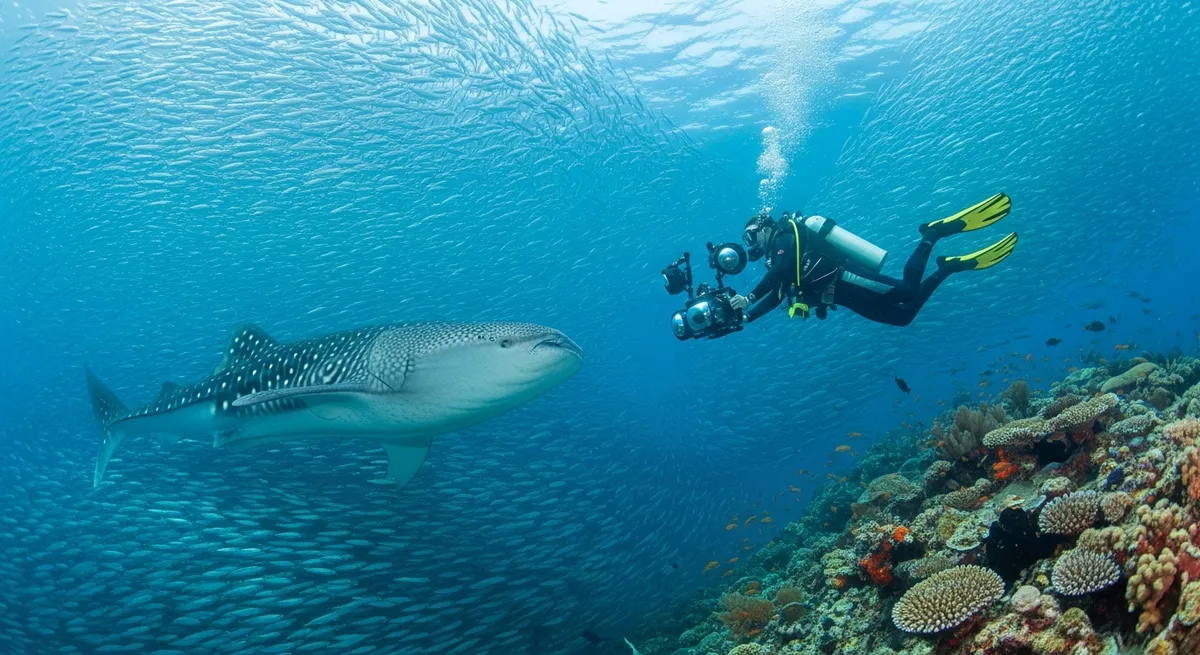
Diving in Coiba National Park
Why dive here
Coiba National Park offers some of Panama's richest diving, with 351+ marine species recorded in the area - including barracuda, bull sharks, dolphins, eagle rays and giant moray eels.
Coiba is one of those places you hear whispers about, a sort of wild west of Pacific diving, and for good reason. We love it because it genuinely feels remote, a proper adventure to get to, and it pays off in spades. Think strong, clean currents sweeping past ancient volcanic islands, attracting big pelagics like magnets. We've found the best time to visit is during the dry season, December to May, when the visibility often pushes past 20 metres. That’s when you’re most likely to see the big whale sharks cruise by, slow and majestic, or catch humpbacks breaching in the distance during their migration. The dives themselves are often drift dives, carrying you along walls covered in colourful soft corals and past schools of snapper and jacks so thick they momentarily blot out the sun. Don't be surprised to find nurse sharks napping under ledges or a curious clown wrasse checking you out. It’s rugged, untamed diving, and that’s precisely why we rate it so highly. Be prepared for a bit of a journey to get here, but that’s part of the charm.
Coiba National Park Dive Site Map
Dive sites and dive centres in Coiba National Park
Coiba National Park Dive Sites
29 dive sites in Coiba National Park
Bajo Piñon
Bajo Piñon, just off Isla Afuerita, is our pick for a macro feast in Coiba. A lone rock pokes above the surface, marking the spot, and it’s a good idea to scout that out before you drop in. We generally kick off in the shallows, maybe 5-7 metres, where the coral clings to the rock, before following it down to its base at 20 metres. Here, the current can pick up, so keep an eye on your dive guide. We love this site for its smaller residents. Peer into the crevices and you’ll find plenty of Greater Soapfish, their bodies mottled, blending in perfectly. Look for Redhead Gobies darting between the coral branches, and we’ve spotted tiny Codlets tucked away too. While the big stuff like white tip reef sharks and turtles sometimes cruise by, our favourite finds here are the Baja California Ceriths clinging to the rocks, and the colourful Cortez Angelfish. Visibility averages around 17 metres, which is usually plenty to appreciate the intricate details of the reef. It's a great spot for photographers, especially if you’re into the smaller subjects, and it suits divers comfortable with a gentle drift.
Bajo Piñon
Bajo Piñon, just off Isla Afuerita, is our pick for a macro feast in Coiba. A lone rock pokes above the surface, marking the spot, and it’s a good idea to scout that out before you drop in. We generally kick off in the shallows, maybe 5-7 metres, where the coral clings to the rock, before following it down to its base at 20 metres. Here, the current can pick up, so keep an eye on your dive guide. We love this site for its smaller residents. Peer into the crevices and you’ll find plenty of Greater Soapfish, their bodies mottled, blending in perfectly. Look for Redhead Gobies darting between the coral branches, and we’ve spotted tiny Codlets tucked away too. While the big stuff like white tip reef sharks and turtles sometimes cruise by, our favourite finds here are the Baja California Ceriths clinging to the rocks, and the colourful Cortez Angelfish. Visibility averages around 17 metres, which is usually plenty to appreciate the intricate details of the reef. It's a great spot for photographers, especially if you’re into the smaller subjects, and it suits divers comfortable with a gentle drift.
Boca del Drago
Boca del Drago offers a gentle drift along a sloping reef, good for those still building confidence in currents. We often spot white-tip reef sharks cruising the deeper sections and rays on the sandy bottom. Visibility can vary, especially after heavy rain, but it’s generally a relaxed dive with consistent opportunities to see larger pelagics moving through.
Buffet
Buffet is a Coiba classic, one we always try to get in if the conditions are right. You drop down a buoy line, typically to around 12 meters, and then the reef proper starts. It’s a series of rocky formations that stretch down to about 19 meters here, not super deep, but packed. We’ve had some truly epic bull shark encounters at Buffet, often just hanging out in the blue. Keep an eye out for patrolling schools of bullet mackerel too, they move like a shimmering wall, and we’ve seen big jacks hunting them in the past. Visibility averages around 15 meters, which is decent for Coiba, but it can get choppy on the surface. We always love spotting the blunthead triggerfish here, they seem to be everywhere. Look for hawksbill turtles tucked into crevices and the occasional deepwater serrano. The topography itself is interesting, lots of overhangs and small swim-throughs to peek into. Buffet is a fantastic dive for those who appreciate consistent big fish action and don't mind a bit of current to get the blood pumping.
Buffet
Buffet is a Coiba classic, one we always try to get in if the conditions are right. You drop down a buoy line, typically to around 12 meters, and then the reef proper starts. It’s a series of rocky formations that stretch down to about 19 meters here, not super deep, but packed. We’ve had some truly epic bull shark encounters at Buffet, often just hanging out in the blue. Keep an eye out for patrolling schools of bullet mackerel too, they move like a shimmering wall, and we’ve seen big jacks hunting them in the past. Visibility averages around 15 meters, which is decent for Coiba, but it can get choppy on the surface. We always love spotting the blunthead triggerfish here, they seem to be everywhere. Look for hawksbill turtles tucked into crevices and the occasional deepwater serrano. The topography itself is interesting, lots of overhangs and small swim-throughs to peek into. Buffet is a fantastic dive for those who appreciate consistent big fish action and don't mind a bit of current to get the blood pumping.
Corner Point Ladrones
Corner Point Ladrones, within Panama's Coiba National Park, consistently delivers a good show. We often find schooling jacks and snapper here, sometimes a passing reef shark or eagle ray out in the blue. The currents can pick up, so it's best suited for divers comfortable with a drift. It’s a solid site for seeing larger pelagics moving through.
Don Juan
Don Juan is one of our favourites in Coiba, especially for those looking to build confidence without sacrificing the good stuff. It’s a shallow spot, topping out around 14 metres, with wide sandy channels flanking the reef. This layout is brilliant; you can drift along the sand, keeping an eye on your buoyancy, while still having a full, unobstructed view of the coral action. We’ve found the visibility here to be pretty reliable, often around 10-12 metres, which is plenty to watch the schools of bigeye jacks swirl through the water, a shimmering, silver curtain. Look closely among the corals for cheeky chameleon clinids and the subtle beauty of a Margarita blenny peeking out. You’ll often spot vibrant Pacific red snappers and Cortez chubs darting in and out of the reef. Don Juan is a gentle introduction to Coiba's buzzing reefs, perfect for a relaxed dive where you can truly soak it all in.
El Cholo
El Cholo offers a decent drift dive, often with a good push from the current. We’ve seen white-tip reef sharks cruising through the blue and plenty of schooling fish. It’s a solid pick for divers comfortable with current, looking for pelagic action in Coiba. Visibility can vary, but on a good day, it’s a rewarding site.
El Porton
El Porton offers a relaxed dive along a sloping reef, suitable for less experienced divers or those looking for a gentle second dive. You’ll typically spot whitetip reef sharks resting on the sandy patches and schools of snapper moving through the coral. It’s a good spot to slow down and observe smaller critters hiding in the crevices. We often encounter green turtles here too, grazing on the shallower sections.
Faro
Faro, in Coiba National Park, is one of those sites that always delivers. We love the options it gives you – shallower stretches at the ends for an easier entry, then a fantastic reef that just keeps going down to around 20 metres. Maximum 20m, but sometimes you can sneak a little deeper if the current is playing nice. Visibility averages around 14m, which is plenty for soaking in the action. What makes Faro special? The sheer volume of fish. Expect large schools of big eye jacks, sometimes so thick they dim the light, and groups of Pacific dog snappers patrolling the reef. Barracudas often cruise by for a closer look, just checking you out. Keep an eye peeled for nurse sharks tucked under ledges; we’ve had some cracking encounters here. It’s also a good spot for the macro stuff if you slow down – a scorpionfish blending perfectly, an octopus peeking out, or even a seahorse if you’ve got a sharp eye. We’d say it suits divers who enjoy a dynamic reef with plenty of pelagic action, but also appreciate the details.
Frijoles
Frijoles is a site we always try to hit when we're in Coiba, though it’s definitely not the deepest dive. Maximum depth is around 21m, but the real show is often shallower. We usually drop down the line to about 10m, then decide – stay put in the coral shallows or follow the sand channel down to where the larger boulders start to stack up. Those boulders are what make it special. They create these fantastic overhangs and little caves, perfect for poking around with a torch. We often find pacific red snappers hunkered down, and sometimes a grumpy-looking pacific spotted scorpionfish trying its best to blend in. Lanternfish are pretty common, too. The visibility averages 12m, so you're not getting those wide-open vistas, but that's part of the charm here; it feels more intimate. Keep an eye out for a longtail stingray cruising the sand patches; they're quite graceful. It’s a site for divers who enjoy taking their time and getting close to the reef’s residents, rather than just zooming past.
Iglesia
Iglesia is one of those sites we always make time for in Coiba. It's a series of rocky outcrops, like giant stepping stones, scattered across a sandy bottom. The sweet spot, we find, is really in the 8-15 meter range. You can spend an entire dive just weaving through the crevices, spotting green morays peering out, or watching delicate triplefins flitting over the coral. Our favourite is rounding a corner and coming face to face with a sheephead, their big, goofy grins always make us smile. Visibility often sits around 15-20 meters, giving you a good view of the schools of bigeye jacks that often swirl here. We've seen reef sharks cruising by on almost every visit, and the occasional turtle glides past, unbothered. It's not a deep-dive site, maxing out at 21m, but that just means more bottom time to explore the nooks and crannies. This is a perfect spot for photographers or anyone who likes to take their time and really soak it all in.
Coiba National Park Dive Centres
5 dive shops and operators in Coiba National Park
Ocean Wildlife in Coiba National Park
351 species recorded in Coiba National Park
Coiba National Park Daylight & Sunrise/Sunset
Sunrise and sunset times for Coiba National Park, calculated from coordinates
Today - Sunday 11 October
Sunrise
06:15
Sunset
18:14
Daylight
11h 59m
Golden Hour
17:46
First light (dawn) at 05:54 · Last light (dusk) at 18:35
Monthly Averages
| Month | Sunrise | Sunset | Daylight |
|---|---|---|---|
| Jan | 06:45 | 18:28 | 11h 43m |
| Feb | 06:46 | 18:38 | 11h 52m |
| Mar | 06:35 | 18:39 | 12h 4m |
| Apr | 06:19 | 18:36 | 12h 17m |
| May | 06:10 | 18:38 | 12h 28m |
| JunLongest | 06:11 | 18:45 | 12h 35m |
| Jul | 06:17 | 18:49 | 12h 32m |
| Aug | 06:21 | 18:44 | 12h 23m |
| Sep | 06:18 | 18:29 | 12h 10m |
| OctNow | 06:15 | 18:12 | 11h 58m |
| Nov | 06:19 | 18:05 | 11h 46m |
| DecShortest | 06:32 | 18:12 | 11h 40m |
Times are approximate local times based on longitude. Actual times may vary slightly depending on the exact timezone observed in Coiba National Park.
Where to Stay near Coiba National Park
Prices from Booking.com. We may earn a commission at no extra cost to you.
Marine Protected Areas near Coiba National Park
21 protected areas near Coiba National Park - please respect local regulations when diving
Parc national de Coiba et sa zone spéciale de protection marine
Coiba
Golfo de Montijo
Escudo de Veraguas
Golfo de Montijo
Golfo de Chiriquí
Isla de Cañas
San San Pond Sak
Pablo Arturo Barrios
Isla Bastimentos
Reverendo Padre Jesús Héctor Gallego Herrera
Isla Montuosa
Showing 12 largest of 21
Getting to Coiba National Park
Santiago
Tocumen
San José (Alajuela)
Plan & book
Ways to dive Coiba National Park, from day trips to liveaboards.
Day trips & courses
via GetYourGuideGuided dives, courses and snorkel trips with instant booking.
Find dive trips in Coiba National ParkPlaces to stay
via Booking.comHotels and dive resorts near Coiba National Park.
Search stays in Coiba National ParkDive insurance
Most travel insurance excludes or limits scuba. Check what you need before you go.
Dive insurance explainedPartner links: we may earn a commission if you book, at no extra cost to you. How we make money