The New Drop Off
Protected Area
Ngemelis Island Complex
Why dive here
With 182+ marine species recorded in the area - including barracuda, lionfish, mandarin fish, napoleon wrasse and nautiluses - The New Drop Off offers some of Rock Islands's richest wall diving. Water ranges 29-30°C, warmest June, October, November.
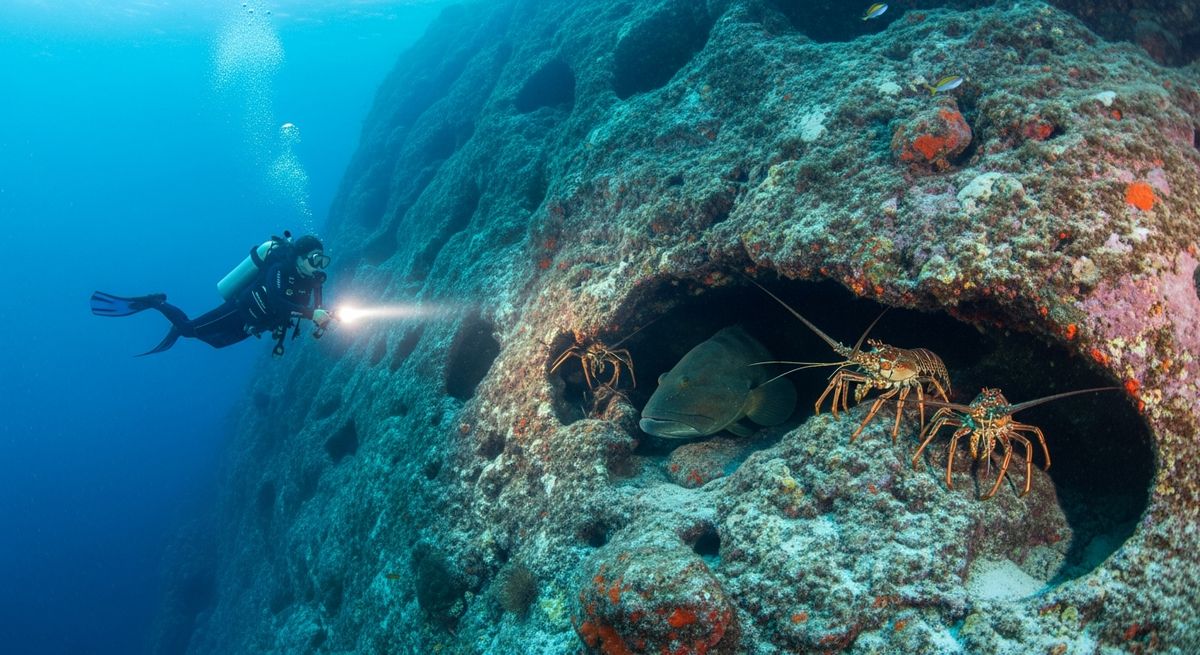
The New Drop Off is a solid wall dive in the Rock Islands, a good spot to see some bigger stuff. It’s essentially a vertical reef that drops to a serious depth, around 150 metres, where two walls meet. You'll often find yourself hanging in the blue here, watching for sharks and eagle rays cruising past, while barracuda schools swirl in the mid-water. Closer to the wall, we like to take our time scanning the enormous gorgonian fans, colourful soft corals, and sponges; the shallower sections are good for spotting moray eels, nudibranchs, and leaffish if you have a keen eye. It’s a good choice for divers who appreciate a classic wall dive with the potential for pelagic action.
Nearest Dive Centres to The New Drop Off
Dive shops near The New Drop Off
Cruise Control palau
Cruise Control palau
DayDream Dive Center
Sam's Tours
Blue Marlin
Blue Marlin
Reviews for The New Drop Off
Conditions
Ocean conditions, forecast and tides for The New Drop Off
The New Drop Off Ocean Conditions
Monthly averages for The New Drop Off, sourced from Open-Meteo marine data + Copernicus Marine (EU) - nearest station: Open-Meteo marine grid (7.2, 134.3) (4km away)
October Averages
Sea Temperature
30°C
86°F · Range: 28.5–31.2°C
Current Speed
10.05 cm/s
Direction: N (5.7°)
Chlorophyll-a
0.026 mg/m³
Very clear (oligotrophic)
Salinity
33.62 PSU
Based on 4 years of monitoring data · Data sources: Open-Meteo marine data + Copernicus Marine (EU)
Plan & book
Ways to dive Rock Islands, from day trips to liveaboards.
Day trips & courses
via GetYourGuideGuided dives, courses and snorkel trips with instant booking.
Find dive trips in Rock IslandsPlaces to stay
via Booking.comHotels and dive resorts near Rock Islands.
Search stays in Rock IslandsDive insurance
Most travel insurance excludes or limits scuba. Check what you need before you go.
Dive insurance explainedPartner links: we may earn a commission if you book, at no extra cost to you. How we make money
Where to Stay near The New Drop Off
Prices from Booking.com. We may earn a commission at no extra cost to you.