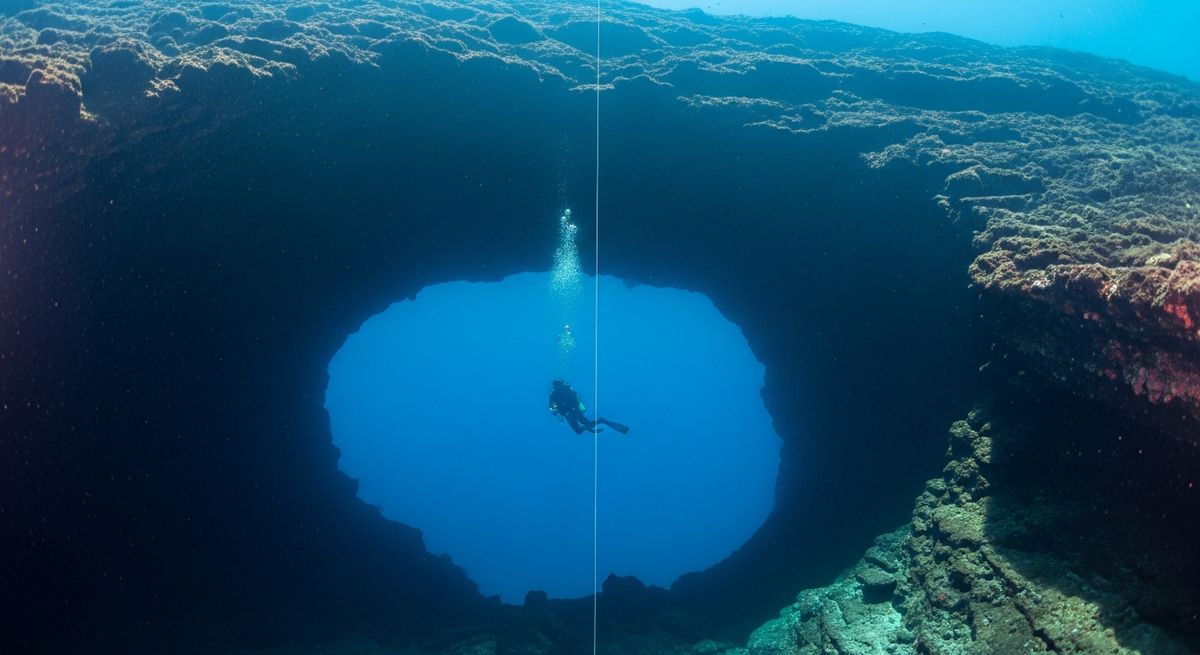
Heron’s Wall - Iron Bottom Sound

Los Mogotes consistently ranks high on our list for Jardines de la Reina, and for good reason. It’s got that classic Caribbean feel, but elevated. You drop down to a mini wall, maybe 18 metres max, and the first thing you notice is the health of the coral. We're talking massive heads of Boulder Brain and Great Star Coral, a real testament to the park's protection. The real magic happens around the cavern overhangs. We've spent entire dives just exploring these, looking for the shy Graysby tucked into a crevice or watching a gang of Schoolmasters drift past. The big draw here, for us, is the schooling tarpon. They hang in the gloom of the overhangs, their silver scales catching the light just so, and it’s a genuinely impressive sight. Keep an eye out for schooling reef sharks too, they’re often patrolling the deeper edge of the wall. We love seeing the huge rainbow parrotfish crunching away at the reef, their colours just popping against the blue. This is a site that suits anyone comfortable with a gentle drift and a bit of cave exploration, offering plenty to see whether you’re peering into nooks or just admiring the wider reef scene.

Location
Iron Bottom Sound, Solomon Islands, Central & South Pacific
Coordinates
-8.312400, 157.394600
Type
cave

Marine Protected Area: Baraulu/Bule Lavata

Best Time to Dive in Iron Bottom Sound

The warmest water temperatures in Iron Bottom Sound occur in January, averaging 30.5°C. The coolest conditions are in December at 30.5°C.

Monthly Water Temperatures

  • January: 30.5°C (air: 26.9°C)
  • February: 30.5°C (air: 26.7°C)
  • March: 30.5°C (air: 26.7°C)
  • April: 30.5°C (air: 26.8°C)
  • May: 30.5°C (air: 26.9°C)
  • June: 30.5°C (air: 26.5°C)
  • July: 30.5°C (air: 26.5°C)
  • August: 30.5°C (air: 26.3°C)
  • September: 30.5°C (air: 26.5°C)
  • October: 30.5°C (air: 26.7°C)
  • November: 30.5°C (air: 26.7°C)
  • December: 30.5°C (air: 26.9°C)

Nearby Dive Sites in Iron Bottom Sound

Nearest Dive Centres to Heron’s Wall

Marine Life in Iron Bottom Sound

Home to 415 recorded species including 320 reef fish, 29 hard corals, 18 sea snails & nudibranchs, 16 sea cucumbers, 7 seagrass & algae, 5 clams & mussels.

Notable Species

Recommended Packing List for Heron’s Wall

Based on average water temperature of 30.5°C.

  • Shorty or Rashguard - warm 30°C water needs minimal exposure protection
  • Mask - essential for every dive
  • Fins
  • BCD - buoyancy compensator
  • Regulator - your most safety-critical piece of gear
  • Dive Computer - tracks depth, time, and NDL
  • Surface Marker Buoy (SMB) - essential for boat pickups
  • Dive Torch - useful for crevices and colour at depth
  • Underwater Camera - capture your diving memories

Frequently Asked Questions

What is the typical depth range for diving at Heron's Wall?
The maximum depth for diving at Heron's Wall is 18m, making it accessible for a range of divers. Although the specific depth range is not fully detailed, you will primarily explore within this limit.
What marine life and coral formations can divers expect to see at Heron's Wall?
At Heron's Wall, divers are treated to stunning hard and soft corals in the shallows, offering fantastic photo opportunities. Keep an eye out in the blue for a pelagic delight, including eagle rays, sharks, schooling jacks, and cuda's. For more information on marine species, visit our wildlife database.
How challenging is the Heron's Wall dive site, and is it suitable for all experience levels?
Heron's Wall is classified as an intermediate dive site, suggesting it's best suited for divers with some prior experience. While not for absolute beginners, it offers a rewarding experience for those comfortable with intermediate conditions.
What is the best time of year to dive Heron's Wall for optimal conditions and marine encounters?
The provided data for Heron's Wall does not specify a best time of year for optimal conditions or marine encounters. For general guidance on seasonal diving, please consult our When to Dive section.
Are there any specific diving certifications or experience levels required to dive Heron's Wall?
As Heron's Wall is an intermediate dive site, divers should have the appropriate certification and experience level to comfortably navigate its conditions. While specific certifications aren't listed, typically an Advanced Open Water Diver certification or equivalent experience is recommended for intermediate sites.
What are the usual current conditions and visibility at Heron's Wall?
Divers at Heron's Wall can expect an average visibility of 8m, which is suitable for enjoying the vibrant corals and marine life. The provided data does not specify the usual current conditions for this site.