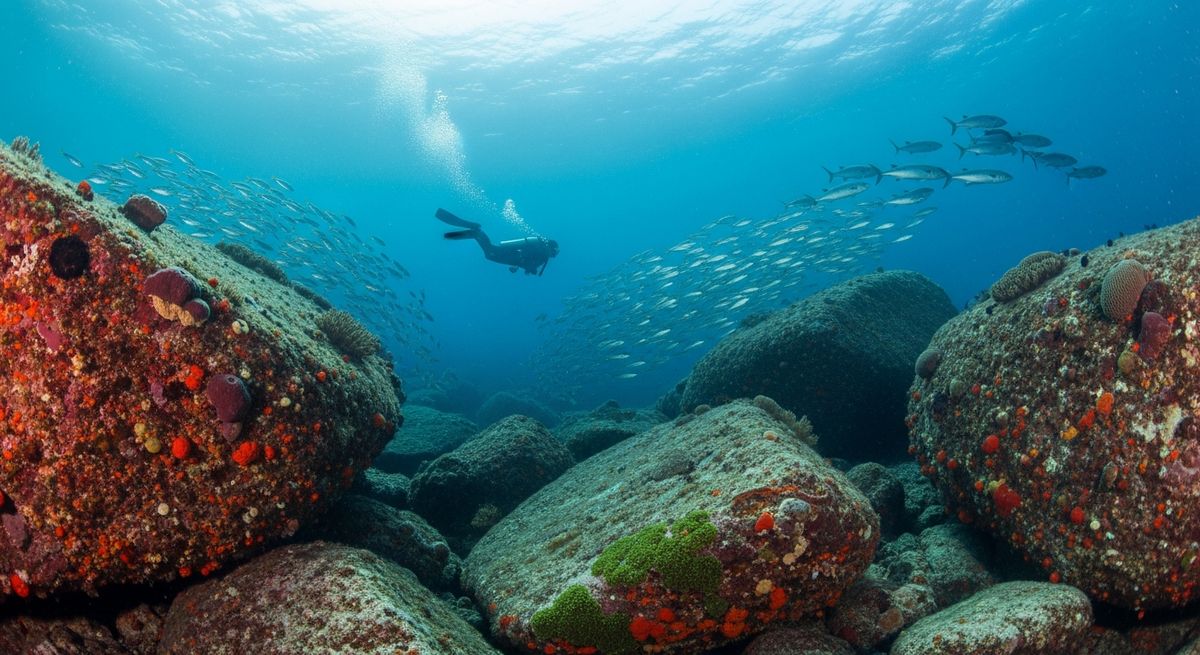
Mborokua (Mary) Island - Iron Bottom Sound

Mborokua, or Mary Island, is a lonely outpost in Iron Bottom Sound. It’s a spot liveaboards often hit, and for good reason. We’ve found the currents here can be lively, pulling in big schools of barracuda and jacks, sometimes so thick they form a swirling wall. Keep an eye out for reef sharks cruising the perimeter and bumphead parrotfish munching on the coral. There are some interesting swim-throughs and overhangs too, making it a good fit for divers who appreciate a bit of current and pelagic action.

Location
Iron Bottom Sound, Solomon Islands, Central & South Pacific
Coordinates
-9.050000, 159.250000

Marine Protected Area: Opele

Best Time to Dive in Iron Bottom Sound

The warmest water temperatures in Iron Bottom Sound occur in January, averaging 30.5°C. The coolest conditions are in December at 30.5°C.

Monthly Water Temperatures

  • January: 30.5°C (air: 26.9°C)
  • February: 30.5°C (air: 26.7°C)
  • March: 30.5°C (air: 26.7°C)
  • April: 30.5°C (air: 26.8°C)
  • May: 30.5°C (air: 26.9°C)
  • June: 30.5°C (air: 26.5°C)
  • July: 30.5°C (air: 26.5°C)
  • August: 30.5°C (air: 26.3°C)
  • September: 30.5°C (air: 26.5°C)
  • October: 30.5°C (air: 26.7°C)
  • November: 30.5°C (air: 26.7°C)
  • December: 30.5°C (air: 26.9°C)

Nearby Dive Sites in Iron Bottom Sound

Nearest Dive Centres to Mborokua (Mary) Island

Marine Life in Iron Bottom Sound

Home to 415 recorded species including 320 reef fish, 29 hard corals, 18 sea snails & nudibranchs, 16 sea cucumbers, 7 seagrass & algae, 5 clams & mussels.

Notable Species

Recommended Packing List for Mborokua (Mary) Island

Based on average water temperature of 30.5°C.

  • Shorty or Rashguard - warm 30°C water needs minimal exposure protection
  • Mask - essential for every dive
  • Fins
  • BCD - buoyancy compensator
  • Regulator - your most safety-critical piece of gear
  • Dive Computer - tracks depth, time, and NDL
  • Surface Marker Buoy (SMB) - essential for boat pickups
  • Dive Torch - useful for crevices and colour at depth
  • Underwater Camera - capture your diving memories

Frequently Asked Questions

What marine life and underwater features can divers expect to see at Mborokua (Mary) Island?
At Mborokua (Mary) Island, divers can anticipate an incredible array of marine life, including large schools of fish like jacks and barracudas, along with sharks, turtles, and bumphead parrotfish. The underwater landscape features vibrant coral gardens, as well as fascinating caves, caverns, and overhangs to explore. This site is truly a highlight for marine biodiversity.
What are the typical diving depths and visibility conditions around Mborokua (Mary) Island?
The typical diving depths and visibility conditions for Mborokua (Mary) Island are not specified in the current data. However, as a renowned reef dive, it offers diverse environments suitable for various depths. We recommend consulting your liveaboard operator or local dive guide for the most current information on specific dive profiles and visibility during your visit.
How challenging is diving at Mborokua (Mary) Island, and is it suitable for beginner divers?
Mborokua (Mary) Island is classified as an intermediate difficulty dive site. While it offers incredible experiences, the presence of sweeping currents and diverse underwater features means it is generally more suitable for divers with some experience rather than absolute beginners. Divers should be comfortable with current diving techniques and have appropriate certifications.
What are the best months or seasons to dive at Mborokua (Mary) Island for optimal conditions?
Information regarding the best months or seasons for optimal diving conditions at Mborokua (Mary) Island is not provided in the current data. The Solomon Islands generally offer good diving year-round, but specific seasonal variations can occur. For the most up-to-date advice on when to dive, please check our When to Dive section or consult with local dive operators.
Are there strong currents at Mborokua (Mary) Island, and how do they affect the diving experience?
Yes, Mborokua (Mary) Island is known for its sweeping currents. These currents play a crucial role in the diving experience, as they attract the large schools of fish that make this site so spectacular. Divers should be prepared for current diving, which adds an exciting dynamic to exploring the vibrant reef and its abundant marine life.
What dive certifications are recommended or required for diving at Mborokua (Mary) Island?
While specific dive certifications are not explicitly stated for Mborokua (Mary) Island, its classification as an intermediate difficulty dive site suggests that divers should possess experience beyond entry-level. It is recommended that divers are comfortable with various diving conditions, including currents, and hold appropriate certifications for such environments. Always check with your dive operator for their specific requirements.