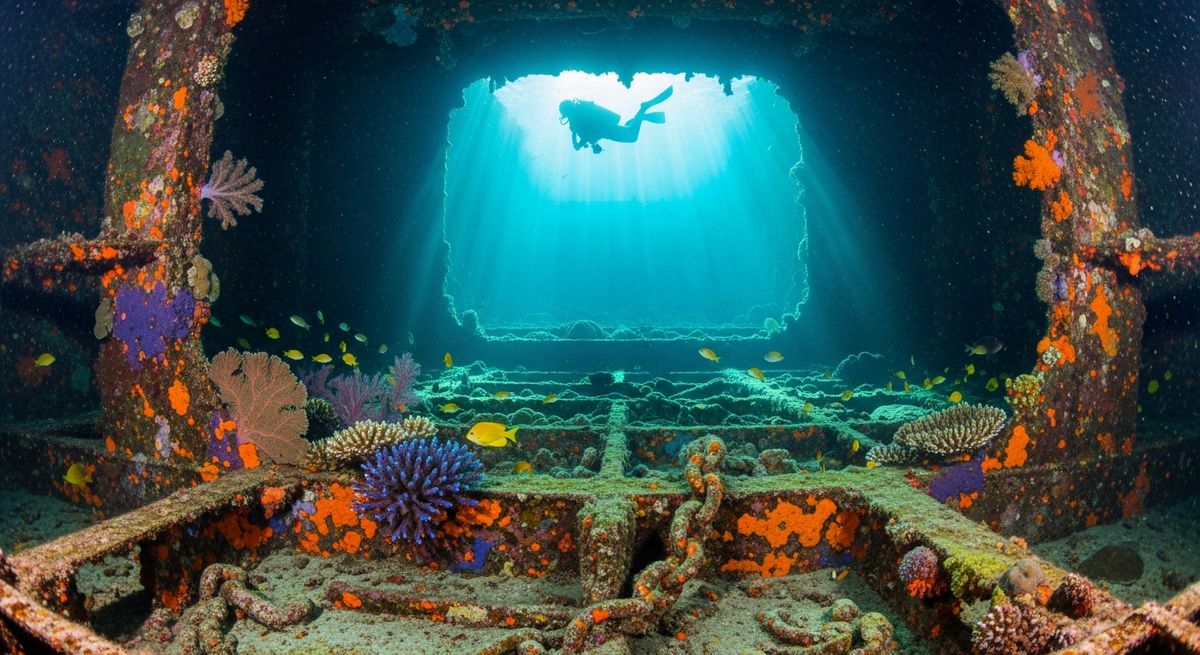
Nanjalakalau Wall
Protected Area
Komarindi
Why dive here
With 391+ marine species recorded in the area - including barracuda, blacktip reef sharks, grey reef sharks, humpback whales and orcas - Nanjalakalau Wall offers some of Iron Bottom Sound's richest wreck diving. Water ranges 29-31°C, warmest January, April, December.
Nanjalakalau Wall is our pick for a really solid drift dive in Iron Bottom Sound. We love how the wall just drops away into the blue, creating this perfect setup for cruising along and letting the current do the work. You’re always looking two ways here: into the wall’s crevices for Painted Spiny Lobsters and sneaky High Hat Triplefins, and then out into the open water. That’s where the bigger stuff hangs out – we’ve seen eagle rays glide past and Giant Trevally patrol the deeper edges. The gorgonian fans are truly prolific, a thick tapestry of them, and sometimes you spot a banana nudibranch inching its way along. Visibility isn’t always phenomenal, averaging about 11 metres, but on a good day, it opens up enough to really appreciate the scale. If you're comfortable with a bit of current and enjoy the feeling of flying along a reef, Nanjalakalau is a fantastic afternoon spent underwater. Keep an eye out for the Grey Reef and Black Tip Reef Sharks often spotted a bit deeper, below 20 metres.
Safety Notes
Wreck site - avoid penetration without wreck diving certification. Watch for sharp metal and entanglement hazards.
Reviews for Nanjalakalau Wall
Conditions
Ocean conditions, forecast and tides for Nanjalakalau Wall
Nanjalakalau Wall Ocean Conditions
Monthly averages for Nanjalakalau Wall, sourced from Open-Meteo marine data - nearest station: Open-Meteo marine grid (-9.03, 159.16) (58km away)
October Averages
Sea Temperature
30°C
85°F · Range: 28.7–30.5°C
Air Temperature
27°C
80°F
Wind Speed
3.74 m/s
7.3 knots
Atmospheric Pressure
1010.5 hPa
Based on 4 years of monitoring data · Data sources: Open-Meteo marine data
Plan & book
Ways to dive Iron Bottom Sound, from day trips to liveaboards.
Day trips & courses
via GetYourGuideGuided dives, courses and snorkel trips with instant booking.
Find dive trips in Iron Bottom SoundPlaces to stay
via Booking.comHotels and dive resorts near Iron Bottom Sound.
Search stays in Iron Bottom SoundDive insurance
Most travel insurance excludes or limits scuba. Check what you need before you go.
Dive insurance explainedPartner links: we may earn a commission if you book, at no extra cost to you. How we make money
Where to Stay near Nanjalakalau Wall
Prices from Booking.com. We may earn a commission at no extra cost to you.