Papatura point - Iron Bottom Sound

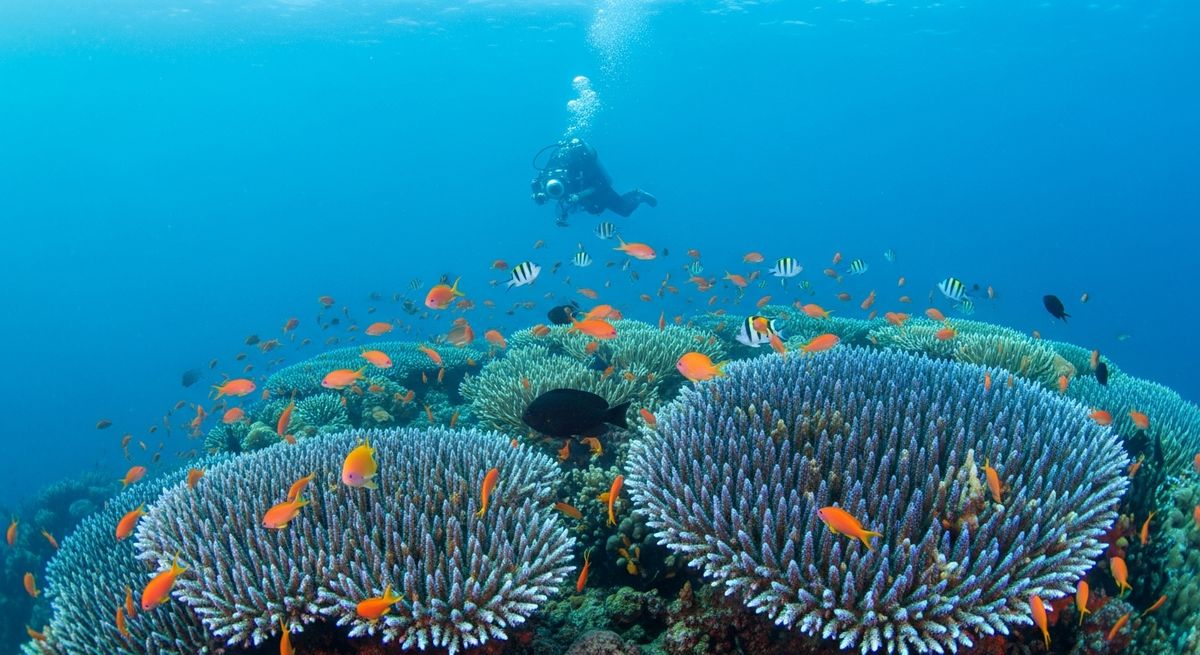
Sampalan, off the northeast corner of Nusa Penida, gives you a comfortable drift. We typically see a good number of fish here, often schools of fusiliers zipping past. The reef itself has some interesting structures: big coral bommies, barrel sponges, and some really chunky, compact corals. If you keep an eye out into the blue, you might catch a glimpse of something larger swimming by. It’s a site that suits anyone comfortable with a gentle current, keen to just watch the world go past.

Location
Iron Bottom Sound, Solomon Islands, Central & South Pacific
Coordinates
-7.581600, 158.767100
Type
reef

Marine Protected Area: Kia

Best Time to Dive in Iron Bottom Sound

The warmest water temperatures in Iron Bottom Sound occur in January, averaging 30.5°C. The coolest conditions are in December at 30.5°C.

Monthly Water Temperatures

  • January: 30.5°C (air: 26.9°C)
  • February: 30.5°C (air: 26.7°C)
  • March: 30.5°C (air: 26.7°C)
  • April: 30.5°C (air: 26.8°C)
  • May: 30.5°C (air: 26.9°C)
  • June: 30.5°C (air: 26.5°C)
  • July: 30.5°C (air: 26.5°C)
  • August: 30.5°C (air: 26.3°C)
  • September: 30.5°C (air: 26.5°C)
  • October: 30.5°C (air: 26.7°C)
  • November: 30.5°C (air: 26.7°C)
  • December: 30.5°C (air: 26.9°C)

Nearby Dive Sites in Iron Bottom Sound

Nearest Dive Centres to Papatura point

Marine Life in Iron Bottom Sound

Home to 415 recorded species including 320 reef fish, 29 hard corals, 18 sea snails & nudibranchs, 16 sea cucumbers, 7 seagrass & algae, 5 clams & mussels.

Notable Species

Recommended Packing List for Papatura point

Based on average water temperature of 30.5°C.

  • Shorty or Rashguard - warm 30°C water needs minimal exposure protection
  • Mask - essential for every dive
  • Fins
  • BCD - buoyancy compensator
  • Regulator - your most safety-critical piece of gear
  • Dive Computer - tracks depth, time, and NDL
  • Surface Marker Buoy (SMB) - essential for boat pickups
  • Dive Torch - useful for crevices and colour at depth
  • Underwater Camera - capture your diving memories

Frequently Asked Questions

What are the typical depths for diving at Papatura Point dive sites?
The dive sites at Papatura Point offer a long, spacious reef that typically ranges in depth from 5 meters down to 18 meters. While the reef extends to 18 meters, the maximum recommended depth for this site is 17 meters. This makes it suitable for divers looking for a diverse depth profile within recreational limits.
What kind of marine life and underwater topography can divers expect to see at Papatura Point?
Divers at Papatura Point can expect to explore a long, spacious reef adorned with large fan coral and vibrant purple vase sponges. The site is rich in marine life, frequently featuring turtles in the seagrass areas, often followed by batfish. You'll also encounter a variety of reef fish such as clownfish, parrot fish, wrasse, and angelfish, making it a vibrant underwater experience.
How challenging are the dive sites at Papatura Point for different experience levels?
The dive sites at Papatura Point are rated as intermediate difficulty, making them suitable for divers with some experience. This is primarily due to the bi-directional currents influenced by tidal movements, which can add a layer of challenge. Divers should be comfortable with varying current conditions to fully enjoy this site.
What is the best time of year to go diving at Papatura Point for optimal conditions?
The provided data indicates that visibility at Papatura Point can become murky if there has been a lot of rainfall. Therefore, for optimal conditions, it would be best to plan your dive during periods with less precipitation to ensure clearer waters. While specific seasonal recommendations aren't provided, avoiding the rainy season would likely improve your experience and average 10m visibility.
What scuba diving certifications are required to dive at Papatura Point?
The data indicates that Papatura Point is an intermediate difficulty dive site. However, specific scuba diving certifications required to dive here are not detailed in the provided information. Divers should possess the necessary experience and training commensurate with intermediate conditions, which include bi-directional currents and depths up to 17 meters. It is always advisable to consult with local dive centers for their specific certification prerequisites.
What are the typical water conditions and currents like when diving around Papatura Point?
When diving around Papatura Point, divers can expect bi-directional currents that are influenced by tidal movements, adding to the intermediate difficulty of the site. Water conditions can vary, with visibility averaging around 10 meters. However, it's important to note that visibility can become murky if there has been significant rainfall.