Rainbow Wall
Protected Area
Rendova Harbor
Why dive here
With 391+ marine species recorded in the area - including barracuda, blacktip reef sharks, grey reef sharks, humpback whales and orcas - Rainbow Wall offers some of Iron Bottom Sound's richest wreck diving. Water ranges 29-31°C, warmest January, April, December.
Rainbow Wall is a bit of a journey out, tucked away near Rendova Island, but it consistently delivers. We love a good wall dive, and this one doesn't disappoint, dropping quickly into the blue. It's a spot for when you're feeling confident, perhaps a bit more advanced in your diving, because the currents can be lively. We’ve hooked in here more than once, just watching the show unfold – big schools of Blue and Gold Fusiliers streaming past, then a sudden flurry of Manini, and the occasional Malabar grouper lurking in the crevices. The real draw here is the open water. Keep an eye out into the blue, because that’s where the action happens. We've seen eagle rays glide by, their shadows passing over us, and it's not uncommon to spot a shark cruising the deeper sections. It’s a site where you spend as much time looking out as you do at the wall itself, which, by the way, is covered in some lovely corals and home to plenty of vibrant Lineated and Latticed Butterflyfish. Visibility averages a solid 22 meters, which helps you appreciate the scale of it all. This is our pick for divers who crave that wide-open ocean feel and aren't afraid of a bit of current to get the best views.
Safety Notes
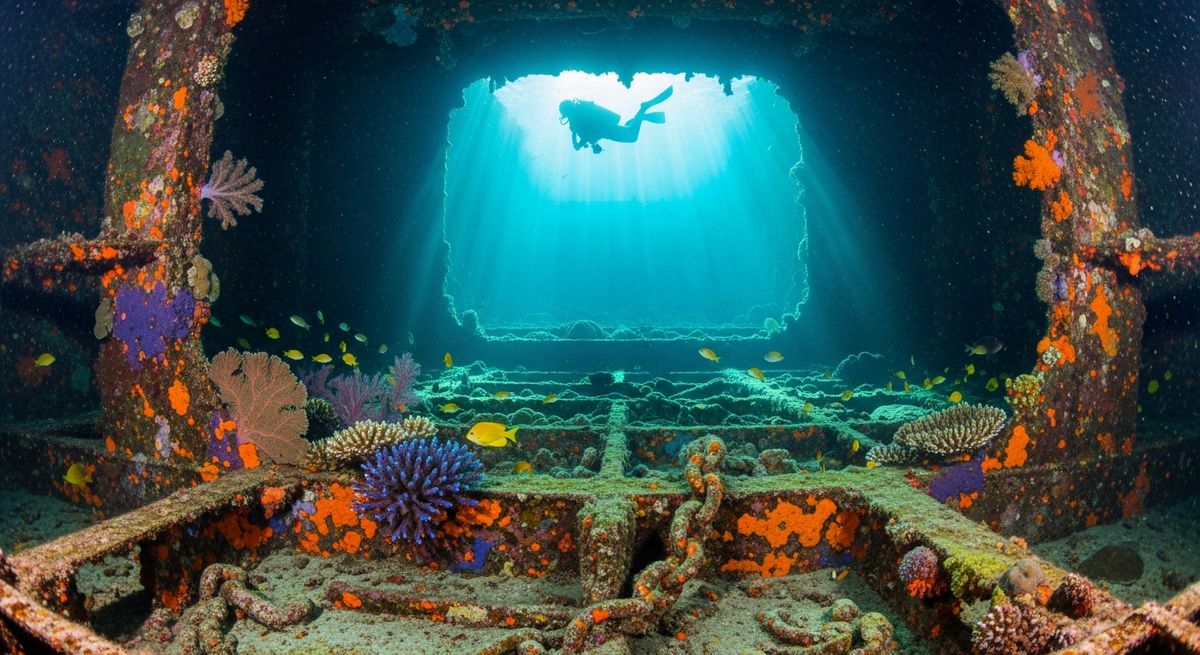
Wreck site - avoid penetration without wreck diving certification. Watch for sharp metal and entanglement hazards.
Reviews for Rainbow Wall
Conditions
Ocean conditions, forecast and tides for Rainbow Wall
Rainbow Wall Ocean Conditions
Monthly averages for Rainbow Wall, sourced from Open-Meteo marine data - nearest station: Open-Meteo marine grid (-9.03, 159.16) (58km away)
October Averages
Sea Temperature
30°C
85°F · Range: 28.7–30.5°C
Air Temperature
27°C
80°F
Wind Speed
3.74 m/s
7.3 knots
Atmospheric Pressure
1010.5 hPa
Based on 4 years of monitoring data · Data sources: Open-Meteo marine data
Plan & book
Ways to dive Iron Bottom Sound, from day trips to liveaboards.
Day trips & courses
via GetYourGuideGuided dives, courses and snorkel trips with instant booking.
Find dive trips in Iron Bottom SoundPlaces to stay
via Booking.comHotels and dive resorts near Iron Bottom Sound.
Search stays in Iron Bottom SoundDive insurance
Most travel insurance excludes or limits scuba. Check what you need before you go.
Dive insurance explainedPartner links: we may earn a commission if you book, at no extra cost to you. How we make money
Where to Stay near Rainbow Wall
Prices from Booking.com. We may earn a commission at no extra cost to you.