Russell Islands - Iron Bottom Sound

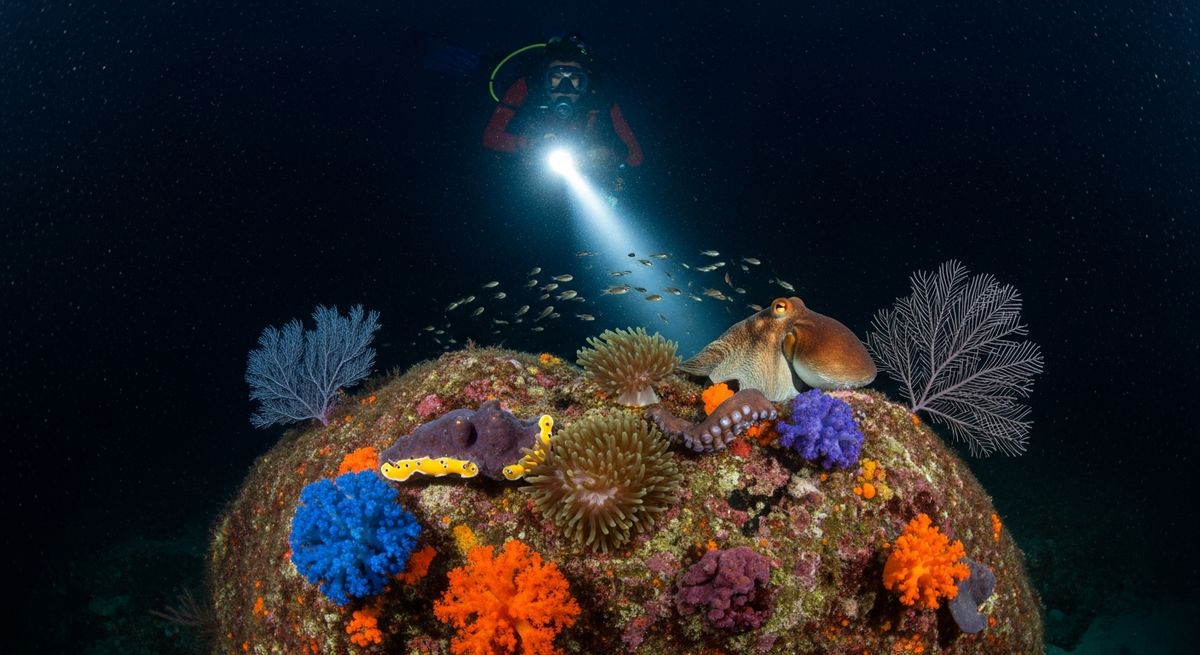
The Russell Islands, just a short hop from Guadalcanal in Iron Bottom Sound, are a staple on most Solomon Islands itineraries, and for good reason. We always enjoy the sheer variety here. You'll spend mornings navigating sun-dappled channels and caverns, the light playing tricks on your eyes, then drift over current-swept pinnacles in the afternoon, keeping an eye out for bigger fish passing through. There are vibrant coral reefs that live up to the “Rainbow Reef” name, thick with fusiliers and anthias that swirl like a living kaleidoscope. And of course, being the Solomons, you'll find scattered WWII relics, a somber reminder of history beneath the waves. It’s a spot that offers a lot, from easy reef exploration to more dynamic drift dives, suitable for divers comfortable with a mix of conditions.

Location
Iron Bottom Sound, Solomon Islands, Central & South Pacific
Coordinates
-9.035000, 159.165000

Best Time to Dive in Iron Bottom Sound

The warmest water temperatures in Iron Bottom Sound occur in January, averaging 30.5°C. The coolest conditions are in December at 30.5°C.

Monthly Water Temperatures

  • January: 30.5°C (air: 26.9°C)
  • February: 30.5°C (air: 26.7°C)
  • March: 30.5°C (air: 26.7°C)
  • April: 30.5°C (air: 26.8°C)
  • May: 30.5°C (air: 26.9°C)
  • June: 30.5°C (air: 26.5°C)
  • July: 30.5°C (air: 26.5°C)
  • August: 30.5°C (air: 26.3°C)
  • September: 30.5°C (air: 26.5°C)
  • October: 30.5°C (air: 26.7°C)
  • November: 30.5°C (air: 26.7°C)
  • December: 30.5°C (air: 26.9°C)

Nearby Dive Sites in Iron Bottom Sound

Nearest Dive Centres to Russell Islands

Marine Life in Iron Bottom Sound

Home to 415 recorded species including 320 reef fish, 29 hard corals, 18 sea snails & nudibranchs, 16 sea cucumbers, 7 seagrass & algae, 5 clams & mussels.

Notable Species

Recommended Packing List for Russell Islands

Based on average water temperature of 30.5°C.

  • Shorty or Rashguard - warm 30°C water needs minimal exposure protection
  • Mask - essential for every dive
  • Fins
  • BCD - buoyancy compensator
  • Regulator - your most safety-critical piece of gear
  • Dive Computer - tracks depth, time, and NDL
  • Surface Marker Buoy (SMB) - essential for boat pickups
  • Dive Torch - useful for crevices and colour at depth
  • Underwater Camera - capture your diving memories

Frequently Asked Questions

What are the typical diving depths at popular Russell Islands dive sites like Leru Cut or Custom Cave?
The provided information does not specify typical diving depths for popular Russell Islands dive sites such as Leru Cut or Custom Cave. However, the area is known for a huge variety of dives, including sunlit channels and caverns, which can vary significantly in depth. Divers should consult with local dive operators for specific depth profiles.
What kind of marine life and underwater features can divers expect to see when diving in the Russell Islands?
Divers exploring the Russell Islands can expect a rich variety of underwater features and marine life. The area boasts sunlit channels and caverns, current-swept pinnacles where pelagics are often seen, and colourful wrecks offering a glimpse into WWII history. Sites like Rainbow Reef are particularly vibrant, known for huge schools of fusiliers and anthias, creating a swirling mass of colour.
How challenging is the diving in the Russell Islands, and is it suitable for beginner divers?
Diving in the Russell Islands offers a diverse range of conditions. While specific sites like Rainbow Reef are rated as intermediate difficulty, the area also features current-swept pinnacles, which can present more challenging conditions. Divers should be prepared for varying currents, and some sites may be more suitable for experienced divers.
When is the best time of year to go diving in the Russell Islands for optimal conditions?
The provided information does not specify the best time of year to go diving in the Russell Islands for optimal conditions. For general guidance on dive seasons and planning your trip, please refer to our When to Dive section.
What scuba diving certifications are recommended or required for diving in the Russell Islands?
The provided data does not explicitly state specific scuba diving certifications recommended or required for diving in the Russell Islands. However, with sites rated as intermediate difficulty and featuring current-swept pinnacles, divers should possess appropriate certification and experience for such conditions. An Advanced Open Water certification is often beneficial for exploring diverse sites.
What are the typical water temperatures, visibility, and current conditions like for diving around the Russell Islands?
While specific water temperatures and visibility are not detailed in the provided information for the Russell Islands, divers can expect varying current conditions. The presence of 'current-swept pinnacles' indicates that currents can be a significant factor at some dive sites in the area. Always consult with local dive operators for the most up-to-date conditions before planning your dives.