Sasavele Dump Site - Iron Bottom Sound

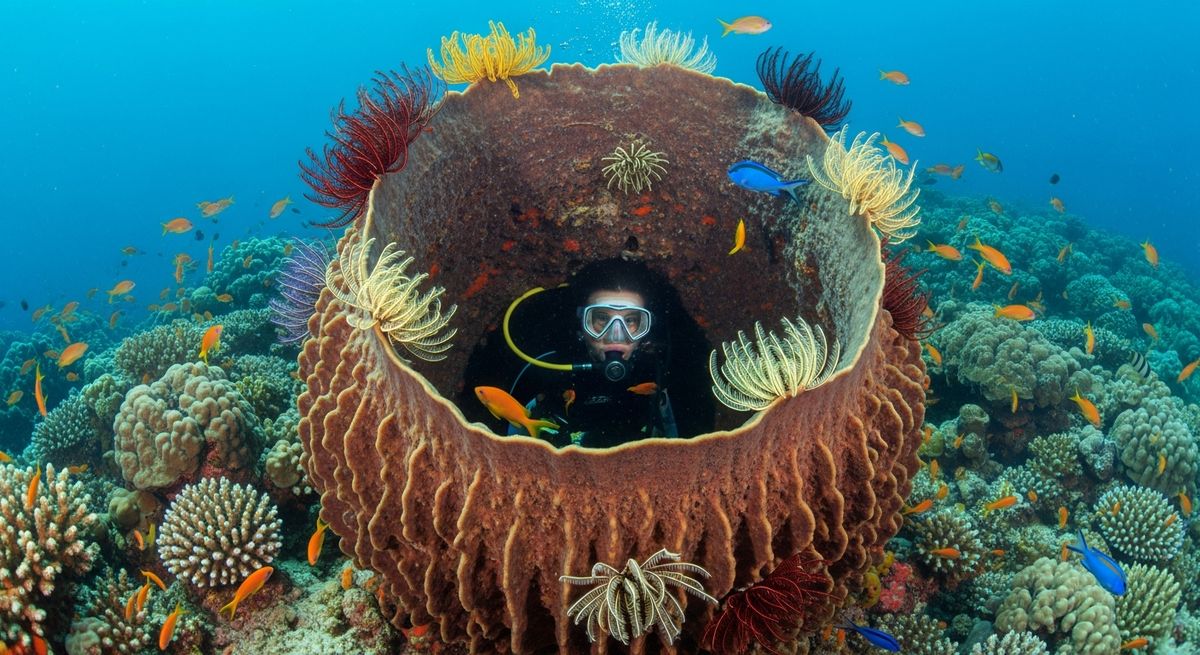
The Bight is one of those spots we recommend for a second dive of the day, a chance to really slow down. It’s a shallow one, just topping out at 19m, so you get plenty of bottom time to poke around. We love drifting over the sandy patches between the coral heads, keeping an eye out for the Fat Sleepers – they’re surprisingly camouflaged, almost like a piece of the sand itself. You'll often see groups of Chalk Bass darting in and out of the crevices, and the juveniles of Grey Snapper hang out in the turtlegrass. The Ten-ray Star Corals here are particularly impressive, forming big, intricate structures that hide all sorts of smaller life, like the Coney and the occasionally glimpsed Spot-tail Golden Bass. We’ve had some cracking encounters with green turtles here too, just cruising along, completely unfazed. Visibility generally hovers around a comfortable 20-25m, making it a super relaxed dive. It’s perfect for new divers getting their buoyancy dialled in or experienced folks who just want a chill cruise, hunting for critters and enjoying the quiet hum of the reef. If you hit it mid-morning, the light spilling onto the top reef is just gorgeous.

Location
Iron Bottom Sound, Solomon Islands, Central & South Pacific
Coordinates
-8.313100, 157.347600
Type
reef

Marine Protected Area: Sasavele/NB

Best Time to Dive in Iron Bottom Sound

The warmest water temperatures in Iron Bottom Sound occur in January, averaging 30.5°C. The coolest conditions are in December at 30.5°C.

Monthly Water Temperatures

  • January: 30.5°C (air: 26.9°C)
  • February: 30.5°C (air: 26.7°C)
  • March: 30.5°C (air: 26.7°C)
  • April: 30.5°C (air: 26.8°C)
  • May: 30.5°C (air: 26.9°C)
  • June: 30.5°C (air: 26.5°C)
  • July: 30.5°C (air: 26.5°C)
  • August: 30.5°C (air: 26.3°C)
  • September: 30.5°C (air: 26.5°C)
  • October: 30.5°C (air: 26.7°C)
  • November: 30.5°C (air: 26.7°C)
  • December: 30.5°C (air: 26.9°C)

Nearby Dive Sites in Iron Bottom Sound

Nearest Dive Centres to Sasavele Dump Site

Marine Life in Iron Bottom Sound

Home to 415 recorded species including 320 reef fish, 29 hard corals, 18 sea snails & nudibranchs, 16 sea cucumbers, 7 seagrass & algae, 5 clams & mussels.

Notable Species

Recommended Packing List for Sasavele Dump Site

Based on average water temperature of 30.5°C.

  • Shorty or Rashguard - warm 30°C water needs minimal exposure protection
  • Mask - essential for every dive
  • Fins
  • BCD - buoyancy compensator
  • Regulator - your most safety-critical piece of gear
  • Dive Computer - tracks depth, time, and NDL
  • Surface Marker Buoy (SMB) - essential for boat pickups
  • Dive Torch - useful for crevices and colour at depth
  • Underwater Camera - capture your diving memories

Frequently Asked Questions

What is the typical depth range for diving at Sasavele Dump Site?
The Sasavele Dump Site offers a typical maximum recreational diving depth of 18m, making it accessible for many divers. However, the site features a sloping wall that continues to drop to 40m, providing opportunities for deeper exploration for appropriately certified divers.
What kind of marine life and historical artifacts can divers expect to see at Sasavele Dump Site?
At the Sasavele Dump Site, divers can explore a fascinating array of WWII historical artifacts, including giant steel pontoons from a former US Navy base, assorted machinery, and even live ordinance scattered on the sloping wall. Beyond the history, the site teems with marine life, offering an abundance of macro critters like nudibranchs and cleaner shrimp, alongside sightings of Nurse Sharks and passing Eagle Rays. For more on marine species, visit our wildlife database.
How challenging is the Sasavele Dump Site for divers, and what level of experience is recommended?
The Sasavele Dump Site is rated as an intermediate difficulty dive. This suggests that divers should have some prior experience beyond entry-level certifications and be comfortable with various diving conditions. It is an excellent site for divers looking to expand their skills and explore historical wrecks.
What is the best time of day or year to dive the Sasavele Dump Site for optimal conditions and marine encounters?
Specific information regarding the best time of day or year for optimal conditions and marine encounters at the Sasavele Dump Site is not available in the provided data. For general guidance on diving seasons in the region, you may consult our When to Dive section.
Are there any specific diving certifications or training recommended for diving the Sasavele Dump Site?
Given the intermediate difficulty rating and the sloping wall that drops to 40m, divers exploring the deeper sections of the Sasavele Dump Site would benefit from advanced certifications such as Advanced Open Water or Deep Diver training. While not explicitly required, understanding wreck diving principles and exercising caution around live ordinance is always recommended. Always ensure your equipment is in top condition.
What are the typical current conditions and visibility like at Sasavele Dump Site?
The provided data does not contain specific information regarding the typical current conditions or visibility at the Sasavele Dump Site. Divers planning a trip should consult local dive operators for the most up-to-date conditions.