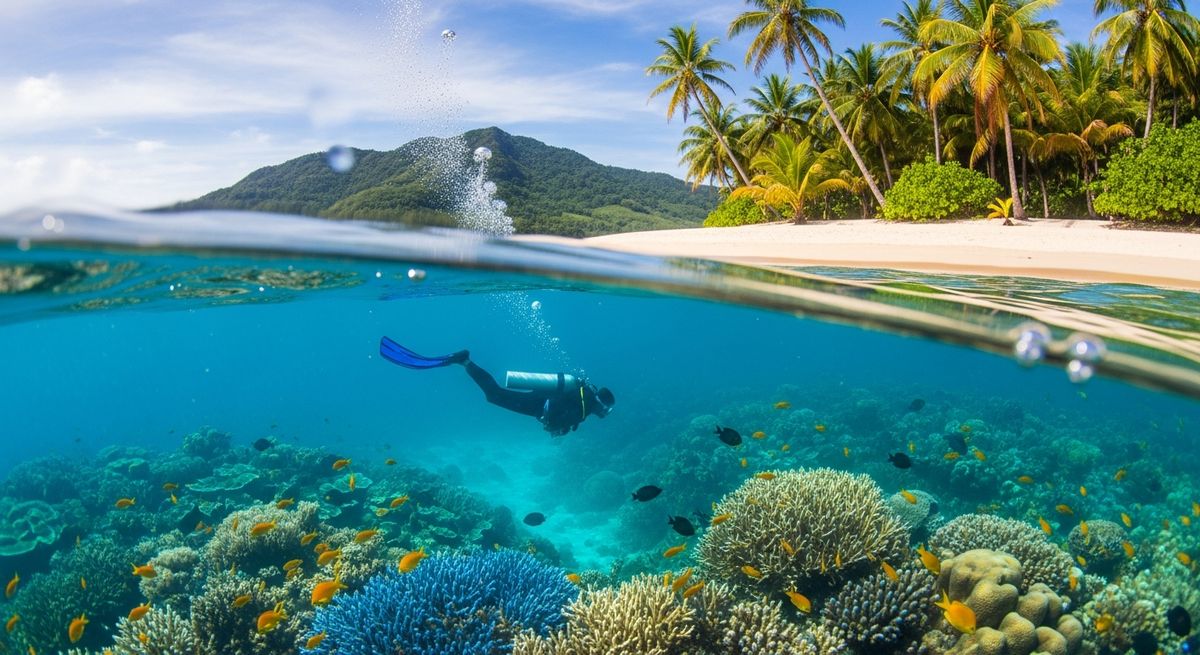
Twin Tunnels Reef
Protected Area
Tulagi Island
Why dive here
With 391+ marine species recorded in the area - including barracuda, blacktip reef sharks, grey reef sharks, humpback whales and orcas - Twin Tunnels Reef offers some of Iron Bottom Sound's richest reef diving. Water ranges 29-31°C, warmest January, April, December.
Twin Tunnels is one of those sites we always make a point of revisiting. It's a proper pinnacle reef, dropping straight down from 15m to a sandy bottom somewhere beyond recreational limits. What makes it special are the two vertical shafts that cut through the reef top. Dropping into one, you immediately feel the temperature dip and hear the subtle rush of water. Sunlight filters down, illuminating schools of tiny silversides shimmering like glitter. We often find ourselves just hovering in the shafts, watching the light play on the walls. They open into a larger chamber at 36m, and this is where the real action often happens. It's a natural meeting point for predator and prey, so keep an eye out for talang queenfish patrolling the current, and we’ve spotted black triggerfish flitting about. Outside the chamber, the reef is just bursting with colour – soft corals swaying, and we’ve seen multiple species of anemonefish sharing the same anemone, which is always a treat. Our favourite moment is usually exiting the tunnel and looking back up at the blue, often catching a fleeting glimpse of something larger in the distance. It’s a site that rewards careful exploration, great for those who enjoy a bit of overhead environment combined with vibrant reef life.
Nearest Dive Centres to Twin Tunnels Reef
Dive shops near Twin Tunnels Reef
View all dive centres in Iron Bottom SoundReviews for Twin Tunnels Reef
Conditions
Ocean conditions, forecast and tides for Twin Tunnels Reef
Twin Tunnels Reef Ocean Conditions
Monthly averages for Twin Tunnels Reef, sourced from Open-Meteo marine data - nearest station: Open-Meteo marine grid (-9.03, 159.16) (58km away)
October Averages
Sea Temperature
30°C
85°F · Range: 28.7–30.5°C
Air Temperature
27°C
80°F
Wind Speed
3.74 m/s
7.3 knots
Atmospheric Pressure
1010.5 hPa
Based on 4 years of monitoring data · Data sources: Open-Meteo marine data
Plan & book
Ways to dive Iron Bottom Sound, from day trips to liveaboards.
Day trips & courses
via GetYourGuideGuided dives, courses and snorkel trips with instant booking.
Find dive trips in Iron Bottom SoundPlaces to stay
via Booking.comHotels and dive resorts near Iron Bottom Sound.
Search stays in Iron Bottom SoundDive insurance
Most travel insurance excludes or limits scuba. Check what you need before you go.
Dive insurance explainedPartner links: we may earn a commission if you book, at no extra cost to you. How we make money
Where to Stay near Twin Tunnels Reef
Prices from Booking.com. We may earn a commission at no extra cost to you.