ACAMAR
Why dive here
ACAMAR is a wreck dive in Northeast Coast, Taiwan. Water ranges 18-30°C, warmest July, August, September.
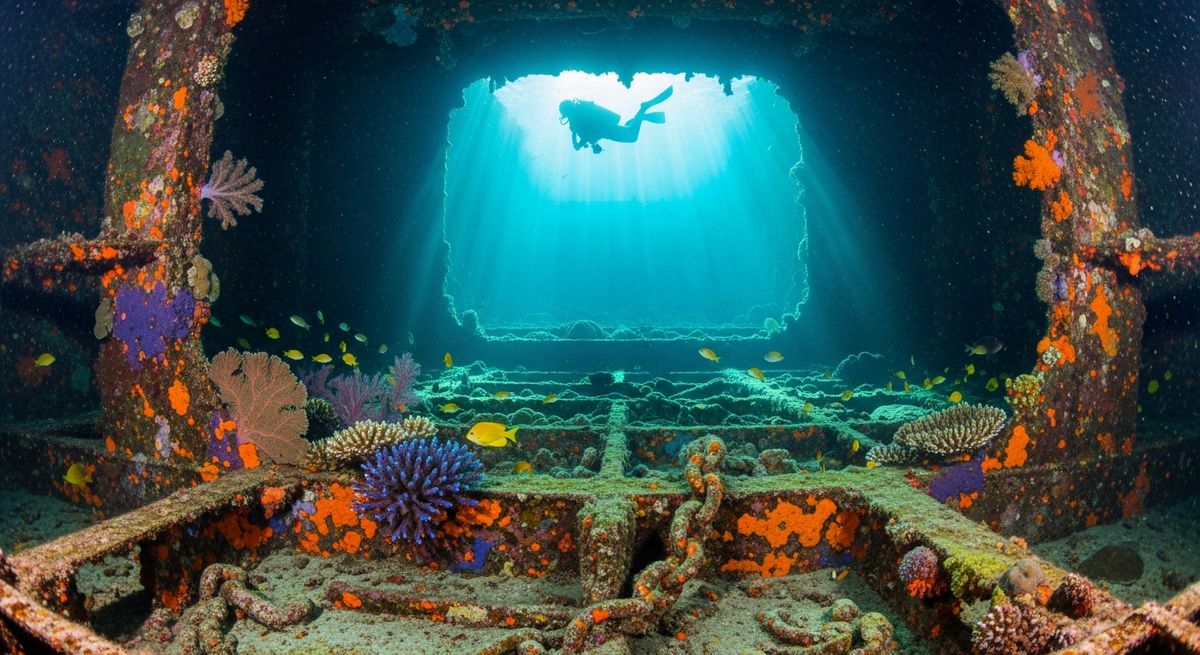
Acamar. Just the name sounds a bit mysterious, doesn't it? This isn't your average shallow reef bimble, it’s a proper expedition. We’re talking about a wreck that disappeared in '93, a 100-meter cargo vessel that now lies upright at 60 meters. Dropping down, the blue just stretches forever until the dark outline of the hull appears, massive and imposing. Our favourite part is definitely the stern, where the prop is still mostly intact, huge blades covered in sponges and hydroids. The holds are open, gaping black mouths, and while penetration is possible, we’d suggest careful planning and appropriate training given the depth. You’ll see plenty of schooling fish, bigeye trevally often swirling around the mast, and we’ve spotted giant moray eels peeking from crevices. We love that feeling of being in such a remote, deep spot, completely alone with this piece of history. The sheer scale of it is humbling. It’s a dive that demands respect, perfect for experienced technical divers looking for a real challenge and a genuine sense of exploration. Expect strong currents sometimes, so pick your day carefully.
Typical ACAMAR Dive Profile
Illustrative profile based on site depth and type. Actual dive profiles vary - always follow your dive computer and training.
Safety Notes
Maximum depth 60m exceeds recreational limits (40m). Technical diving certification and equipment required.
Wreck site - avoid penetration without wreck diving certification. Watch for sharp metal and entanglement hazards.
Always perform a 3-minute safety stop at 5m before surfacing.
ACAMAR Wreck History
Year Sunk
1993
Vessel Type
cargo ship
Cause
unknown
The story of the motor vessel Acamar is one of modern maritime mystery. In January 1993, the ship departed Hong Kong, bound for the port of Keelung in Taiwan. It never arrived. The Acamar was reported missing, and despite an extensive search, no trace of the vessel or its crew was found. The ship had vanished without a distress call, leaving behind only questions.
The vessel's fate was tragically confirmed later when bodies were recovered from the sea near the P'eng-hu (Pescadores) Islands. It was presumed that the Acamar had foundered and sunk, but the exact cause remains unknown to this day. Whether it was overcome by a sudden storm, suffered a catastrophic mechanical failure, or met with another misfortune, the sea has kept its secrets.
For the technical diving community, the Acamar represents a challenging and somber exploration. Resting at a depth of 60 meters off the northeast coast of Taiwan, it is a deep dive reserved for only the most experienced and properly equipped divers. The wreck is a modern time capsule, and its exploration is a dive into the heart of a recent maritime tragedy, demanding respect for the lives that were lost.
Reviews for ACAMAR
Conditions
Ocean conditions, forecast and tides for ACAMAR
ACAMAR Ocean Conditions
Monthly averages for ACAMAR, sourced from Open-Meteo marine data - nearest station: Open-Meteo marine grid (25.02, 121.51) (24km away)
October Averages
Sea Temperature
27°C
81°F · Range: 25.1–30°C
Based on 4 years of monitoring data · Data sources: Open-Meteo marine data
Plan & book
Ways to dive Northeast Coast, from day trips to liveaboards.
Day trips & courses
via GetYourGuideGuided dives, courses and snorkel trips with instant booking.
Find dive trips in Northeast CoastPlaces to stay
via Booking.comHotels and dive resorts near Northeast Coast.
Search stays in Northeast CoastDive insurance
Most travel insurance excludes or limits scuba. Check what you need before you go.
Dive insurance explainedPartner links: we may earn a commission if you book, at no extra cost to you. How we make money
Where to Stay near ACAMAR
Prices from Booking.com. We may earn a commission at no extra cost to you.