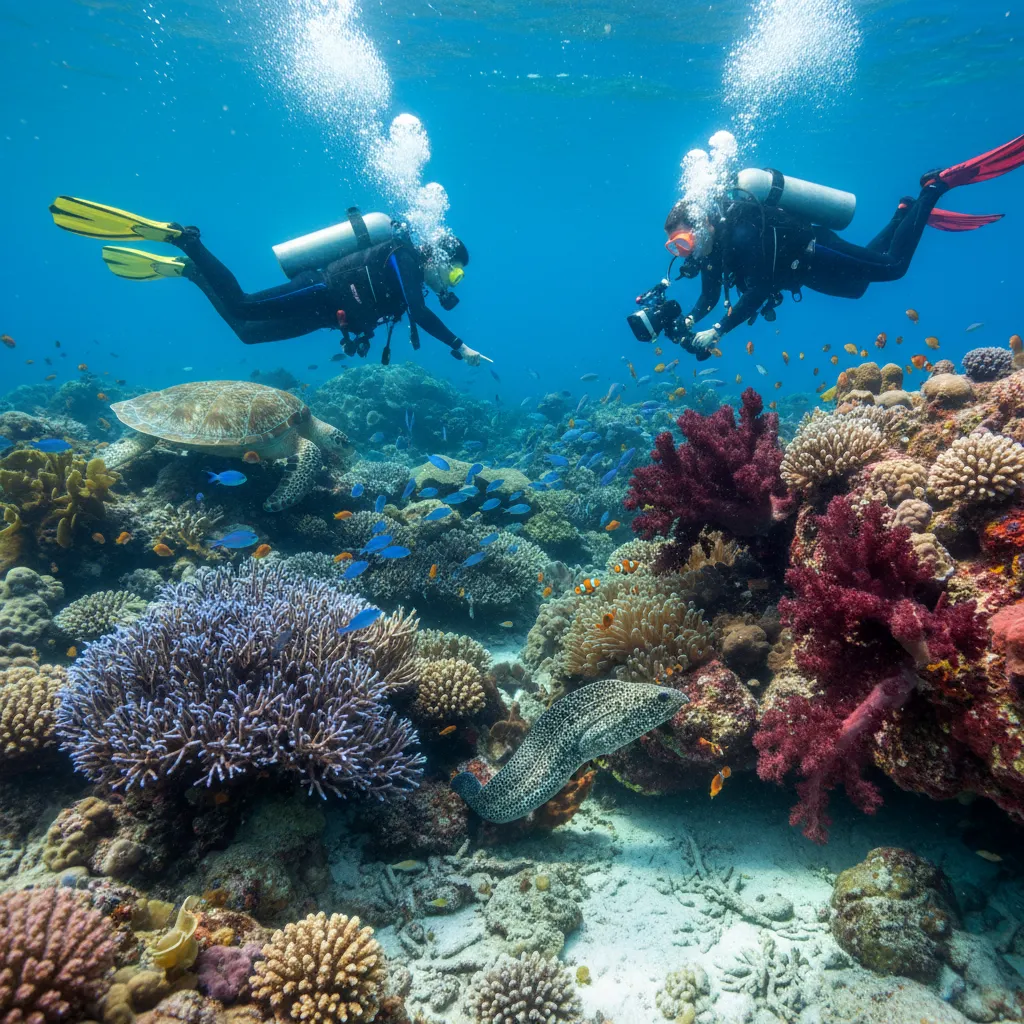
Diving in Northeast Coast
Why dive here
Northeast Coast offers 38 dive sites in Taiwan.
Taiwan’s Northeast Coast, just a short drive from Taipei, is often overlooked by divers chasing tropical titans. That’s a mistake. We love it for its quiet charm and incredible macro opportunities. Think temperate rocky reefs, a place where you're more likely to spot a quirky Flat-faced Seahorse clinging to a sponge or a shy Red Whalefish tucked into a crevice than a pelagic showstopper. The nudibranch diversity here is truly outstanding; you’ll find species you’ve never even heard of, their colours popping against the darker rock. Visibility can be a bit variable, especially after heavy rains, but we find the best conditions usually run from late spring through autumn. That’s when the soft corals really come alive, painting the reefs in delicate pinks and purples. Currents are generally manageable, making it perfect for lingering over a patch of Pavona coral searching for a Honeycomb Grouper or a Green Turtle munching on algae. Don't expect dramatic drop-offs; this is diving for the patient observer, the one who thrills at finding a Blackfin Triplefin perched on a rock or a pair of Common Dragonets dancing during their mating ritual. Our favourite dive often involves picking a small area and thoroughly exploring every crack and crevice - you’ll be amazed at what reveals itself.
Northeast Coast Dive Site Map
Dive sites and dive centres in Northeast Coast
Northeast Coast Dive Sites
38 dive sites in Northeast Coast
ACAMAR
Acamar. Just the name sounds a bit mysterious, doesn't it? This isn't your average shallow reef bimble, it’s a proper expedition. We’re talking about a wreck that disappeared in '93, a 100-meter cargo vessel that now lies upright at 60 meters. Dropping down, the blue just stretches forever until the dark outline of the hull appears, massive and imposing. Our favourite part is definitely the stern, where the prop is still mostly intact, huge blades covered in sponges and hydroids. The holds are open, gaping black mouths, and while penetration is possible, we’d suggest careful planning and appropriate training given the depth. You’ll see plenty of schooling fish, bigeye trevally often swirling around the mast, and we’ve spotted giant moray eels peeking from crevices. We love that feeling of being in such a remote, deep spot, completely alone with this piece of history. The sheer scale of it is humbling. It’s a dive that demands respect, perfect for experienced technical divers looking for a real challenge and a genuine sense of exploration. Expect strong currents sometimes, so pick your day carefully.
ADHIGUNA MERANTI
We’ve always had a soft spot for the Adhiguna Meranti. It’s not a deep dive, only five metres at most, but what it lacks in depth it more than makes up for in character. This old carrier, built in ‘64 and sunk in ‘81 after running aground south of Keelung Island, now sits broken but proud. You can explore the bow and stern sections, which are largely intact and full of nooks and crannies. We particularly like the way the sunlight filters through the collapsed superstructure, illuminating schools of small baitfish that swirl around the metal. It’s an easy dive, perfect for photographers looking for interesting angles or newer divers getting their first taste of a wreck. Look closely and you’ll find plenty of nudibranchs clinging to the metal, and we’ve often seen lionfish lurking in the shadows. Our favourite time to visit is on a calm morning, just as the sun gets high enough to really penetrate the water. The visibility can be a bit variable, so pick your day carefully; after a few dry days is usually best. It’s a proper piece of history, now a vibrant artificial reef, and we think it’s a real standout on Taiwan's Northeast Coast.
ASIAN VICTORY
The *Asian Victory* is a proper wreck dive, especially for Taiwan's Northeast Coast. We love that it's completely broken into three main sections, all spread out enough to give you a good swim, but not so far that you lose the plot. Dropping down, you’re often greeted by schools of yellowstripe scad that just part as you glide through. The bow section, upright and still imposing, is our favourite. There’s a cargo hold you can duck into, if you’re comfortable with overheads, and it’s usually crammed with glassfish that shimmer like a living curtain. The stern section, a bit flatter, is home to some big groupers that have clearly made it their permanent address. You’ll find nudibranchs crawling across the older growth on the metal plates, and sometimes a stonefish blending in a little too well. With a maximum depth of 15 metres, it’s a site that rewards slower exploration; you can really spend time looking into the crevices without worrying about your bottom time. It’s perfect for divers who appreciate the history of a wreck and the way nature reclaims it, without needing extreme depths or challenging currents.
BARKLA
The Barkla, resting just four metres deep, is less a dive and more an underwater history lesson you can snorkel over, or, better yet, free dive down to. We love this site because it’s so accessible, making it a brilliant spot for those days when you just want to get wet without hauling all your gear, or for introducing newer divers to the magic of a wreck. This old bulk carrier, scuttled in ‘87 while on its way to be scrapped, has become a home to so many critters, almost as if it dodged its fate to become a living reef instead. You'll spend your time here exploring the broken hull, watching schools of juvenile snapper dart in and out of the metal plates. Look for the nudibranchs inching across the encrusted beams; we’ve spotted some truly striking specimens here, bright splashes of colour against the rust. The sheer size of the Barkla, even with much of it salvaged, is impressive at this shallow depth, and on a calm day, the visibility lets you take in large sections of the structure from the surface. It’s a gentle introduction to wreck diving, perfect for honing buoyancy or just enjoying a relaxed float over a piece of maritime history.
BORAG (AFT SECTION)
The Borag's aft section sits in surprisingly shallow water, making it a cracking wreck dive for just about anyone. At only 10 metres deep, you get fantastic bottom time to really snoop around. We love drifting over the propeller, still looking massive after all these years, and then poking our heads into the old engine room. Light filters down from the surface, illuminating schools of small jacks darting through the superstructure. What makes this site a standout for us isn't just the history – a tanker grounded back in '77 – but how the ocean has reclaimed it. Anemones carpet steel plates, their tentacles waving in the gentle surge, and we’ve spotted moray eels peeking out from pipes more times than we can count. Our favourite move is to duck through one of the larger openings, feeling the cooler water inside, and watching the colourful wrasse flit between the corroded metal. It’s an easy, rewarding dive, offering a proper wreck experience without the usual depth challenges.
CAHAYA
Okay, so Cahaya. Not your typical tropical wreck, but a really fascinating spot on Taiwan's Northeast Coast. This motor vessel, originally bound for Japan from Indonesia, got properly hammered by Typhoon Ophelia back in 1990, breaking into three distinct sections. The deepest part sits at around 4 metres, making it incredibly accessible, even for newer divers getting their first taste of wreck diving. We love that you can spend ages just finning over the fragmented hull, piecing together its story. What you'll actually see is a landscape of twisted metal and exposed ribs, all draped in a surprising amount of soft coral and anemones. Schools of small damselfish dart in and out of the crevices, and we’ve often spotted a grumpy moray eel peeking from a protected nook. The bow section is our favourite, still quite recognisable, with its anchor chain a ghostly trail across the sandy bottom. Visibility here can vary, so we'd suggest checking local conditions before you go. On a good day, with the sun filtering through the shallows, the light play on the wreck is absolutely mesmerising. It’s not about grand swim-throughs, but rather the sheer scale of the wreckage and how nature has reclaimed it.
CHOONG YONG
The Choong Yong, a bulk carrier that went down back in '85, isn't your typical deep wreck dive. In fact, it's barely a dive at all, with depths bottoming out at just 5 metres. That's why we love it. We’ve found it’s ideal for a long, slow explore, especially when the light is good. You’re practically snorkelling over history here. The sheer scale of the ship is impressive, even if much of it is now broken up. We like to drift along its length, picking out the scattered sections of the hull. Look closely and you’ll find plenty of smaller life: we've often seen clownfish darting among the anemones that have taken root, and groups of damselfish flitting around the exposed metal. On a calm day, with the sun high, the light plays beautifully through the shallow water, illuminating the colours of the algae and corals growing on the old steel. It’s not a challenging dive, which means you can really take your time and soak it all in. Our favourite approach is a long, easy swim along the wreck, letting the gentle surge push you along. It's a great spot for newer divers, or anyone who just wants a relaxed swim with a bit of history to it.
DINOK
The DINOK wreck, formerly the *Die Lorelei*, lies off Taiwan's Northeast Coast, a casualty of a typhoon back in '88. We typically dive it to a max depth of 13 meters, which makes it pretty accessible. The ship itself is a decent size, over 100 meters long, and it's mostly intact. You can swim through some of the cargo holds and around the superstructure, finding plenty of lionfish tucked into crevices and schools of rabbitfish grazing on the growth. It’s a solid wreck dive for those looking to explore a piece of history that’s now home to a good variety of reef fish, without needing advanced certs.
EVPO AGFREM
EVPO AGFREM, affectionately known as the Franka Wreck, isn't just another chunk of metal at the bottom. This old carrier, sunk back in '88, sits upright and largely intact, which we always appreciate. She’s only at 10 metres, making it a brilliant spot for extended bottom times and really picking apart the details. We love dropping onto the stern, where the superstructure still offers plenty of swim-throughs. Sunlight filters through the wheelhouse windows, illuminating schools of glassfish that pulse like a living curtain. Our favourite part is exploring the cargo holds, now home to territorial moray eels peeking from every crevice and lionfish fanning their spines in the shadows. The sheer scale of the Franka means you can dive it several times and still find new corners, and it’s especially good for newer wreck divers or photographers wanting to practice without depth concerns. Just keep an eye on the occasional surge when the tide turns; it can make navigating the interior a bit lively.
Hammerhead Rock
Hammerhead Rock, off Taiwan's Northeast Coast, is a good intermediate dive. The site is mostly rock formations dropping to 26 meters, with visibility that can sometimes surprise you. We've seen schooling fish here and the occasional pelagic passing through, though hammerheads are rare. It's a decent spot if you're in the area and looking for a straightforward dive with some current.
HONG TONG
Hong Tong is a bittersweet site for us. We were so sad to hear she’s being salvaged, a real loss for the Northeast Coast. Even now, with her back broken and the hull slowly going, she’s still a fantastic shallow wreck dive. At just 8 metres, it’s a site for everyone, perfect for long bottom times and really soaking in the atmosphere. The wreck itself is a motor vessel, a decent size, and she’s been down since ’79, plenty of time for life to take hold. You’ll find loads of scorpionfish camouflaged on the hull, and often a few lionfish too, just hovering in the gentle surge. Inside what’s left of the superstructure, look for glassfish schooling and, if you’re lucky, a moray eel peeking out from a pipe. We always enjoyed finning slowly from bow to stern, spotting the details that time and the ocean had etched into the metal. She was a colourful wreck, lots of soft corals and sponges growing over the rust. Go soon if you can, before she’s gone completely.
HONGYI
Hongyi is a wreck dive, but it’s not your usual deep plunge. This old motor vessel, which went down in '91, sits in an incredibly shallow three metres of water. We love it because it’s a proper wreck, not just some scattered debris, and it’s completely colonised by the reef. You’re basically snorkelling a shipwreck, or if you’re on a single tank, you could spend a good hour exploring it. The hull itself is a tapestry of soft corals, and you’ll see anthias and damsels flitting in and out of every nook. We’ve found moray eels tucked into the darker crevices, and sometimes a big grouper will eye you from under a steel plate. It’s an easy dive, perfect for photographers or anyone who wants to really take their time soaking in the details of a sunken ship without worrying about bottom time or decompression. The ambient light at this depth just makes everything glow.
Show all 38 dive sites in Northeast Coast
- HSIN-HUNG-FA
- HUALIEN
- JEN CHENG HAO NO 201
- Long Dong Bay
- LUNG HAO
- MIN LIEN NO 1525
- NAN SING
- NISSHO
- ORIENTAL LADY (BOW SECTION)
- ORIENTAL LADY (STERN SECTION)
- PRESIDENT GRANT
- QUATSINO SOUND
- Secret garden
- SONG YUN
- SOUTH PACIFIC QUEEN
- STELLA CROCE
- SUMMIT 11 (PROBABLY)
- TA WAN
- TOYOI-CHI MARU
- TRANS SAPHIRE
- TRIUMPH ACE
- WESTERN GLORY
- Wreck of Arromanches
- YEOU MAW
- 比賽池
- 潛立方潛水旅館
Northeast Coast Dive Centres
31 dive shops and operators in Northeast Coast
1988 Diver Training Center
52 Long Dong
891 Diving Center
Aodi Diving Center
Awesome Diving Center
Big Blue
Blue Bay Diving Institution
Blue Galaxsea Diving Center
Show all 31 dive centres in Northeast Coast
- DIVE CUBE City Diving & Hotel
- Dreamer Diving
- FREEPILOT
- I diving
- Inner Space Dive Center I - Taipei 內太空潛水訓練中心
- LA Diving
- Nereus Dive Center
- Ocean Diving Club 縱橫四海
- Ocean Planet Diving Center
- OCEAN TRACER CLUB
- PACIFIC DIVE CENTER
- Phoenix Bay Diving
- Plus Dive Center
- Quarter Diving
- R. H. Ocean
- Sam’s Club
- Sea Apes Diving
- SHARK RESORT ALOHA WATERWIDE
- SUBTIDAL DIVE
- Taiwan Dive Buddy
- W-SPORT DIVING CENTER 威鯨潛水訓練中心
- 東北角潛水客棧
- 海洋途徑潛水Ocean Channel Diving
Northeast Coast Daylight & Sunrise/Sunset
Sunrise and sunset times for Northeast Coast, calculated from coordinates
Today - Sunday 11 October
Sunrise
05:51
Sunset
17:33
Daylight
11h 42m
Golden Hour
17:03
First light (dawn) at 05:28 · Last light (dusk) at 17:56
Monthly Averages
| Month | Sunrise | Sunset | Daylight |
|---|---|---|---|
| Jan | 06:42 | 17:27 | 10h 45m |
| Feb | 06:30 | 17:49 | 11h 19m |
| Mar | 06:05 | 18:04 | 11h 59m |
| Apr | 05:34 | 18:17 | 12h 43m |
| May | 05:12 | 18:32 | 13h 20m |
| JunLongest | 05:06 | 18:46 | 13h 40m |
| Jul | 05:15 | 18:47 | 13h 33m |
| Aug | 05:29 | 18:31 | 13h 2m |
| Sep | 05:41 | 18:01 | 12h 19m |
| OctNow | 05:53 | 17:29 | 11h 36m |
| Nov | 06:12 | 17:09 | 10h 57m |
| DecShortest | 06:32 | 17:09 | 10h 36m |
Times are approximate local times based on longitude. Actual times may vary slightly depending on the exact timezone observed in Northeast Coast.
Where to Stay near Northeast Coast
Prices from Booking.com. We may earn a commission at no extra cost to you.
Marine Protected Areas near Northeast Coast
18 protected areas near Northeast Coast - please respect local regulations when diving
大肚溪口野生動物重要棲息環境
大肚溪口野生動物保護區
客雅溪口及香山?地野生動物重要棲息環境
新竹市濱海野生動物保護區
高美野生動物保護區
台中縣高美野生動物重要棲息環境
桃園觀新藻礁生態系野生動物重要棲息環境
桃園觀新藻礁生態系野生動物保護區
嘉義縣鰲鼓野生動物重要棲息環境
馬祖列島野生動物重要棲息環境
馬祖列島燕鷗保護區
蘭陽溪口水鳥保護區
Showing 12 largest of 18
Getting to Northeast Coast
Taoyuan
Taipei (Songshan)
Hualien City
Plan & book
Ways to dive Northeast Coast, from day trips to liveaboards.
Day trips & courses
via GetYourGuideGuided dives, courses and snorkel trips with instant booking.
Find dive trips in Northeast CoastPlaces to stay
via Booking.comHotels and dive resorts near Northeast Coast.
Search stays in Northeast CoastDive insurance
Most travel insurance excludes or limits scuba. Check what you need before you go.
Dive insurance explainedPartner links: we may earn a commission if you book, at no extra cost to you. How we make money