TRANS SAPHIRE
Protected Area
淡水河紅樹林自然保留區
Why dive here
TRANS SAPHIRE is a wreck dive in Northeast Coast, Taiwan. Water ranges 18-30°C, warmest July, August, September.
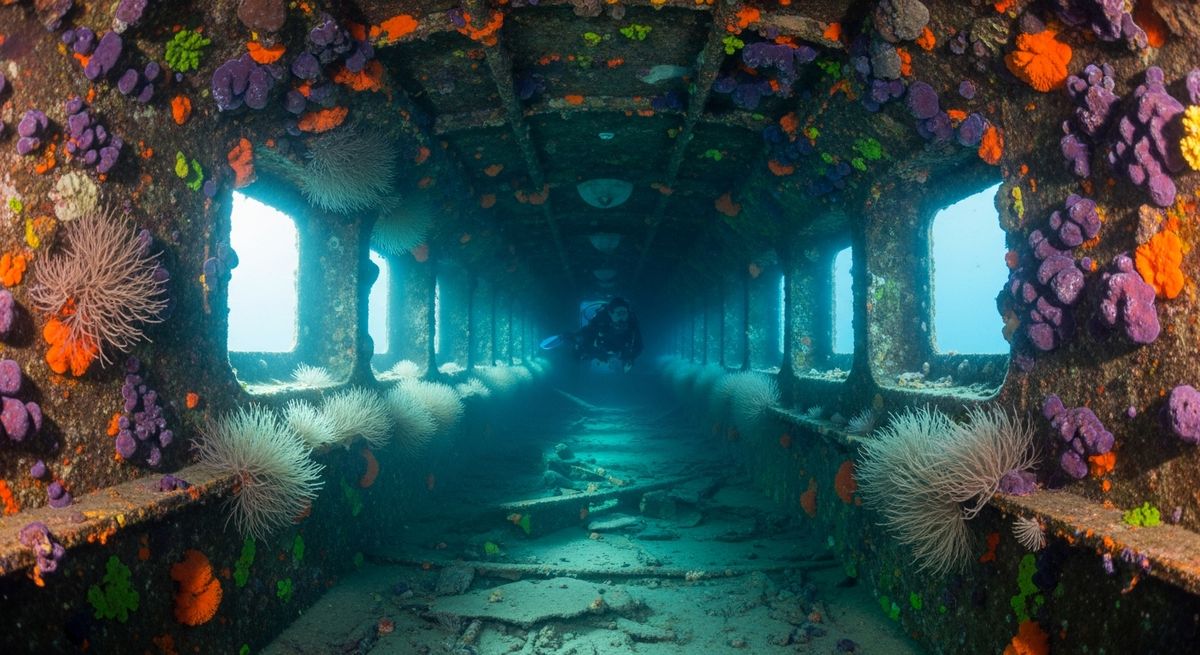
The Trans Saphire isn’t about big pelagics or colourful reefs; it’s a proper piece of history, just sitting there in the shallows off Taiwan’s Northeast Coast. This old bulk carrier, sunk way back in ‘78, is surprisingly intact for such a shallow wreck. We love how the sheer size of it dominates the underwater landscape, even at a maximum depth of just 8 metres. You’re swimming over massive steel plates, some peeling back like forgotten pages, and through cavernous cargo holds now serving as apartment blocks for schools of snapper. The best time to dive it is definitely on a calm day, when the sun can really penetrate, lighting up the nooks and crannies where groupers lurk. Look closely, and you’ll spot nudibranchs crawling along the corroded metal, and we’ve seen some decent-sized lionfish too. Our favourite part has to be tracing the outline of the stern, imagining the ship’s final moments. It’s a gentle dive, perfect for photographers wanting to capture dramatic wreck silhouettes, or anyone who enjoys a bit of maritime archaeology without the need for deep technical skills. Just keep an eye on the currents; they can pick up sometimes, making it a bit of a workout.
Typical TRANS SAPHIRE Dive Profile
Illustrative profile based on site depth and type. Actual dive profiles vary - always follow your dive computer and training.
Safety Notes
Wreck site - avoid penetration without wreck diving certification. Watch for sharp metal and entanglement hazards.
Nearest Dive Centres to TRANS SAPHIRE
Dive shops near TRANS SAPHIRE
PACIFIC DIVE CENTER
Nereus Dive Center
Taiwan Dive Buddy
1988 Diver Training Center
Big Blue
Inner Space Dive Center I - Taipei 內太空潛水訓練中心
Reviews for TRANS SAPHIRE
Conditions
Ocean conditions, forecast and tides for TRANS SAPHIRE
TRANS SAPHIRE Ocean Conditions
Monthly averages for TRANS SAPHIRE, sourced from Open-Meteo marine data - nearest station: Open-Meteo marine grid (25.02, 121.51) (24km away)
October Averages
Sea Temperature
27°C
81°F · Range: 25.1–30°C
Based on 4 years of monitoring data · Data sources: Open-Meteo marine data
Plan & book
Ways to dive Northeast Coast, from day trips to liveaboards.
Day trips & courses
via GetYourGuideGuided dives, courses and snorkel trips with instant booking.
Find dive trips in Northeast CoastPlaces to stay
via Booking.comHotels and dive resorts near Northeast Coast.
Search stays in Northeast CoastDive insurance
Most travel insurance excludes or limits scuba. Check what you need before you go.
Dive insurance explainedPartner links: we may earn a commission if you book, at no extra cost to you. How we make money
Where to Stay near TRANS SAPHIRE
Prices from Booking.com. We may earn a commission at no extra cost to you.