Raunglap - Flic en Flac & West Coast

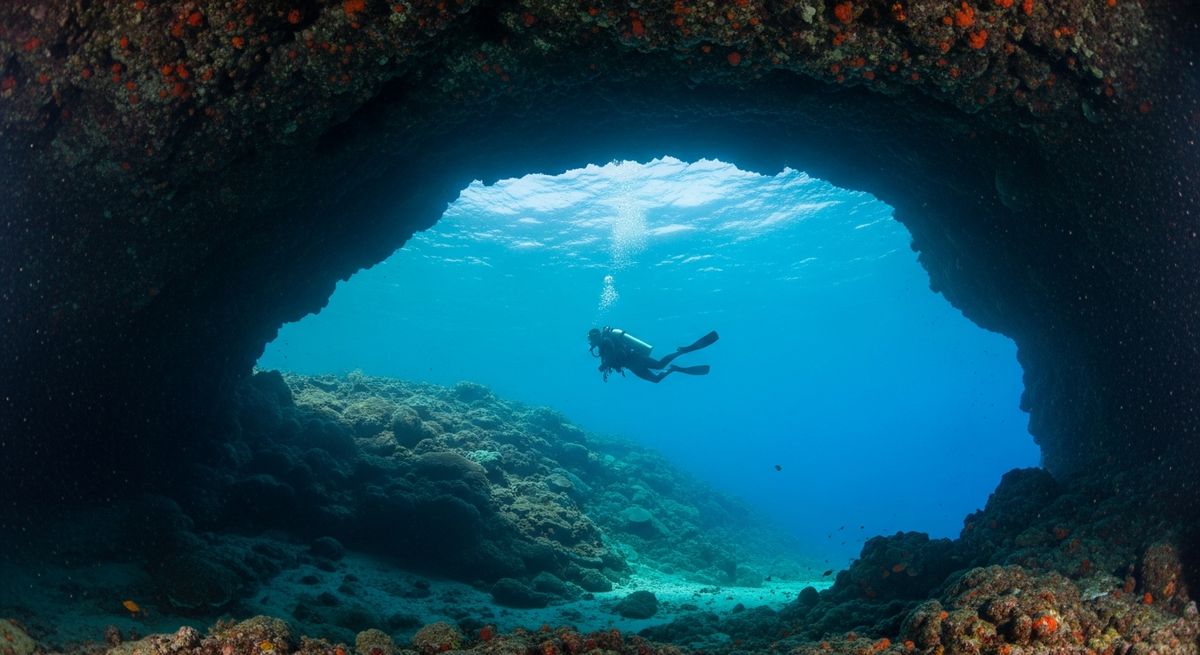
Stanley Island, for us, is a perfect example of why we love diving in the Hauraki Gulf. It’s not about huge pelagics or endless visibility, though we’ve had some cracking days here. It’s about the texture of the place. We’ve drifted along the ‘Great Wall’ on the western side, watching the light play on the sponges and anemones that coat the rock face. The max depth here is 16m, so there’s plenty of bottom time to really explore. On the eastern side, we often poke around the two small caves. They aren’t huge, more like swim-throughs, but they’re big enough to give you that cool, enclosed feeling, and we’ve found green rock lobsters tucked away in there more than once. The schools of Pacific sardines can be mesmerising, shifting like quicksilver, and we’ve had barracouta shoot through them on occasion. Visibility averages around 12m, but can vary. We always suggest hitting it on a calm day, especially if you want to properly explore the cave entrances. Stanley Island suits divers who appreciate detailed reef exploration and don't necessarily need dramatic drop-offs. It's a forgiving site, good for knocking off some rust or for a relaxed day out, offering engaging visuals without demanding deep dives. You’ll see plenty of New Zealand’s common reef fish, like pigfish and wrasse, along with the occasional pelagic passing through.

Location
Flic en Flac & West Coast, Mauritius, Indian Ocean & East Africa
Coordinates
-20.177300, 57.781900
Type
cave

Marine Protected Area: Poste Lafayette Fishing Reserve

Best Time to Dive in Flic en Flac & West Coast

The warmest water temperatures in Flic en Flac & West Coast occur in January, averaging 28.0°C. The coolest conditions are in December at 28.0°C.

Monthly Water Temperatures

  • January: 28.0°C (air: 27.0°C)
  • February: 28.0°C (air: 27.2°C)
  • March: 28.0°C (air: 27.0°C)
  • April: 28.0°C (air: 26.3°C)
  • May: 28.0°C (air: 25.0°C)
  • June: 28.0°C (air: 23.2°C)
  • July: 28.0°C (air: 22.5°C)
  • August: 28.0°C (air: 22.5°C)
  • September: 28.0°C (air: 23.2°C)
  • October: 28.0°C (air: 24.3°C)
  • November: 28.0°C (air: 25.4°C)
  • December: 28.0°C (air: 26.7°C)

Nearby Dive Sites in Flic en Flac & West Coast

Nearest Dive Centres to Raunglap

Marine Life in Flic en Flac & West Coast

Home to 453 recorded species including 314 reef fish, 71 hard corals, 14 sea snails & nudibranchs, 12 sharks & rays, 11 seagrass & algae, 8 whales & dolphins.

Notable Species

Recommended Packing List for Raunglap

Based on average water temperature of 28.0°C.

  • Shorty or Rashguard - warm 28°C water needs minimal exposure protection
  • Mask - essential for every dive
  • Fins
  • BCD - buoyancy compensator
  • Regulator - your most safety-critical piece of gear
  • Dive Computer - tracks depth, time, and NDL
  • Surface Marker Buoy (SMB) - essential for boat pickups
  • Dive Torch - useful for crevices and colour at depth
  • Underwater Camera - capture your diving memories

Frequently Asked Questions

How deep is the Raunglap wreck dive site?
The Raunglap wreck, a 34-meter boat, sits at a depth of 27 meters on sand. The maximum depth for this dive site is noted as 23 meters, suggesting the deepest parts of the wreck or the general dive profile. Divers can explore the wreck and its surroundings at these depths at the Raunglap dive site.
What marine life and underwater features are commonly found at the Raunglap dive site?
The Raunglap dive site is centered around a 34-meter Taiwanese Wreck, which was intentionally sunk to create an artificial reef. This wreck has become home to marine life, notably a moray eel that has established itself in the cockpit and can be found extending into the engine room. After exploring the wreck, the dive typically concludes on a fascinating drop off, offering additional underwater features for divers to observe.
What is the difficulty level for diving the Raunglap wreck, and is it suitable for beginner divers?
The Raunglap wreck dive site is rated with an intermediate difficulty level. Due to this rating, it is generally not considered suitable for beginner divers who may lack the experience required for wreck diving or navigating the site's features. Divers should possess appropriate certification and experience for intermediate dives.
When is the best season or time of year to dive the Raunglap wreck for the clearest visibility and calmest conditions?
Unfortunately, the provided data does not specify the best season or time of year to dive the Raunglap wreck for the clearest visibility and calmest conditions. We recommend checking local dive operator information or a dedicated when to dive resource for Mauritius to get up-to-date seasonal recommendations.
What diving certifications are necessary or recommended for a dive at the Raunglap wreck?
Given the intermediate difficulty level of the Raunglap wreck dive site, it is recommended that divers hold certifications beyond entry-level, such as an Advanced Open Water Diver certification or equivalent. While specific certifications aren't listed, experience with wreck diving or deeper dives would be beneficial. Always consult with your chosen dive center in Flic en Flac regarding their specific requirements.
What are the typical current and swell conditions divers can expect at the Raunglap dive site?
The provided data does not include specific information regarding the typical current and swell conditions divers can expect at the Raunglap dive site. For the most current and accurate conditions, it is always best to consult with local dive operators in Flic en Flac or check a detailed dive forecast before planning your dive.