SECUNDRA
Protected Area
Rumassala SAN
Why dive here
With 91+ marine species recorded in the area - including blue whales, giant moray eels, humpback whales, orcas and sea turtles - SECUNDRA offers some of Hikkaduwa & South Coast's richest wreck diving. Water ranges 28-31°C, warmest March, April, May.
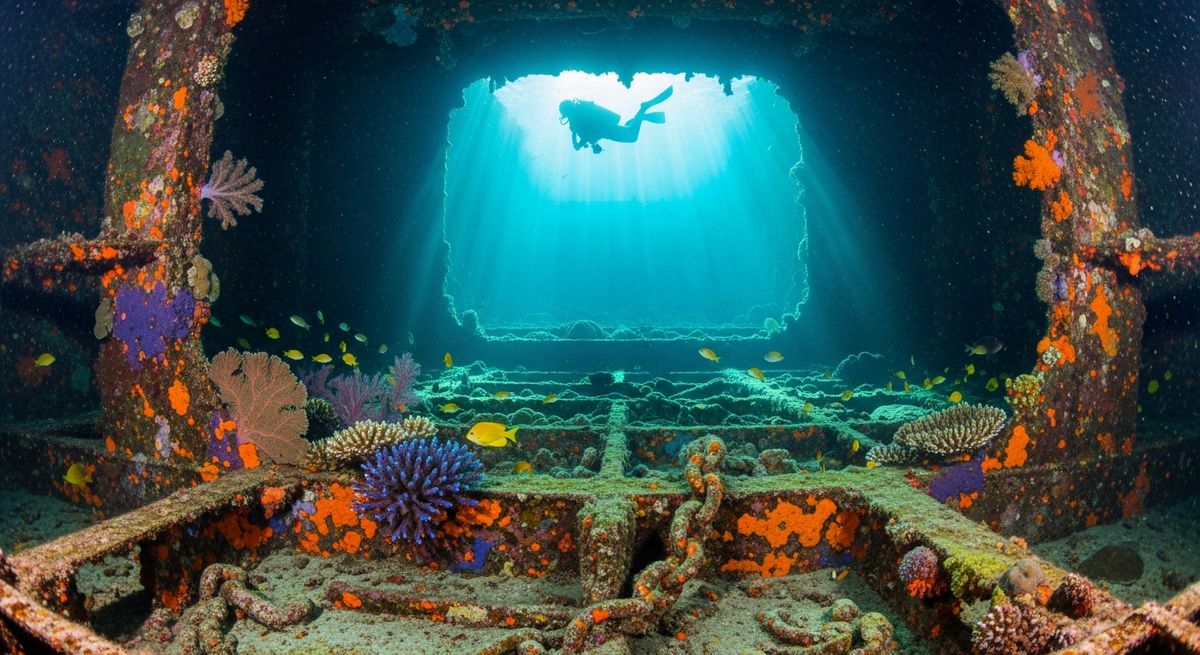
The Secundra, a steamship that sank back in 1904, lies in such shallow water it’s almost unbelievable. Eight metres, max. We’re talking about a wreck dive where you can almost always see the surface, which makes it perfect for those newer to wreck diving or anyone who just fancies a really relaxed explore. You’ll find the remains of the hull spread out across the rocky seabed. It’s not one of those intact wrecks you can penetrate, but we love how the ocean has reclaimed it. Large sections of twisted metal are draped in soft corals, and there are schools of snapper that seem to permanently hover over the bigger plates. Look closely, and you’ll spot moray eels tucked into the crevices, their heads poking out with a watchful gaze. We’ve even seen blue-spotted rays resting in the sand nearby. The light here is usually fantastic, painting the whole scene in a beautiful, filtered blue. It’s a gentle introduction to Sri Lanka’s underwater history and a really pleasant way to spend an hour.
Typical SECUNDRA Dive Profile
Illustrative profile based on site depth and type. Actual dive profiles vary - always follow your dive computer and training.
Safety Notes
Wreck site - avoid penetration without wreck diving certification. Watch for sharp metal and entanglement hazards.
Nearest Dive Centres to SECUNDRA
Dive shops near SECUNDRA
Submarine Diving School
Divinguru Unawatuna
Pearl Divers
Dive For You
Poseidon Diving Center
Weligama Bay Diving Centre
Reviews for SECUNDRA
Conditions
Ocean conditions, forecast and tides for SECUNDRA
SECUNDRA Ocean Conditions
Monthly averages for SECUNDRA, sourced from Open-Meteo marine data - nearest station: Open-Meteo marine grid (6.45, 79.98) (12km away)
October Averages
Sea Temperature
29°C
84°F · Range: 27.7–30°C
Air Temperature
26°C
79°F
Wind Speed
5.07 m/s
9.9 knots
Atmospheric Pressure
1010.1 hPa
Based on 4 years of monitoring data · Data sources: Open-Meteo marine data
Plan & book
Ways to dive Hikkaduwa & South Coast, from day trips to liveaboards.
Day trips & courses
via GetYourGuideGuided dives, courses and snorkel trips with instant booking.
Find dive trips in Hikkaduwa & South CoastPlaces to stay
via Booking.comHotels and dive resorts near Hikkaduwa & South Coast.
Search stays in Hikkaduwa & South CoastDive insurance
Most travel insurance excludes or limits scuba. Check what you need before you go.
Dive insurance explainedPartner links: we may earn a commission if you book, at no extra cost to you. How we make money
Where to Stay near SECUNDRA
Prices from Booking.com. We may earn a commission at no extra cost to you.