Taprobane Reefs - Hikkaduwa & South Coast

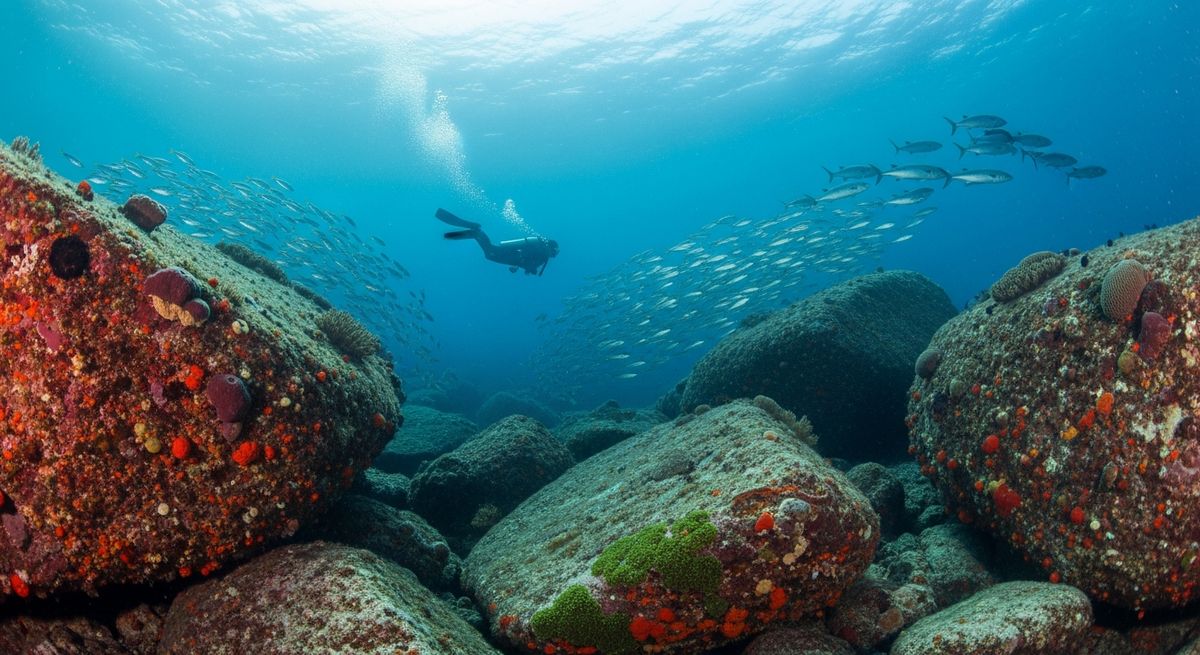
Taprobane Reefs sits a good distance offshore from Hikkaduwa, which often means quieter, less disturbed diving. We’re talking about sizable patch reefs out here, with some really impressive coral domes rising up from the seafloor. It’s the kind of place where you’ll commonly spot large rays cruising by, and the schooling fish can be thick enough to make you slow down just to take it all in. Arthur C. Clarke famously wrote about these reefs, and while we can’t promise a sci-fi encounter, we can say it’s a solid pick for divers looking for healthy coral structures and good fish action away from the immediate coast.

Location
Hikkaduwa & South Coast, Sri Lanka, Indian Ocean & East Africa
Coordinates
7.200000, 79.800000

Marine Protected Area: Muthurajawela

Best Time to Dive in Hikkaduwa & South Coast

The warmest water temperatures in Hikkaduwa & South Coast occur in January, averaging 28.4°C. The coolest conditions are in December at 28.4°C.

Monthly Water Temperatures

  • January: 28.4°C (air: 25.8°C)
  • February: 28.4°C (air: 26.4°C)
  • March: 28.4°C (air: 27.1°C)
  • April: 28.4°C (air: 27.4°C)
  • May: 28.4°C (air: 27.4°C)
  • June: 28.4°C (air: 27.2°C)
  • July: 28.4°C (air: 27.0°C)
  • August: 28.4°C (air: 26.8°C)
  • September: 28.4°C (air: 26.6°C)
  • October: 28.4°C (air: 26.4°C)
  • November: 28.4°C (air: 25.9°C)
  • December: 28.4°C (air: 25.9°C)

Nearby Dive Sites in Hikkaduwa & South Coast

Nearest Dive Centres to Taprobane Reefs

Marine Life in Hikkaduwa & South Coast

Home to 95 recorded species including 65 reef fish, 6 whales & dolphins, 6 hard corals, 5 sea snails & nudibranchs, 3 other, 2 seagrass & algae.

Notable Species

Recommended Packing List for Taprobane Reefs

Based on average water temperature of 28.4°C.

  • Shorty or Rashguard - warm 28°C water needs minimal exposure protection
  • Mask - essential for every dive
  • Fins
  • BCD - buoyancy compensator
  • Regulator - your most safety-critical piece of gear
  • Dive Computer - tracks depth, time, and NDL
  • Surface Marker Buoy (SMB) - essential for boat pickups
  • Dive Torch - useful for crevices and colour at depth
  • Underwater Camera - capture your diving memories

Frequently Asked Questions

What are the typical depths for diving at Taprobane Reefs and its associated dive sites?
The specific typical depths for diving at Taprobane Reefs are not provided in our current data. However, as a reef dive, it typically involves exploring various depths depending on the specific formations. For more information on this pristine site, please check back for updates.
What kind of marine life and coral formations can divers expect to see when exploring Taprobane Reefs?
Divers exploring Taprobane Reefs can expect to encounter large patch reefs punctuated with massive coral domes, creating a stunning underwater landscape. Marine life is abundant, featuring large rays and schooling fish. For a broader look at species, visit our wildlife database.
Is Taprobane Reefs considered a challenging dive site, and what level of diving experience is recommended?
Yes, Taprobane Reefs is considered an intermediate difficulty dive site. This suggests that divers should have some prior experience beyond basic certification to comfortably navigate the conditions and enjoy the pristine reefs. It's an excellent site for divers looking to expand their skills.
What is the best time of year to dive Taprobane Reefs for optimal conditions and marine life sightings?
Our current data does not specify the best time of year to dive Taprobane Reefs for optimal conditions or marine life sightings. Diving conditions can vary, so it's always best to check local reports. For general guidance on dive seasons, you can visit our when to dive section.
What scuba diving certifications are required or recommended for diving at Taprobane Reefs?
Given that Taprobane Reefs is classified as an intermediate dive site, it is recommended that divers possess more than just entry-level certification. An Advanced Open Water Diver certification or equivalent experience would be beneficial to fully enjoy and safely navigate this well offshore location. Always consult with a local dive operator for specific requirements.
What are the typical underwater currents and visibility conditions like at Taprobane Reefs?
Information regarding the typical underwater currents and visibility conditions at Taprobane Reefs is not available in our current dataset. As an offshore site, conditions can sometimes be more dynamic than in sheltered areas. We recommend checking with local dive centers in Hikkaduwa & South Coast for the most up-to-date conditions.