Diving in Kalpitiya & Northwest
Why dive here
Kalpitiya & Northwest offers some of Sri Lanka's richest diving, with 89+ marine species recorded in the area - including whitetip reef sharks, lionfish and napoleon wrasse.
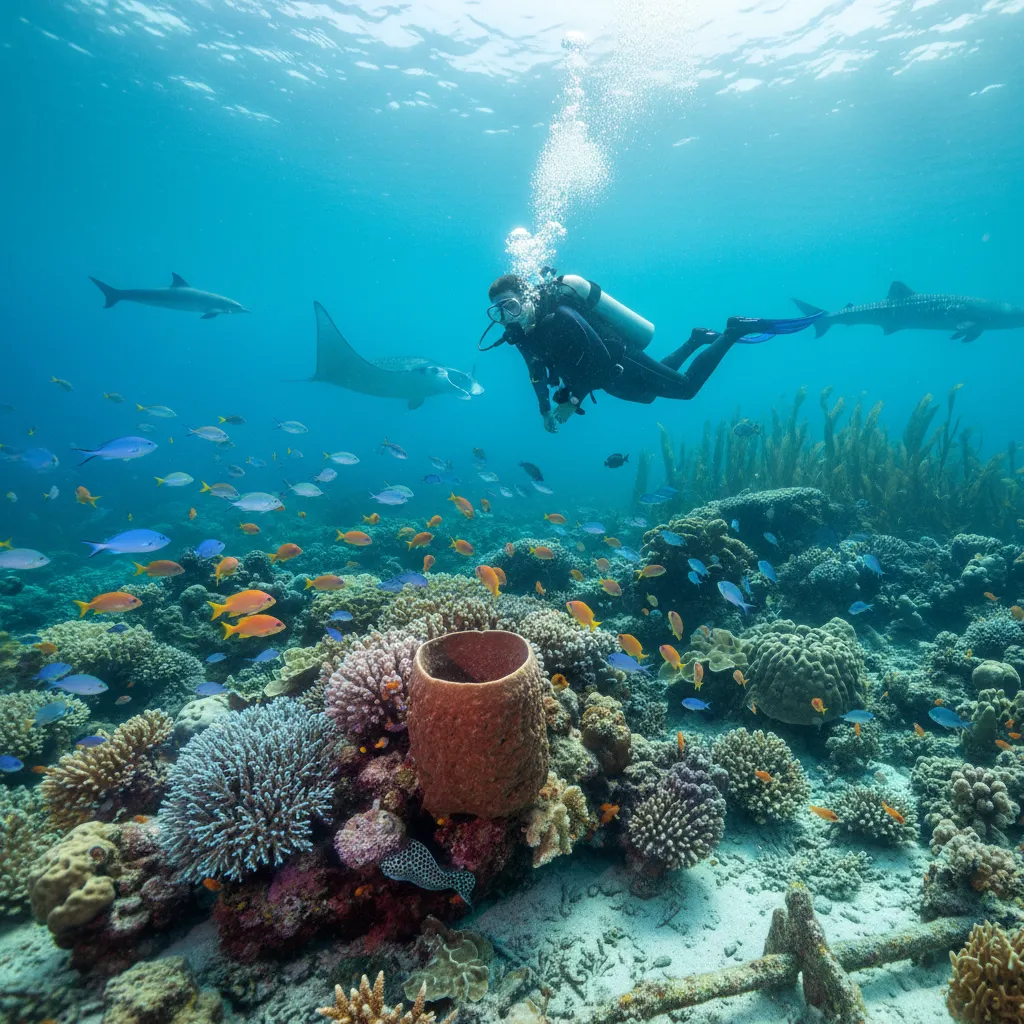
Kalpitiya is a real up-and-comer for Sri Lanka diving. We love the feeling of exploring somewhere still finding its feet, especially when it delivers sights like the Bar Reef. It’s a huge system, the biggest coral reef in Sri Lanka, and you’ll find yourself drifting over plateaus packed with Nagasaki damsels and blue green chromis. Keep an eye out for humpback turretfish, they’re odd little things. The season runs from November to May, and that’s when you’ll get the clearest water. Visibility can hit 20 metres on a good day. It’s mostly drift diving, the currents aren't too gnarly, just enough to carry you along. We’ve had some memorable encounters with tiger sharks here, a real adrenaline rush. You’re also in prime territory for dolphins, and during the migration months, you might even spot a blue whale on the surface interval. Don't expect pristine, untouched corals everywhere; this region has seen its share of changes. But the sheer scale of the reef, the chance for pelagics, and the quiet dive centres make Kalpitiya our pick for a more adventurous Sri Lanka trip.
Kalpitiya & Northwest Dive Site Map
Dive sites and dive centres in Kalpitiya & Northwest
Kalpitiya & Northwest Dive Sites
16 dive sites in Kalpitiya & Northwest
Anchor Point
Anchor Point is one of those sites we always recommend to divers heading to Kalpitiya. It’s a good one, especially if you’re into the smaller, more intricate stuff. Drop in, and you’re often met with a gentle current, perfect for just drifting along and letting the reef reveal itself. We’ve had some truly lovely dives here, spotting bluefin filefish tucked away and the flash of a Checkered Seaperch darting into a crevice. Our favourite moments at Anchor Point usually involve the wrasse – we’ve seen Maori Wrasse cruising past, and the Dusky Wrasse seem to be everywhere, busy poking around the staghorn coral formations. You’ll also spot plenty of Five-lined snapper and the occasional school of Jacks patrolling the deeper edges. It’s a site that rewards patience; take your time, really look closely, and you’ll find those smaller creatures that make a dive memorable. We’d suggest going in the morning; the light is usually better, and the visibility tends to be at its clearest before the afternoon winds pick up. For divers who appreciate a relaxed pace and a keen eye for reef life, Anchor Point is a solid choice.
ASIA CARRIER 1
The Asia Carrier 1 is one of those wrecks that just delivers. At a shallow 7m, it’s a huge, sprawling site, and we love how the light just floods the deck, illuminating every corner. You’ll find the bow section completely separated from the stern, almost like two distinct dives. We always start at the stern, where the prop is still impressive and often surrounded by schools of trevally. Descending onto the main deck, you can weave through the skeletal remains of the superstructure. It’s a proper playground for divers, with swim-throughs opening into cavernous cargo holds. Keep an eye out for resident groupers lurking in the shadows and the occasional reef shark patrolling the perimeter. Our favourite part has to be the sheer density of glassfish around the mast - they swarm so thick you can barely see your buddy. While it’s shallow, its size and the slight current mean it’s best for divers comfortable with navigation. The Asia Carrier 1 offers a genuinely immersive wreck experience, perfect for a long, relaxed dive.
BENITTO
Benitto isn't your typical wreck dive, and that’s precisely why we love it. This isn't a massive freighter, but a sailing vessel, which lends it a delicate, almost ghostly character. Lying in just 10 metres of water, it’s an ideal spot for those newer to wreck diving or anyone who prefers a longer bottom time without the narcosis. The ship has deteriorated significantly, earning its "dangerous wreck" classification, so penetration isn't really on the cards, but its skeletal remains are still incredibly evocative. What you *can* do is trace the outline of the hull, imagine the masts reaching skyward, and watch how the local fish have truly made it home. Schools of fusiliers often swirl around the broken timbers, and we’ve spotted moray eels peeking from beneath plates of rusted metal. The light at this depth is beautiful, often filtering down in soft shafts, highlighting the vibrant sponges and corals that have colonised every available surface. It’s a gentle, reflective dive, perfect for photographers looking to capture the interplay of history and nature. We’d suggest going in the morning; the visibility tends to be best, and the light absolutely pops.
GALATIA
The Galatia wreck in Kalpitiya isn’t about depth, it’s about character. Sitting flat on a sandy bottom at a mere 7 metres, it’s remarkably intact and just begs to be explored. We love how the light plays through the holds, illuminating schools of small snapper that dart between the decaying metal. You can swim right into the cargo areas, imagining the ship's last moments before it settled here. It’s an easy dive, perfect for newer wreck enthusiasts or photographers who appreciate the ambient light. Keep an eye out for the resident moray eels peeking from crevices and the occasional turtle gliding overhead. The sheer volume of fusiliers here can be incredible, sometimes so thick they create a living wall around the stern. While it’s often labelled "dangerous," we find that refers more to its historical status than its diveability today. Just take it slow, enjoy the light, and watch for lionfish tucked into the shadows. We’d suggest going early in the morning for the best visibility and a quieter experience.
HMS HECTOR
The HMS Hector isn’t your typical deep, dark wreck. Instead, we’re talking about a merchant cruiser, repurposed for war, that met a fiery end during a Japanese air raid in 1942. What’s left now sits in a mere 9 metres of water, offering a surprisingly vivid experience for such a shallow site. We love the Hector for its accessibility. It’s perfect for divers who appreciate history without needing extreme depth. You can spend a whole dive exploring the various sections, with light filtering down to illuminate the structure. The ship's bow and stern are still distinct, and we’ve found the mid-section offers some great swim-throughs where the superstructure has collapsed. The marine life here is fantastic. We’ve drifted past schools of snapper so dense they hide the wreck, and lionfish often lurk in the shadowed nooks. Keep an eye out for moray eels poking their heads from pipes and crevices. Visibility can vary, but generally, it’s good, especially if you get there before the afternoon winds pick up. It's a proper historical dive without the advanced certs, and for us, that’s a real winner.
HONG LIAN
The Hong Lian is a proper old-school wreck, lying in just six metres of water. We love a shallow wreck, especially one that’s been down for a while, and this one has settled beautifully into the seabed. You’re not going to get deep here, which means plenty of bottom time to really poke around her remains. The hull is breaking up in places, giving you these lovely swim-throughs where you can duck in and out, feeling the cooler water as you pass through. It’s perfect for new wreck divers, or anyone who just wants a relaxed dive with a bit of history. What makes the Hong Lian special, for us, is how the ocean has just taken over. There are lionfish everywhere, just hanging out under ledges, and we’ve seen some seriously chunky moray eels peering out from gaps in the plating. Look closely and you’ll spot nudibranchs crawling across the corroded metal, tiny pops of colour on the grey. Visibility can be a bit variable here, depending on recent weather, so we’d suggest heading out after a few calm days if you can. It’s a site that rewards a slow pace, letting your eyes adjust to the shadows and the life that now calls this old freighter home.
Kandakuliya
Kandakuliya in Kalpitiya offers a decent drift dive when the currents pick up, often taking you past a rocky reef system. We’ve seen healthy populations of unicorn fish here, often schooling in impressive numbers. Keep an eye out for the larger residents too, like impressive moray eels peering from crevices and substantial stingrays settled on the sand. It’s a good spot for divers comfortable with a bit of flow, and we frequently spot nudibranchs dancing on the rocks and the occasional bump head parrotfish cruising by.
Maha Gala
Maha Gala, off Kalpitiya, offers a straightforward dive with a good chance of spotting various reef fish. We've often seen snappers and fusiliers moving through the coral patches here. It’s a solid choice for a second dive of the day, or for divers who appreciate a relaxed pace without strong currents. Expect decent visibility, though it can drop after heavy rains.
Marine Power 2517
The Marine Power 2517 feels like something plucked right out of a pirate story, especially when you hit it on a day with decent visibility. It’s a shallow barge, sitting upright in just 11 metres of water, which makes it perfect for longer bottom times. We love cruising over the open deck, watching the light play across the barnacle-encrusted metal, and poking our heads into the small, accessible holds. This wreck isn’t about big, dramatic drops or swim-throughs, but about the sheer volume of life that has claimed it. Look closely for robust ghost pipefish swaying with the current, and keep an eye out for batfish schools circling lazily around the superstructure. It's a fantastic site for anyone who enjoys wreck diving without the depth stress, and for photographers who appreciate a well-lit, relatively intact subject. Our advice? Try to dive it around midday for the best light penetration into the wreck's nooks and crannies.
MUSGRAVE
Musgrave is a wreck with history, a real window into the past rather than just some rusting hulk. This steamship went down in 1885, and even after all this time, there’s still plenty to explore across its 30.5-meter length. We love the way the light filters through the superstructure, catching the schools of snapper that swirl around the deck. It’s a shallow dive, maxing out at 10 meters, which makes it perfect for longer bottom times and really soaking in the atmosphere. You’ll spend your dive weaving through the skeletal remains of the ship, admiring the way the metal has become a canvas for soft corals and sponges. Keep an eye out for moray eels tucked into crevices, and we’ve often spotted lionfish perched regally on various beams. The calm, warm waters here make it a relaxing dive, ideal for photographers wanting to capture that historical, ethereal feel. It's an accessible wreck that still tells a story, perfect for anyone who appreciates a dive site with a sense of place.
MV EXPRESS PEARL
The MV Express Pearl, sitting upright at 21m, is a fantastic dive for those who appreciate a wreck with a story and plenty of nooks to explore. We love how intact it still feels; you can swim through the bridge, poke your head into the engine room, and even navigate some of the cargo holds if you’re comfortable with overhead environments and have a good torch. It’s got a slightly eerie but incredibly cool vibe down there, particularly when the light shafts cut through the upper deck. Our favourite part has to be the sheer number of batfish that shoal around the superstructure – sometimes they’re so thick you have to gently push through them. Look out for moray eels tucked into every crevice and the occasional reef shark patrolling the perimeter. This site really suits divers who enjoy methodical exploration rather than just a quick look-see. Try to hit it on an incoming tide for the best visibility, which can make all the difference in appreciating the wreck’s scale.
SLNS SAGARWARDANE
We like the Sagarwardane for something a bit different in Kalpitiya. This old patrol boat sits in a shallow three meters, making it a pretty relaxed dive, even for those still building confidence. You can easily spend an hour finning around her 39-meter hull, peeking into the bridge area and watching the resident batfish drift through the superstructure. It's not a deep, dramatic wreck, but the light is often fantastic, highlighting the soft corals starting to bloom on the metal and the schools of snapper that call her home. A good spot for some easy photography too.
Kalpitiya & Northwest Dive Centres
5 dive shops and operators in Kalpitiya & Northwest
Ocean Wildlife in Kalpitiya & Northwest
89 species recorded in Kalpitiya & Northwest
Kalpitiya & Northwest Daylight & Sunrise/Sunset
Sunrise and sunset times for Kalpitiya & Northwest, calculated from coordinates
Today - Sunday 11 October
Sunrise
05:31
Sunset
17:30
Daylight
11h 59m
Golden Hour
17:02
First light (dawn) at 05:10 · Last light (dusk) at 17:51
Monthly Averages
| Month | Sunrise | Sunset | Daylight |
|---|---|---|---|
| Jan | 06:02 | 17:44 | 11h 42m |
| Feb | 06:02 | 17:54 | 11h 52m |
| Mar | 05:51 | 17:55 | 12h 4m |
| Apr | 05:35 | 17:53 | 12h 18m |
| May | 05:26 | 17:55 | 12h 30m |
| JunLongest | 05:27 | 18:02 | 12h 36m |
| Jul | 05:33 | 18:06 | 12h 33m |
| Aug | 05:37 | 18:01 | 12h 24m |
| Sep | 05:34 | 17:45 | 12h 10m |
| OctNow | 05:31 | 17:28 | 11h 57m |
| Nov | 05:36 | 17:21 | 11h 45m |
| DecShortest | 05:50 | 17:29 | 11h 39m |
Times are approximate local times based on longitude. Actual times may vary slightly depending on the exact timezone observed in Kalpitiya & Northwest.
Where to Stay near Kalpitiya & Northwest
Prices from Booking.com. We may earn a commission at no extra cost to you.
Marine Protected Areas near Kalpitiya & Northwest
6 protected areas near Kalpitiya & Northwest - please respect local regulations when diving
Bar Reef Marine Sanctuary
WedithalathiveNR
Adam's Bridge NP
Vankalai
Muthurajawela
Parititivu Island
Getting to Kalpitiya & Northwest
Colombo
Colombo
Jaffna
Plan & book
Ways to dive Kalpitiya & Northwest, from day trips to liveaboards.
Day trips & courses
via GetYourGuideGuided dives, courses and snorkel trips with instant booking.
Find dive trips in Kalpitiya & NorthwestPlaces to stay
via Booking.comHotels and dive resorts near Kalpitiya & Northwest.
Search stays in Kalpitiya & NorthwestDive insurance
Most travel insurance excludes or limits scuba. Check what you need before you go.
Dive insurance explainedPartner links: we may earn a commission if you book, at no extra cost to you. How we make money