ALMASI
Protected Area
Dar es Salaam
Why dive here
With 312+ marine species recorded in the area - including barracuda, blue-spotted stingrays, dolphins, eagle rays and hammerhead sharks - ALMASI offers some of Zanzibar & Pemba's richest wreck diving. Water ranges 26-30°C, warmest February, March, April.
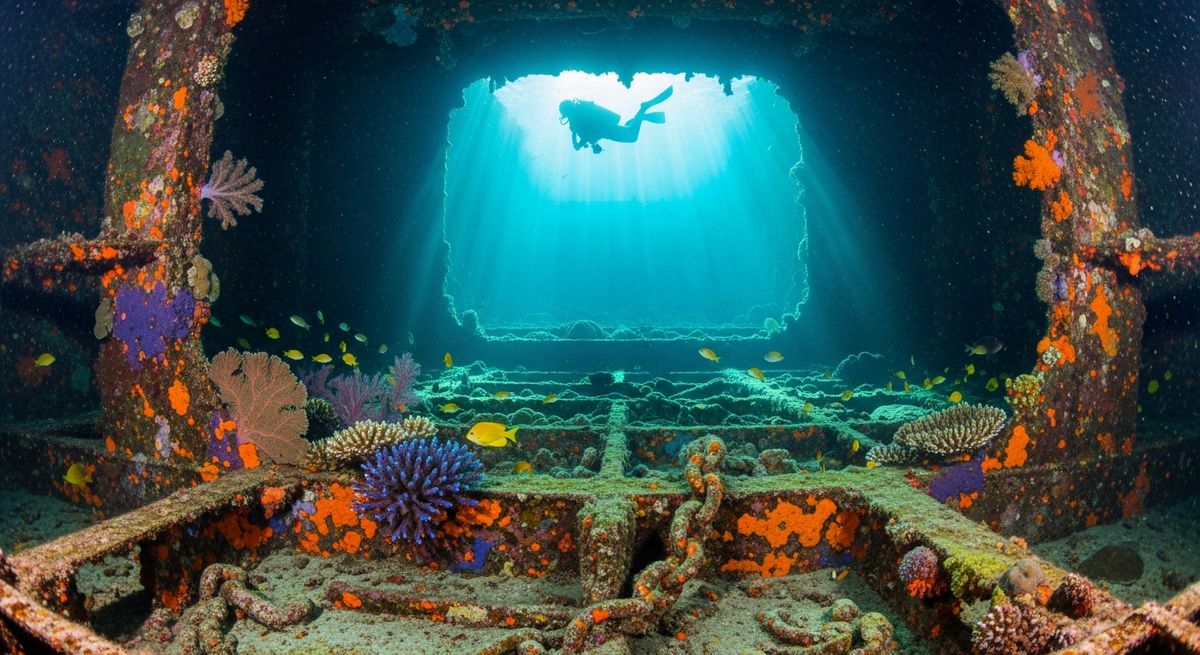
Almasi is not your typical wreck dive. Forget deep exploration; this is a true piece of history, just breaking the surface. The schooner, built in 1898, met its fiery end in 1961 when its cargo of aviation fuel detonated. Now, it's a skeletal outline, almost a ghost ship, in just three metres of water. We love Almasi for its sheer accessibility and the way it tells its story. What you'll find here isn't a grand, intact vessel, but rather the scattered ribs and timbers, a testament to that powerful explosion. It’s an easy, sun-drenched snorkel or a very shallow dive, perfect for photographers looking to capture the interplay of light and shadow on the aged wood. Schools of small silversides often shimmer around the remains, and we’ve spotted plenty of juvenile reef fish taking shelter amongst the debris. It’s a site for contemplation, for imagining the past, and for appreciating how quickly the ocean reclaims what’s hers. Come at high tide for the best visibility, when the water is calmest.
Typical ALMASI Dive Profile
Illustrative profile based on site depth and type. Actual dive profiles vary - always follow your dive computer and training.
Safety Notes
Wreck site - avoid penetration without wreck diving certification. Watch for sharp metal and entanglement hazards.
ALMASI Wreck History
Year Sunk
1961
Vessel Type
schooner
Cause
fire
The story of the Almasi is one of dramatic and fiery destruction. This 30-meter schooner, a classic vessel built in 1898, met its end on November 13, 1961, in a catastrophic explosion. While anchored, its volatile cargo of aviation fuel ignited, completely destroying the ship in a massive fireball. The force of the blast scattered the vessel across the seabed, leaving little of its original form intact.
Lying in just 3 meters of water off Zanzibar, the remains of the Almasi are less a wreck dive and more an underwater archaeological site accessible to snorkelers and novice divers. The site is a scattered field of debris, with charred timbers and metal fittings testament to its violent end. Despite the destruction, the shallow, sunlit waters have encouraged coral growth on the wreckage, attracting a vibrant array of reef fish. It serves as a stark reminder of the power of the sea and the dangers of maritime trade, now reclaimed by nature.
Nearest Dive Centres to ALMASI
Dive shops near ALMASI
View all dive centres in Zanzibar & PembaReviews for ALMASI
Conditions
Ocean conditions, forecast and tides for ALMASI
ALMASI Ocean Conditions
Monthly averages for ALMASI, sourced from Open-Meteo marine data - nearest station: Open-Meteo marine grid (-5.98, 39.4) (10km away)
October Averages
Sea Temperature
27°C
81°F · Range: 25.9–28.4°C
Air Temperature
26°C
79°F
Wind Speed
4.72 m/s
9.2 knots
Atmospheric Pressure
1013.8 hPa
Based on 4 years of monitoring data · Data sources: Open-Meteo marine data
Plan & book
Ways to dive Zanzibar & Pemba, from day trips to liveaboards.
Day trips & courses
via GetYourGuideGuided dives, courses and snorkel trips with instant booking.
Find dive trips in Zanzibar & PembaPlaces to stay
via Booking.comHotels and dive resorts near Zanzibar & Pemba.
Search stays in Zanzibar & PembaDive insurance
Most travel insurance excludes or limits scuba. Check what you need before you go.
Dive insurance explainedPartner links: we may earn a commission if you book, at no extra cost to you. How we make money
Where to Stay near ALMASI
Prices from Booking.com. We may earn a commission at no extra cost to you.