Bawe South
Protected Area
Chumbe Island Coral Park (CHICOP)
Why dive here
With 312+ marine species recorded in the area - including barracuda, blue-spotted stingrays, dolphins, eagle rays and hammerhead sharks - Bawe South offers some of Zanzibar & Pemba's richest reef diving. Water ranges 26-30°C, warmest February, March, April.
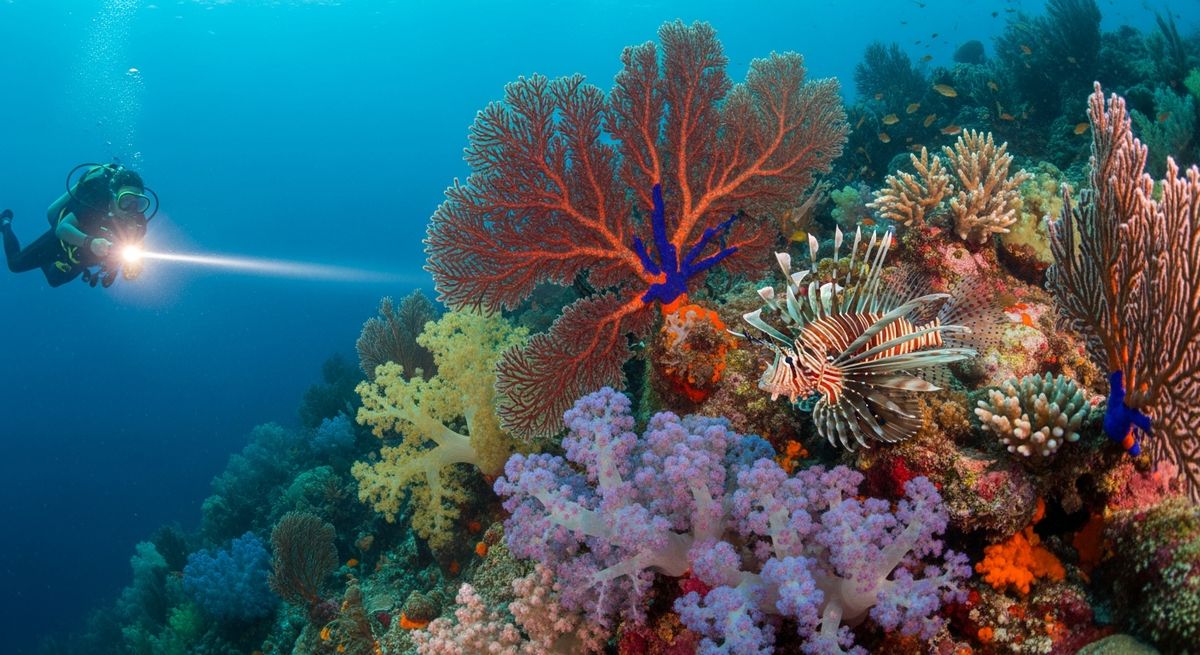
Bawe South is our pick for a chill afternoon dive, especially if you’re staying near Stone Town. The main draw here is the shallow, gentle reef that runs along Bawe Island. It’s perfect for getting back into the swing of things after travel, or for newer divers finding their fins. We love dropping in here and just drifting along, watching the light play on the coral. You’ll find big coral bommies scattered across sandy patches, some with those truly enormous barrel sponges that feel like they belong in a cartoon. Keep an eye out for the resident green and hawksbill turtles; they’re pretty used to divers and often just cruise past, unbothered. We’ve had some great encounters with flowery flounders here, too, blending perfectly with the sand until they make a quick dart. Visibility usually hovers around 13 metres, good enough to appreciate the details without feeling overwhelming. It’s a lovely, relaxed dive, a real breather after a busy morning exploring Stone Town.
Typical Bawe South Dive Profile
Illustrative profile based on site depth and type. Actual dive profiles vary - always follow your dive computer and training.
Nearest Dive Centres to Bawe South
Dive shops near Bawe South
Bawe Diving Center
Fumba Water Sports
Cool Zanzibar Water Sports
Scuba Blue Zanzibar
Scubafish Dive Center Ltd
Ocean Dive
Reviews for Bawe South
Conditions
Ocean conditions, forecast and tides for Bawe South
Bawe South Ocean Conditions
Monthly averages for Bawe South, sourced from Open-Meteo marine data - nearest station: Open-Meteo marine grid (-5.98, 39.4) (10km away)
October Averages
Sea Temperature
27°C
81°F · Range: 25.9–28.4°C
Air Temperature
26°C
79°F
Wind Speed
4.72 m/s
9.2 knots
Atmospheric Pressure
1013.8 hPa
Based on 4 years of monitoring data · Data sources: Open-Meteo marine data
Plan & book
Ways to dive Zanzibar & Pemba, from day trips to liveaboards.
Day trips & courses
via GetYourGuideGuided dives, courses and snorkel trips with instant booking.
Find dive trips in Zanzibar & PembaPlaces to stay
via Booking.comHotels and dive resorts near Zanzibar & Pemba.
Search stays in Zanzibar & PembaDive insurance
Most travel insurance excludes or limits scuba. Check what you need before you go.
Dive insurance explainedPartner links: we may earn a commission if you book, at no extra cost to you. How we make money
Where to Stay near Bawe South
Prices from Booking.com. We may earn a commission at no extra cost to you.