Bawe Island - North
Protected Area
Chumbe Island Coral Park (CHICOP)
Why dive here
With 312+ marine species recorded in the area - including barracuda, blue-spotted stingrays, dolphins, eagle rays and hammerhead sharks - Bawe Island - North offers some of Zanzibar & Pemba's richest reef diving. Water ranges 26-30°C, warmest February, March, April.
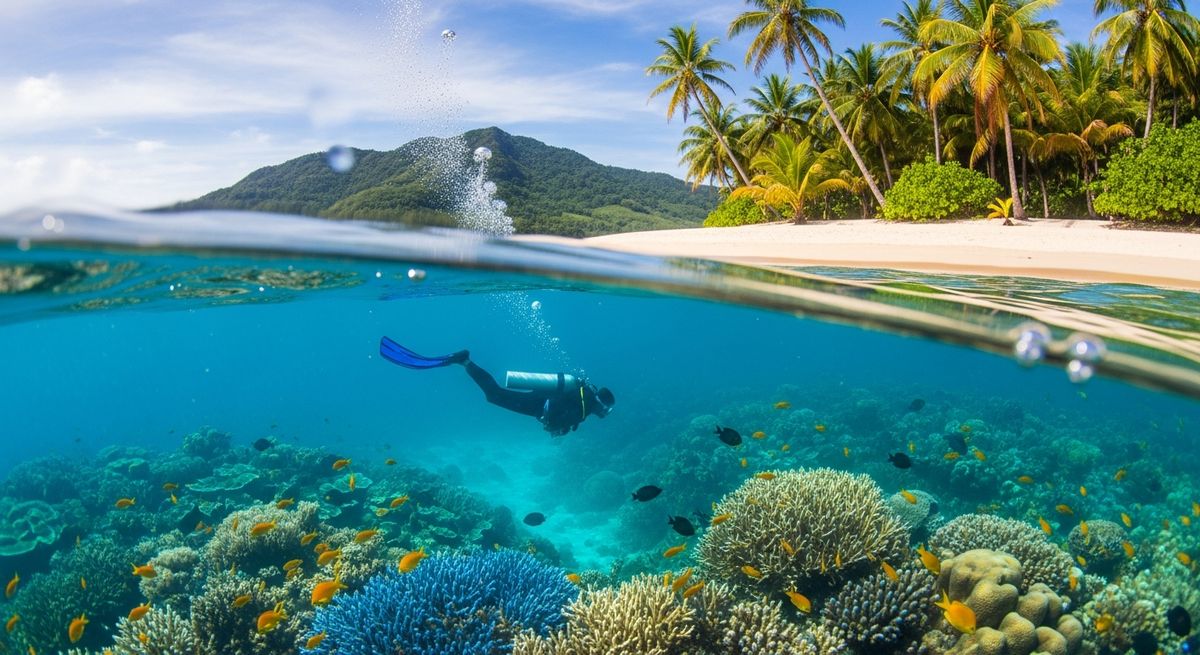
Bawe Island North is a solid pick for a short boat ride out of Stone Town, especially when you’re craving a dive without the long haul. We’d classify it as a friendly wall dive, never dropping deeper than 16 meters, so it’s excellent for longer bottom times and less experienced divers. The continuous coral wall itself is what we love here, draped in plenty of blue sponges where we often spot cuttlefish or the occasional moray eel peeking out. Keep an eye on the open water for rainbow runners and longfin batfish gliding past, and don't forget to scan the sandy patches at the base of the wall – that's where we've seen blue spotted stingrays resting. Visibility averages around 14 meters, good enough to appreciate the details. This site is perfect for those days when you want a relaxed, colourful dive without chasing megafauna, just enjoying the reef’s quiet rhythm.
Typical Bawe Island - North Dive Profile
Illustrative profile based on site depth and type. Actual dive profiles vary - always follow your dive computer and training.
Nearest Dive Centres to Bawe Island - North
Dive shops near Bawe Island - North
Bawe Diving Center
Fumba Water Sports
Cool Zanzibar Water Sports
Scuba Blue Zanzibar
Scubafish Dive Center Ltd
Ocean Dive
Reviews for Bawe Island - North
Conditions
Ocean conditions, forecast and tides for Bawe Island - North
Bawe Island - North Ocean Conditions
Monthly averages for Bawe Island - North, sourced from Open-Meteo marine data - nearest station: Open-Meteo marine grid (-5.98, 39.4) (10km away)
October Averages
Sea Temperature
27°C
81°F · Range: 25.9–28.4°C
Air Temperature
26°C
79°F
Wind Speed
4.72 m/s
9.2 knots
Atmospheric Pressure
1013.8 hPa
Based on 4 years of monitoring data · Data sources: Open-Meteo marine data
Plan & book
Ways to dive Zanzibar & Pemba, from day trips to liveaboards.
Day trips & courses
via GetYourGuideGuided dives, courses and snorkel trips with instant booking.
Find dive trips in Zanzibar & PembaPlaces to stay
via Booking.comHotels and dive resorts near Zanzibar & Pemba.
Search stays in Zanzibar & PembaDive insurance
Most travel insurance excludes or limits scuba. Check what you need before you go.
Dive insurance explainedPartner links: we may earn a commission if you book, at no extra cost to you. How we make money
Where to Stay near Bawe Island - North
Prices from Booking.com. We may earn a commission at no extra cost to you.