PAROS
Why dive here
With 46+ marine species recorded in the area - including dolphins, sea turtles and cuttlefish - PAROS offers some of Istria Peninsula's richest wreck diving. Water ranges 12-26°C, warmest July, August, September.
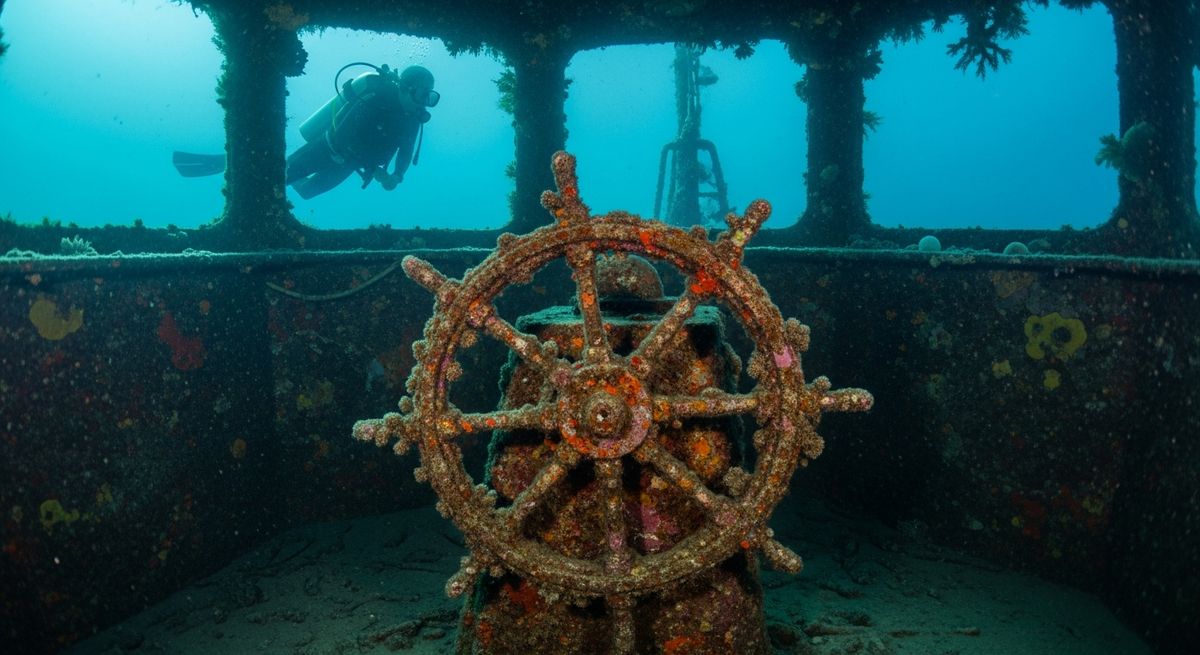
The PAROS wreck, resting upright at a shallow 12 metres, is a solid choice for a relaxed dive in Istria. This former motor vessel, sunk after a collision back in 1979, is fairly intact, offering good penetration points if you’re properly trained and equipped. We’ve found the hold and engine room particularly interesting, with light filtering through where the superstructure has started to break down. Schools of damselfish often flit through the interior, while scorpionfish camouflage themselves on the hull. It’s a comfortable dive, rarely impacted by strong currents, making it suitable for newer wreck divers or those looking for a longer bottom time without pushing depth limits.
Typical PAROS Dive Profile
Illustrative profile based on site depth and type. Actual dive profiles vary - always follow your dive computer and training.
Safety Notes
Wreck site - avoid penetration without wreck diving certification. Watch for sharp metal and entanglement hazards.
Always perform a 3-minute safety stop at 5m before surfacing.
Nearest Dive Centres to PAROS
Dive shops near PAROS
IDENTICI DIVING SCHOOL RAVENNA A.S.D.
A.S.D. Sub Nautilus
ASD Cormorano Sub Forli
SUB ATLANTIDE FORLI’
Red's Swimming & Diving Shop
Reviews for PAROS
Conditions
Ocean conditions, forecast and tides for PAROS
PAROS Ocean Conditions
Monthly averages for PAROS, sourced from Open-Meteo marine data + Copernicus Marine (EU) - nearest station: Open-Meteo marine grid (45.08, 14.15) (21km away)
October Averages
Sea Temperature
20°C
68°F · Range: 18.4–22.3°C
Current Speed
3.16 cm/s
Direction: W (288.4°)
Salinity
37.74 PSU
Based on 4 years of monitoring data · Data sources: Open-Meteo marine data + Copernicus Marine (EU)
Plan & book
Ways to dive Istria Peninsula, from day trips to liveaboards.
Day trips & courses
via GetYourGuideGuided dives, courses and snorkel trips with instant booking.
Find dive trips in Istria PeninsulaPlaces to stay
via Booking.comHotels and dive resorts near Istria Peninsula.
Search stays in Istria PeninsulaDive insurance
Most travel insurance excludes or limits scuba. Check what you need before you go.
Dive insurance explainedPartner links: we may earn a commission if you book, at no extra cost to you. How we make money
Where to Stay near PAROS
Prices from Booking.com. We may earn a commission at no extra cost to you.