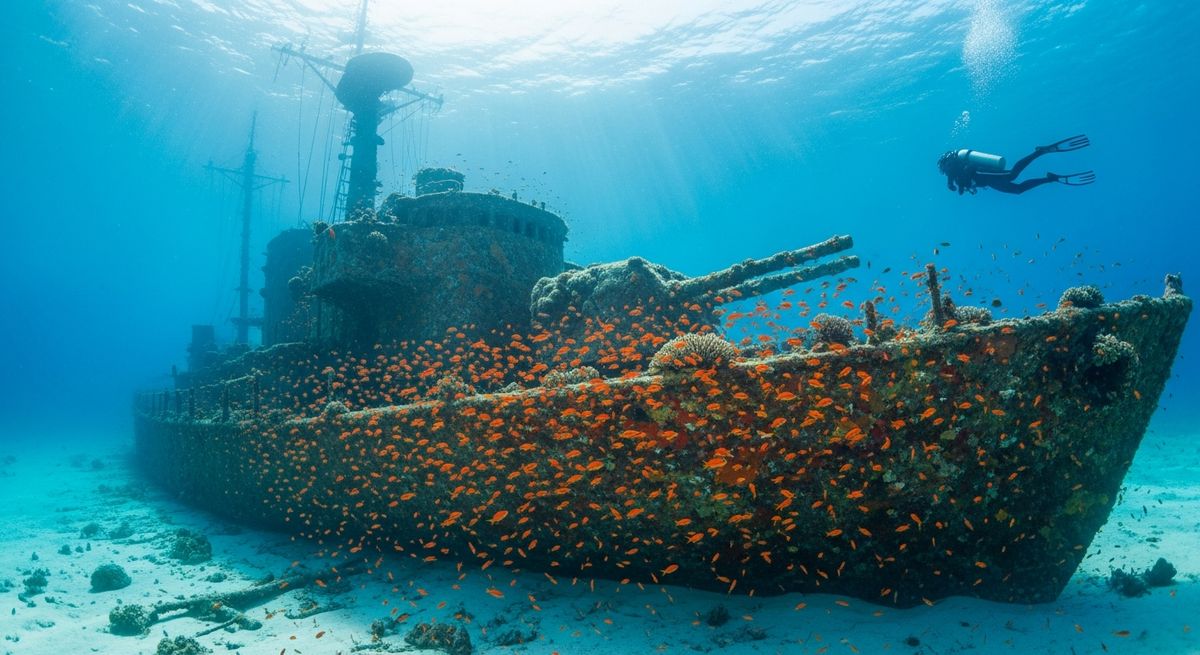
ELPIS - Larnaca

The ELPIS wreck, lying in Larnaca, is a surprising find given its shallow depth. We’re talking five meters, maximum, which means long bottom times and plenty of light. This motor vessel went down in 1967 and still shows a good portion of its hull and superstructure. You can swim over the length of it, watching damselfish dart in and out of the metalwork and occasional octopus peeking from crevices. It’s an easy, relaxed dive, ideal for those wanting a straightforward wreck exploration without the deep dive demands.

Location
Larnaca, Cyprus, Mediterranean & Europe
Coordinates
35.542220, 35.758335
Type
wreck
Maximum Depth
5m

Best Time to Dive in Larnaca

The warmest water temperatures in Larnaca occur in January, averaging 18.5°C. The coolest conditions are in December at 18.5°C.

Monthly Water Temperatures

  • January: 18.5°C (air: 13.1°C)
  • February: 18.5°C (air: 12.9°C)
  • March: 18.5°C (air: 14.7°C)
  • April: 18.5°C (air: 19.1°C)
  • May: 18.5°C (air: 23.0°C)
  • June: 18.5°C (air: 26.4°C)
  • July: 18.5°C (air: 29.9°C)
  • August: 18.5°C (air: 29.4°C)
  • September: 18.5°C (air: 27.2°C)
  • October: 18.5°C (air: 23.9°C)
  • November: 18.5°C (air: 18.8°C)
  • December: 18.5°C (air: 15.2°C)

Nearby Dive Sites in Larnaca

Nearest Dive Centres to ELPIS

Marine Life in Larnaca

Home to 54 recorded species including 32 reef fish, 9 sharks & rays, 4 whales & dolphins, 3 hard corals, 2 other, 2 seagrass & algae.

Notable Species

Recommended Packing List for ELPIS

Based on average water temperature of 18.5°C.

  • Wetsuit (3-5mm) - comfortable for 19°C water
  • Mask - essential for every dive
  • Fins
  • BCD - buoyancy compensator
  • Regulator - your most safety-critical piece of gear
  • Dive Computer - tracks depth, time, and NDL
  • Surface Marker Buoy (SMB) - essential for boat pickups
  • Dive Torch - useful for crevices and colour at depth
  • Underwater Camera - capture your diving memories

Frequently Asked Questions

What is the maximum depth of the ELPIS dive site?
The ELPIS dive site has a maximum depth of 5 meters, making it a relatively shallow wreck dive. This accessible depth allows for extended bottom times and is suitable for various certification levels.
What kind of marine life and wreck features can divers expect to see at the ELPIS shipwreck?
Divers visiting the ELPIS shipwreck can expect to explore the remains of a substantial motor vessel, measuring 93.2m x 13.1m. This wreck, classified as showing a portion of its hull or superstructure, offers interesting features for exploration. While specific marine life details are not provided, wrecks often attract various local species over time.
How challenging is the ELPIS dive site for recreational divers, especially regarding wreck penetration?
The ELPIS dive site is classified as an intermediate difficulty dive, making it suitable for recreational divers with some experience. While the description notes it's a wreck showing a portion of its hull or superstructure, specific details regarding safe wreck penetration are not provided in the current data. Divers should always assess conditions and their training before attempting any penetration.
What is the best time of year to dive the ELPIS shipwreck for optimal conditions?
The provided data does not specify the best time of year to dive the ELPIS shipwreck for optimal conditions. For general guidance on seasonal diving in the region, you might consult our When to Dive section for Mediterranean Europe.
What diving certifications are required to dive the ELPIS shipwreck, and are special permits needed?
Given its 5-meter depth and intermediate difficulty rating, the ELPIS shipwreck is generally accessible to certified open water divers. However, the provided data does not specify any particular certification requirements beyond standard recreational diving or if special permits are needed for this site. Always check with local dive operators in Larnaca, Cyprus for the most current requirements.
What are the typical water conditions and currents like at the ELPIS dive site?
The provided data does not include specific information on typical water conditions or currents at the ELPIS dive site. Divers planning a trip to ELPIS should consult with local dive centers for up-to-date reports on visibility, temperature, and current strength.