ZENOBIA
Protected Area
MPA Zenobia Shipwreck
Why dive here
With 52+ marine species recorded in the area - including sea turtles and sperm whales - ZENOBIA offers some of Larnaca's richest wreck diving. Water ranges 18-30°C, warmest July, August, September.
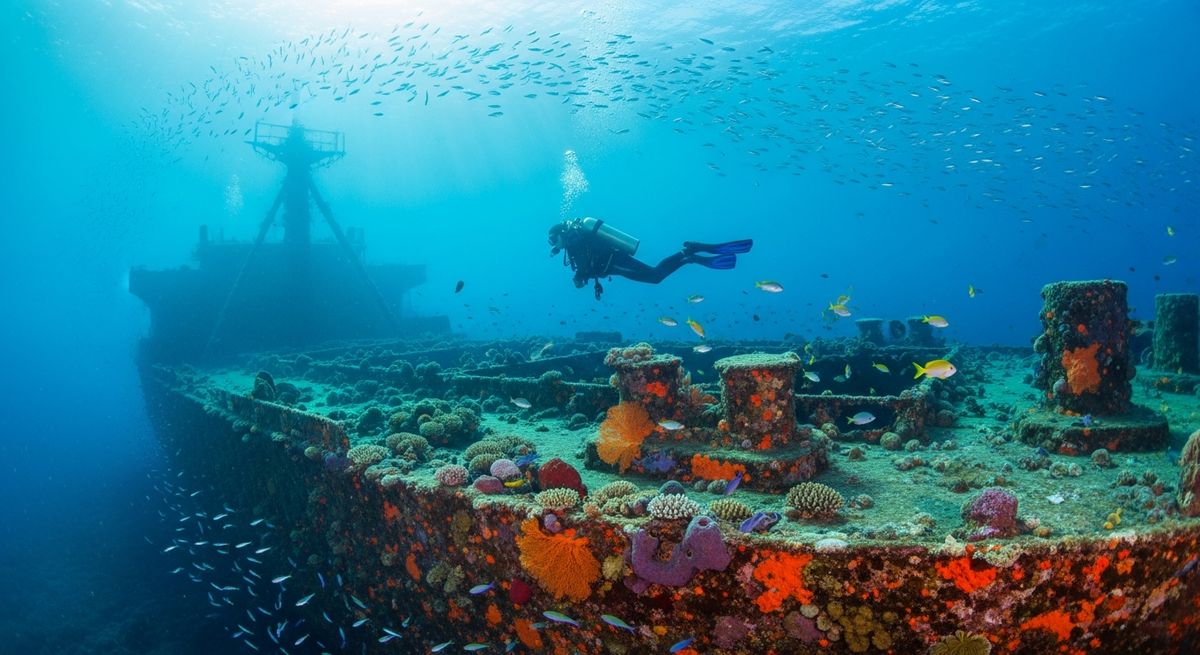
The Zenobia isn't just a wreck, it's a small city under the sea. She sank in '80, just a year old, and now sits on her port side at 40 metres, her starboard flank reaching up to 16. We love the sheer scale of the thing. You can swim through the upper car deck, past the ghost trucks and their cargo, or peer into the canteen where plates still sit stacked. We'd suggest at least two dives to really get a feel for her, maybe more if you want to penetrate deeper into the lower car deck or the bridge. Look out for the resident groupers, the barracuda patrolling the mast, and the thousands of lionfish that have made the Zenobia their home. Visibility here is consistently good, often pushing 30 metres, which makes the enormity of the wreck even more striking as you descend. It’s a site that rewards repeat visits, offering new perspectives and details each time.
Typical ZENOBIA Dive Profile
Illustrative profile based on site depth and type. Actual dive profiles vary - always follow your dive computer and training.
Safety Notes
Deep dive (40m) - monitor air consumption closely. Advanced certification recommended.
Wreck site - avoid penetration without wreck diving certification. Watch for sharp metal and entanglement hazards.
Always perform a 3-minute safety stop at 5m before surfacing.
Nearest Dive Centres to ZENOBIA
Dive shops near ZENOBIA
DRIVE AND DIVE WITH MARIO
Sea Bliss
Viking Divers
Alpha Divers
F. GUARDIANS LIFEGUARD SERVICES LTD
TRITON ADVENTURES
Reviews for ZENOBIA
Conditions
Ocean conditions, forecast and tides for ZENOBIA
ZENOBIA Ocean Conditions
Monthly averages for ZENOBIA, sourced from Open-Meteo marine data - nearest station: Open-Meteo marine grid (35.67, 34.58) (31km away)
October Averages
Sea Temperature
26°C
79°F · Range: 23.8–28.3°C
Air Temperature
24°C
75°F
Wind Speed
4.8 m/s
9.3 knots
Atmospheric Pressure
1014.6 hPa
Based on 4 years of monitoring data · Data sources: Open-Meteo marine data
Plan & book
Ways to dive Larnaca, from day trips to liveaboards.
Day trips & courses
via GetYourGuideGuided dives, courses and snorkel trips with instant booking.
Find dive trips in LarnacaPlaces to stay
via Booking.comHotels and dive resorts near Larnaca.
Search stays in LarnacaDive insurance
Most travel insurance excludes or limits scuba. Check what you need before you go.
Dive insurance explainedPartner links: we may earn a commission if you book, at no extra cost to you. How we make money
Where to Stay near ZENOBIA
Prices from Booking.com. We may earn a commission at no extra cost to you.