ADERNO
Why dive here
With 213+ marine species recorded in the area - including blue sharks, dolphins, great white sharks, hammerhead sharks and mobula rays (devil rays) - ADERNO offers some of Corsica's richest wreck diving. Water ranges 15-28°C, warmest July, August, September.
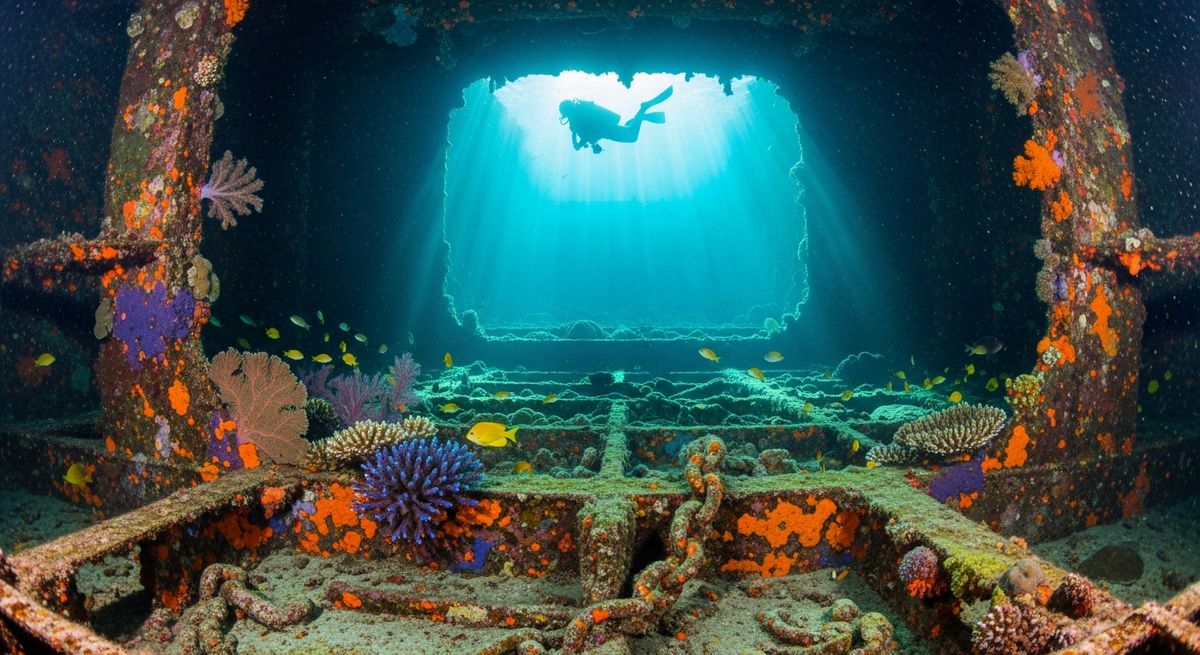
The Adorno, sunk in 1942, is one of Corsica's most atmospheric deep wrecks. It sits upright at 55 metres, a proper steamship with real presence on the seabed. We love drifting along her deck, imagining the wartime drama that brought her down. Her holds are open in places, offering glimpses into the dark interior, but it's the superstructure that really draws us in. Look for the massive propeller, often obscured by schools of damselfish that scatter as you approach. Visibility here is usually excellent, common for Corsica, but the depth means you’ll want to be comfortable with your gas management. The Adorno is a fantastic technical dive, but even advanced recreational divers can make a good, albeit brief, visit if they're careful with their bottom time. Keep an eye out for conger eels peering from every dark nook. She’s a grand old lady of the deep, providing a real sense of history.
Typical ADERNO Dive Profile
Illustrative profile based on site depth and type. Actual dive profiles vary - always follow your dive computer and training.
Safety Notes
Maximum depth 55m exceeds recreational limits (40m). Technical diving certification and equipment required.
Wreck site - avoid penetration without wreck diving certification. Watch for sharp metal and entanglement hazards.
Always perform a 3-minute safety stop at 5m before surfacing.
ADERNO Wreck History
Year Sunk
1943
Vessel Type
cargo ship
Cause
torpedo
The story of the Aderno is a dramatic tale of capture and conflict from the Second World War. The ship began her life in 1912 as the Ardeola, a British steamship belonging to the Yeoward Line, likely spending her early decades peacefully plying trade routes. The outbreak of war, however, would drastically change her destiny.
In November 1942, while in the Mediterranean, the vessel was caught in a searchlight at Bizerta, Tunisia, and captured by Axis forces. Renamed Aderno and pressed into Italian service, her fate was sealed on July 23, 1943. While sailing off the coast of Corsica, she was targeted by one of the Royal Navy's most famous submarines, HMS Torbay, under the command of Victoria Cross recipient Lt. Cdr. Anthony Miers. A successful torpedo strike sent the Aderno to the bottom, another casualty of the intense naval warfare in the Mediterranean.
Today, the Aderno rests at a depth of 55 meters, placing it firmly in the realm of technical diving. This is a challenging and rewarding dive for experienced, suitably qualified divers. The wreck is a tangible piece of WWII history, and descending through the blue Corsican waters to see its form emerge from the depths is an unforgettable experience. The depth has helped preserve the wreck, offering a sombre but fascinating glimpse into a pivotal moment in naval history.
Reviews for ADERNO
Conditions
Ocean conditions, forecast and tides for ADERNO
ADERNO Ocean Conditions
Monthly averages for ADERNO, sourced from Open-Meteo marine data - nearest station: Open-Meteo marine grid (42.38, 9.55) (2km away)
October Averages
Sea Temperature
22°C
72°F · Range: 20.1–24.6°C
Air Temperature
18°C
64°F
Wind Speed
5.12 m/s
10.0 knots
Atmospheric Pressure
1017.2 hPa
Based on 4 years of monitoring data · Data sources: Open-Meteo marine data
Plan & book
Ways to dive Corsica, from day trips to liveaboards.
Day trips & courses
via GetYourGuideGuided dives, courses and snorkel trips with instant booking.
Find dive trips in CorsicaPlaces to stay
via Booking.comHotels and dive resorts near Corsica.
Search stays in CorsicaDive insurance
Most travel insurance excludes or limits scuba. Check what you need before you go.
Dive insurance explainedPartner links: we may earn a commission if you book, at no extra cost to you. How we make money
Where to Stay near ADERNO
Prices from Booking.com. We may earn a commission at no extra cost to you.