5B-CCF
Protected Area
Agioi Pantes Lasithiou
Why dive here
5B-CCF is a wreck dive where divers can encounter sea turtles. Water ranges 17-27°C, warmest July, August, September.
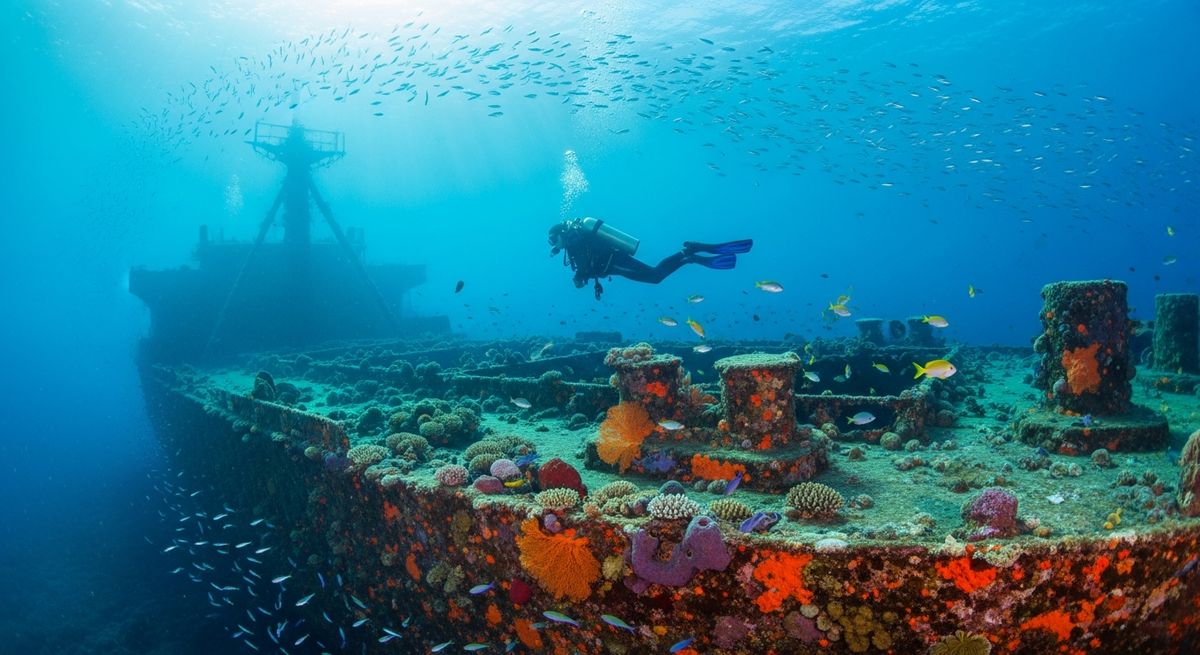
The 5B-CCF wreck in Crete isn't about big fish or colourful corals; it's about the sheer presence of a downed aircraft, lying surprisingly intact at 18 metres. We love how the light plays on the metal fuselage, giving it a ghostly, almost ethereal feel as you approach. It’s a Hawker Sea Hawk, an old British naval jet, and you can still make out the cockpit and the wings stretching out on the sandy bottom. Swimming around the plane, we often find schools of damselfish flitting in and out of the crevices, and the occasional moray eel peeking from beneath a wing. It feels like swimming through a moment frozen in time, the metallic structure now a canvas for the slow creep of marine growth. Our favourite detail has to be the way the engine intake is now home to dozens of tiny blennies. Visibility here is usually good, 20 metres or more on a calm day, which makes for excellent photography. We’d suggest heading out in the morning, before any wind picks up, for the best conditions. This wreck suits divers who appreciate history and the quiet beauty of something man-made being reclaimed by the sea.
Typical 5B-CCF Dive Profile
Illustrative profile based on site depth and type. Actual dive profiles vary - always follow your dive computer and training.
Safety Notes
Wreck site - avoid penetration without wreck diving certification. Watch for sharp metal and entanglement hazards.
Always perform a 3-minute safety stop at 5m before surfacing.
5B-CCF Wreck History
Year Sunk
1976
Vessel Type
aircraft
Cause
unknown
On June 15, 1976, a Cessna 185 aircraft with the tail number 5B-CCF crashed into the sea off the coast of Ierapetra, Crete. Today, its wreckage offers a unique and accessible dive, a departure from the more common shipwrecks. Resting at a maximum depth of 18 meters, the site is well within the limits of open water divers, providing a thrilling opportunity to explore a submerged airplane.
Unlike a ship, a plane wreck presents a different silhouette and set of exploration points. Divers can investigate the fuselage, the remnants of the wings, and the cockpit area where the pilot once sat. The relatively small size of the Cessna allows divers to take in the entire wreck in a single dive. Over the decades, the aluminum frame has become a foundation for marine life, with colorful sponges and algae colonizing its surfaces and fish seeking refuge within its hollow structure, creating a fascinating juxtaposition of technology and nature.
Nearest Dive Centres to 5B-CCF
Dive shops near 5B-CCF
DIVING CENTER BLUE DOLPHIN
PADI Dive Center NICEDIVE4U
SCUBAKRETA DIVING HOLIDAYS - G.GEORGANTAS KAI SIA
DISCOVERY DIVING CENTER
Heraklion diving center
Reviews for 5B-CCF
Conditions
Ocean conditions, forecast and tides for 5B-CCF
5B-CCF Ocean Conditions
Monthly averages for 5B-CCF, sourced from Open-Meteo marine data + Copernicus Marine (EU) - nearest station: Open-Meteo marine grid (35.42, 24.79) (35km away)
October Averages
Sea Temperature
24°C
75°F · Range: 22.3–25.7°C
Current Speed
4 cm/s
Direction: S (180°)
Chlorophyll-a
0.086 mg/m³
Very clear (oligotrophic)
Salinity
39.3 PSU
Based on 4 years of monitoring data · Data sources: Open-Meteo marine data + Copernicus Marine (EU)
Plan & book
Ways to dive Crete, from day trips to liveaboards.
Day trips & courses
via GetYourGuideGuided dives, courses and snorkel trips with instant booking.
Find dive trips in CretePlaces to stay
via Booking.comHotels and dive resorts near Crete.
Search stays in CreteDive insurance
Most travel insurance excludes or limits scuba. Check what you need before you go.
Dive insurance explainedPartner links: we may earn a commission if you book, at no extra cost to you. How we make money
Where to Stay near 5B-CCF
Prices from Booking.com. We may earn a commission at no extra cost to you.