Diving in Crete
Why dive here
Crete is a diving destination where divers can encounter sea turtles. Water ranges 17-27°C, warmest July, August, September.
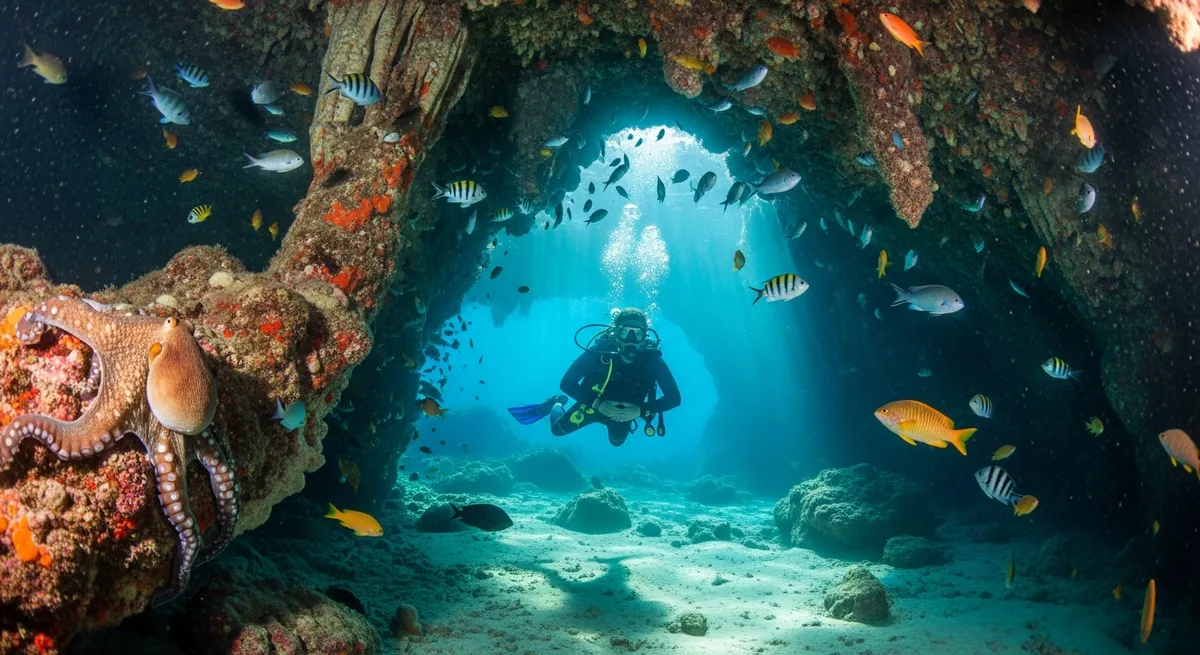
Crete. Greece’s big one. We love it for its unexpected ruggedness, both above and below the surface. Forget tropical reefs here; this is Mediterranean diving at its most atmospheric. Think dramatic rock formations dropping into deep blue, light shafts piercing through ancient caves, and a fascinating array of critters that often get overlooked elsewhere. Our favourite dive has to be the Elephant Cave. It’s a genuine marvel, a freshwater cave system filled with prehistoric elephant fossils - ribs, vertebrae, even tusks. Diving through there, you feel the cool water on your face, the silence broken only by your own breathing, and then you see them, those ghostly white bones against the dark rock. It's a surreal, almost spiritual experience. Beyond the caves, we've had some cracking wall dives, particularly on the south coast, where the rock face just keeps going down, covered in orange and purple sponges. Keep an eye out for the Studded Pufferfish; they’re surprisingly endearing. Currents can pick up, especially around headlands, so it's worth checking conditions with the local centres before you plan your day. Summertime offers the best visibility, but we've found autumn diving here can be wonderfully peaceful.
Crete Dive Site Map
Dive sites and dive centres in Crete
Crete Dive Sites
164 dive sites in Crete
5B-CCF
The 5B-CCF wreck in Crete isn't about big fish or colourful corals; it's about the sheer presence of a downed aircraft, lying surprisingly intact at 18 metres. We love how the light plays on the metal fuselage, giving it a ghostly, almost ethereal feel as you approach. It’s a Hawker Sea Hawk, an old British naval jet, and you can still make out the cockpit and the wings stretching out on the sandy bottom. Swimming around the plane, we often find schools of damselfish flitting in and out of the crevices, and the occasional moray eel peeking from beneath a wing. It feels like swimming through a moment frozen in time, the metallic structure now a canvas for the slow creep of marine growth. Our favourite detail has to be the way the engine intake is now home to dozens of tiny blennies. Visibility here is usually good, 20 metres or more on a calm day, which makes for excellent photography. We’d suggest heading out in the morning, before any wind picks up, for the best conditions. This wreck suits divers who appreciate history and the quiet beauty of something man-made being reclaimed by the sea.
ABED AL SALEM
The Abed al Salem isn’t about huge pelagics or technicolour reefs. No, this is a shallow wreck with a story, perfect for a long, relaxed dive or even a snorkel if the conditions are right. We love it for its sheer accessibility and the way the light plays through the broken hull. She went down in 1981, a cargo ship from Marseilles to Beirut, coming unstuck when two containers broke loose in heavy seas. Diverted to Iraklion, she ended up beached and abandoned. Now, she lies just offshore, the bow barely breaking the surface, making for an easy entry. The stern is the deepest part, sitting at around 5m, so you’re never far from the surface. What we really enjoy is poking around the twisted metal, imagining the chaos of her final hours. Small schooling fish, often hundreds of juvenile barracuda, swirl around the superstructure, shimmering like silver confetti. You'll spot plenty of blennies peeking from crevices and the occasional octopus tucked into a pipe. Keep an eye out for nudibranchs on the hull plates, too. It’s a fantastic site for photographers keen on ambient light wreck shots, especially mid-morning when the sun is high and bright.
ADAMAS
Adamas, grounded near Heraklion back in 1980, isn't a deep dive. In fact, it's barely a dive at all, with a maximum depth of two metres. But don't let that fool you. We love this site for its sheer accessibility and the way it introduces you to a proper wreck, right there in the shallows. What you'll find here is a motor vessel, its bow poking out of the water like a sleepy whale. The stern section is submerged, offering an easy exploration. It's a fantastic spot for snorkelers or freedivers, but for scuba divers, it’s a brilliant training ground for wreck penetration without the overhead. You can swim right into the hold, through what used to be the engine room, and along the deck. Sunlight streams in, illuminating schools of tiny damselfish darting between rusted bulkheads. We often see octopus tucked into crevices, their eyes watching you with mild curiosity. Look out for the nudibranchs inching across the metal, adding splashes of colour. The best time to visit is on a calm morning, before the day boats stir up the sand. It’s perfect for practicing buoyancy, getting comfortable in confined spaces, and just generally enjoying a historical piece of the Mediterranean without the pressure of depth or currents. It’s our pick for a relaxing afternoon dip with a fascinating twist.
ADRIAS
We love a good wreck, and the Adria, off Crete, delivers. She’s a proper old steamer, built way back in 1893, and you can feel that history as you descend. At 25 metres, she’s well within recreational limits, but still feels like a deep exploration. The Adria split in two when she went down in '51, so you’ve got two distinct sections to navigate, which we always appreciate – keeps things interesting. Visibility here can be brilliant, especially in late summer, giving you clear views of her massive propeller and the intricate machinery. We often find schools of damselfish flitting through the beams, and octopus are regulars in the deeper crevices. Our favourite part has to be the stern section; there’s an almost cathedral-like feel as you peer into the cargo holds, now home to moray eels. It’s a dive that rewards careful exploration, perfect for those who like to take their time and soak in the atmosphere of a truly historic vessel.
Aegean Divers
We’ve always found the diving around Crete to be a pleasant surprise, and the sites near Aegean Divers are a good example. You’ll typically be exploring rocky reefs, with the usual Mediterranean suspects making an appearance. Keep your eyes peeled for ornate wrasse darting between rocks, and we often spot parrotfish grazing on algae. While you might not find the dramatic drop-offs of some other regions, it’s a solid spot for relaxed dives, particularly if you're keen on macro life – those speckled sea-lice and glycerine worms are pretty cool. It’s a good choice for newer divers or those looking for an easy afternoon in the water.
Afalatosi
Afalatosi, off the coast of Crete, gives you a classic Mediterranean reef dive. We usually see plenty of moray eels here, often peeking out from rocky crevices. It’s a pretty calm spot, which makes it good for newer divers or anyone wanting a relaxed second dive of the day. Visibility is generally solid, letting you take your time exploring the rock formations.
Agios Pavlos Cliff and Caves
Agios Pavlos Cliff and Caves offers a series of swim-throughs and small caverns carved into the coastline. The rock formations themselves are the main draw here, with light shafts piercing the darker sections on sunny days. It’s a site for divers who enjoy exploring geological features rather than seeking out abundant marine life. We'd suggest it for those looking for a relaxing, shallow dive with some interesting architecture.
Agios Pavlos Gold Mine
At Agios Pavlos, you’re diving an old gold mine, which is a bit different. We’ve found some interesting rock formations and the occasional small octopus tucked into crevices. It’s not about big fish action here, more about the unique history and the unusual environment. Good for divers who appreciate something a little out of the ordinary, and probably best for those with a bit of experience.
Agios Pavlos Wall
The Agios Pavlos Wall off Crete drops straight down, offering a simple deep dive. You'll find plenty of gorgonian corals clinging to the rock face, and we’ve often spotted the odd moray eel peering out from crevices. It’s a solid option for divers who enjoy topography over pelagics, or those looking to gain some experience with wall diving in the Med.
Akrotiri reef
Akrotiri reef is a solid choice for a relaxing dive off Crete's coast. The reef itself has some decent coral patches and we often spot damselfish darting between the rocks. It’s a good spot for newer divers looking for an easy, shallow exploration, or for experienced folks wanting to shake off the rust with a straightforward profile. You'll likely see a few Mediterranean residents, but don't expect big pelagics here.
Alonaki
Alonaki is a straightforward dive on Crete, good for shaking off the rust or for those newer to diving. Expect to explore interesting rock formations and small caverns. We've often spotted octopuses tucked away, along with various small reef fish. It’s a comfortable, shallow dive without strong currents, making it a solid choice for a relaxed afternoon in the water.
Ammoudi Reef
Ammoudi Reef on Crete offers a straightforward dive, popular with local dive centres for introductory experiences and refresher courses. The main draw is a shallow reef system, typically staying within 15 metres, with some interesting rock formations. You'll likely spot small Mediterranean fish, perhaps an octopus tucked away, and plenty of nudibranchs if you look closely. It's a comfortable spot for newer divers or those wanting a relaxed dip to shake off the travel rust.
Show all 164 dive sites in Crete
- Ammoudi Reef Wreck
- Ammoudi Wall
- Arado 196 A
- Aspronisi 1
- Aspronisi 2
- AVLIS
- Bali
- Beaufighter
- Big Cave
- BYRON I
- Cape Plakias-Kalypso
- Cathedral
- Caverns
- Chimney Cave
- Christiana
- Coral Cave
- Corallbeach
- Damnoni Bay West Side
- Damnoni Beach Middle Part
- DELPHINUS
- Dias Rock
- Dragon s nose
- Elafonisi
- Elephant Cave
- Elephant feet
- Elounda Village Corner
- EVANTHIA K
- EXPRESS SAMINA
- fighter plane wrack world war II
- Finikia
- Fokia s cave
- Fresh Water Cave Sfakia
- Gianniskari Cave
- Gianniskari Reef Paleochora
- Glaronísi
- Glaronissia Seagull Island
- God s Cave
- Grouper Rock
- Groupers Reef
- HMS Barham
- HMS Bonaventure
- HMS Calypso
- HMS CAMBRIAN
- HMS Diamond
- HMS Fiji
- HMS Gloucester
- HMS Greyhound
- HMS Hasty
- HMS Jackal
- HMS Jervis
- HMS Kashmir
- HMS Kelly
- HMS Kipling
- HMS Terror
- HMS YORK
- Illigas Beach West
- IONION (PROBABLY)
- Ios Petalotis Cave
- Ios Wreck
- Italian cave
- Jimmy s Reef
- Kabia
- Kakia Skala
- Kalypso - Behind swimming pool
- Kalypso Walls
- Kamari Beach
- Kamini
- KAPTAIN ISMAIL HAKKI
- Karga Island
- Knossos housereef
- Kolimbari
- Kolona
- Korfos
- Kori reef
- Kournonisi
- Koutalas Beach - Left Side
- Lava Reef
- Le Grande Bleu
- Leguria Beach
- Ligres Beach
- Limni Kournas
- Lisaki reef
- Lissos
- Lygaria
- Mansel reef
- Manthos Reef
- Marianna
- Mavro Vouno Caves
- Messerschmitt Bf 109
- MILAS
- MINNEWASKA
- Mononaftis
- Mononaftis
- Moulas
- NAWARA
- Nea Kameni
- NEREUS
- Old Mine
- Omprogialos Beach
- Paleochora Schisto Lighthouse
- Palia Kameni Wreck
- PANGRATION
- PANORMITIS S
- Papadoplaka
- Paros Divers
- Pavlos Gulf
- Paximadia East
- Perissa Rock 1
- PETALON (PROBABLY)
- PIPO
- Plakias Beach - East End
- Plakias Cave
- Pleora
- point of interest? rock?
- Prasonisi
- Red Rock
- Riva Santo
- Rodakino West
- Rolling Stones
- Saint Nikolas Island
- Sarmas
- Serifos Scuba Divers
- Skaros
- Skinaria Cave
- Small Harbor
- SONIA
- Souda Beach
- Souda Pierced Rock
- Souda Rock
- Spilies
- Stephen s reef
- St. George Cave
- St Spiridhon
- Sugar hill wreck
- Swimthrough reef
- SYROS
- TAXIARCHIS
- The Amphitheater
- The Arch
- The Big Blue
- The Dome
- Thirasia 1
- Thirasia 2
- Triapetra
- TSAMANTE
- Vlamis Villas Stavros
- Waterfall Aspronisi
- Wreck of Dimitrios P. (ship, 1921)
- Wreck of HMT Royal Edward
- Wreck of INS Dakar
- WWII Boat Wreck
- ZAKYNTHOS
Crete Dive Centres
64 dive shops and operators in Crete
Alonissos Triton Dive Center
Amorgos diving
Aquadive
Aqua Divers Club
Aqua Team
Atlantis Diving Center
Blue Adventures Diving Ltd
Blue Fin Divers
Show all 64 dive centres in Crete
- BlueIsland Divers
- Blue Nomads
- Caldera Dive
- Chania Diving
- Chania Diving Center
- Cool Experience
- Cretandivers
- Cretan Divers
- Cycladic Diving
- DISCOVERY DIVING CENTER
- Dive2Gether
- Diver's Club Crete
- Diver's Corner
- DIVE SAFARI
- Dive Spot
- Diving Center Atlantis
- DIVING CENTER BLUE DOLPHIN
- Easy Divers Rhodes
- ECO DIVING CENTER
- Evelin Dive Center
- Fundive
- FUN DIVE DIVING CENTER
- Go Dive
- Heraklion diving center
- HORIZON DIVING CENTER
- Horizon Diving - Βάση σκαφους
- Keadivers
- Maistrali Marine
- Mare Sud Diving Center
- Mediterranean Dive Center
- Mediterranean Dive Club
- Meltemi Dive Centre
- Mykonos Diving Center
- Navys Waterworld Dive Center
- Navy's Waterworld Diving Center
- Nima
- Nima Dive Center
- NIREAS SCUBA DIVING
- Omega Divers
- PADI Dive Center NICEDIVE4U
- Paradise Diving Center
- PAROS DIVING CENTER
- Phoenixdiveclub
- POSEIDON DIVING CLUB
- Salty Descents
- SANTORINI SCUBA ACADEMY
- Sapounakis Kissamos Diving Center
- SCUBAKRETA DIVING HOLIDAYS - G.GEORGANTAS KAI SIA
- Seahorse Dive Center
- Sea World Crete
- Sifnos Diving Center
- Stalos Dive Center
- StayWet dive center
- Syros Diving Center
- THE BIG BLUE DIVING
- Waterhoppers Diving Schools
Ocean Wildlife in Crete
8 species recorded in Crete
Crete Daylight & Sunrise/Sunset
Sunrise and sunset times for Crete, calculated from coordinates
Today - Sunday 11 October
Sunrise
06:24
Sunset
17:52
Daylight
11h 28m
Golden Hour
17:18
First light (dawn) at 05:59 · Last light (dusk) at 18:18
Monthly Averages
| Month | Sunrise | Sunset | Daylight |
|---|---|---|---|
| Jan | 07:31 | 17:31 | 10h 0m |
| Feb | 07:09 | 18:03 | 10h 54m |
| Mar | 06:33 | 18:28 | 11h 55m |
| Apr | 05:50 | 18:53 | 13h 3m |
| May | 05:18 | 19:18 | 14h 1m |
| JunLongest | 05:05 | 19:39 | 14h 33m |
| Jul | 05:16 | 19:38 | 14h 22m |
| Aug | 05:39 | 19:13 | 13h 34m |
| Sep | 06:03 | 18:32 | 12h 28m |
| OctNow | 06:27 | 17:48 | 11h 22m |
| Nov | 06:57 | 17:15 | 10h 18m |
| DecShortest | 07:24 | 17:09 | 9h 45m |
Times are approximate local times based on longitude. Actual times may vary slightly depending on the exact timezone observed in Crete.
Where to Stay near Crete
Prices from Booking.com. We may earn a commission at no extra cost to you.
Marine Protected Areas near Crete
46 protected areas near Crete - please respect local regulations when diving
THALASSIA PERIOCHI DYTIKIS KAI NOTIODYTIKIS KRITIS
MIKRES KYKLADES, VOREIOANATOLIKI AMORGOS, ANATOLIKES AKTES DONOUSAS, GYRO NISIDES KAI THALASSIA PERIOCHI
THALASSIA PERIOCHI KYTHIRON
VOREIOANATOLIKO AKRO KRITIS: DIONYSADES, ELASA KAI CHERSONISOS SIDERO (AKRA MAVRO MOURI – VAI – AKRA PLAKAS) KAI THALASSIA ZONI
ANATOLIKO TMIMA ASTYPALEAS KAI NISIDES KOUNOUPI, FTENO, CHONDROPOULO, KOYTSOMYTIS, MONI, AGIA KYRIAKI, TIGANI, CHONDRI, LIGNO, FOKIONISIA, KATSAGRELI, PONTIKOYSSA, FIDOYSSA, KTENIA KAI THALASSIA PERIO
NISIDES PAROU KAI NOTIA ANTIPAROS KAI THALASSIA PERIOCHI
DIONYSADES NISOI KAI THALASSIA ZONI
NISIDES MYKONOU: RINEIA, CHTAPODIA, KAI TRAGONISI KAI THALASSIA PERIOCHI
KASOS KAI KASONISIA – EVRYTERI THALASSIA PERIOCHI
NISOS POLYAIGOS - KIMOLOS
NISOS KASOS KAI SYMPLEGMA KASONISION KAI THALASSIA PERIOCHI
CHERSONISOS GRAMVOUSAS KAI NISIDES IMERI KAI AGRIA GRAMVOUSA, PONTIKONISI KAI THALASSIA ZONI
Showing 12 largest of 46
Getting to Crete
Heraklion
Souda
Santorini Island
Plan & book
Ways to dive Crete, from day trips to liveaboards.
Day trips & courses
via GetYourGuideGuided dives, courses and snorkel trips with instant booking.
Find dive trips in CretePlaces to stay
via Booking.comHotels and dive resorts near Crete.
Search stays in CreteDive insurance
Most travel insurance excludes or limits scuba. Check what you need before you go.
Dive insurance explainedPartner links: we may earn a commission if you book, at no extra cost to you. How we make money